
Mangaluru Doctors’ Nutrition Study Prompts WHO to Revise TB Guidelines
Mangaluru, October 12, 2025 — A pioneering nutrition-focused study led by a doctor couple from Mangaluru has prompted the World Health Organisation (WHO) to update...
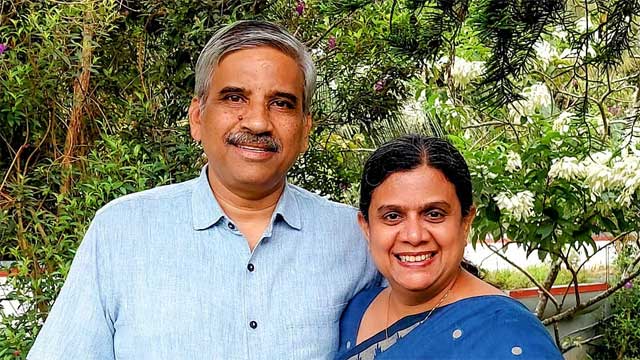
Mangaluru, October 12, 2025 — A pioneering nutrition-focused study led by a doctor couple from Mangaluru has prompted the World Health Organisation (WHO) to update its global tuberculosis (TB) treatment guidelines, underscoring the importance of food support for patients and their families.
The RATIONS Trial: Nutrition as Medicine
Dr. Anurag Bhargava of Kasturba Medical College and Dr. Madhavi Bhargava of Yenepoya Medical College conducted the RATIONS (Reducing Activation of Tuberculosis by Improvement of Nutritional Status) trial, supported by the Indian Council of Medical Research (ICMR).
The trial involved approximately 2,800 TB patients and over 10,000 household contacts across four districts in Jharkhand. Each adult received a monthly food basket containing 5 kg of rice, 1.5 kg of lentils, and multivitamin tablets. Researchers found that providing nutritional support to patients improved recovery and survival, while food assistance to family members cut the risk of new TB infections by nearly half (48%).
“This approach tackles TB not just medically but socially,” said Dr. Madhavi Bhargava. “Household members face higher exposure due to shared living spaces and food insecurity. Supporting the entire family helps reduce transmission and saves lives.”
WHO Endorses Family-Based Nutrition Support
Based on this and related studies by the Bhargavas, WHO’s updated consolidated guidelines on TB and undernutrition now explicitly recommend food assistance for household contacts in food-insecure settings. Five peer-reviewed studies from the Bhargavas’ team were cited as key evidence.
Dr. Anurag Bhargava highlighted the real-world relevance of the research: “This wasn’t conducted in a lab or hospital alone. Field-based interventions demonstrate what works on the ground, and WHO recognition within two years is unprecedented.”
Impact on Policy and Public Health
Following the trial, several Indian states, including Jharkhand, Tamil Nadu, and Himachal Pradesh, have initiated programs distributing food baskets to TB-affected families. The Union government has also increased monetary aid to enhance nutritional access.
India continues to bear the world’s highest TB burden, with over 28 lakh new cases and more than 3.2 lakh deaths in 2023, averaging 37 deaths every hour. In Karnataka alone, nearly 5,000 lives are lost annually to the disease.
Research shows that improved nutrition reduces TB mortality by 35%, and weight gain during the first two months of food supplementation lowers death risk by 60%. Modeling studies suggest that extending similar food support to half of India’s TB-affected households could prevent 4 lakh deaths and 9 lakh TB cases between 2023 and 2035.
Looking Ahead
Experts say integrating nutrition into TB management could be transformative in India’s fight against the disease. “Malnutrition remains the leading risk factor for TB in India,” Dr. Bhargava emphasized. “Population-wide nutritional improvement could be a game-changer in ending TB.”