
Maharashtra Doctor’s Suicide Case Takes New Turn: Woman Alleges She Was Forced to Falsify Postmortem Report in Daughter’s Death
Fresh allegations deepen mystery around doctor’s suicide The death of a government doctor in Maharashtra has taken a new and more complex turn. A woman...
Fresh allegations deepen mystery around doctor’s suicide
The death of a government doctor in Maharashtra has taken a new and more complex turn. A woman from Satara district has alleged that the doctor—who recently died by suicide—had been coerced into signing a fake postmortem report in her daughter’s suspicious death.
The woman, Bhagyashree Maruti Pachangne, claimed that her daughter, Deepali Maruti, did not die by suicide as officially stated, and accused local authorities of covering up the truth. She alleged that the deceased doctor, who conducted the postmortem, was under immense pressure from political figures and the police to manipulate the findings.
Doctor’s death and suicide notes point to harassment
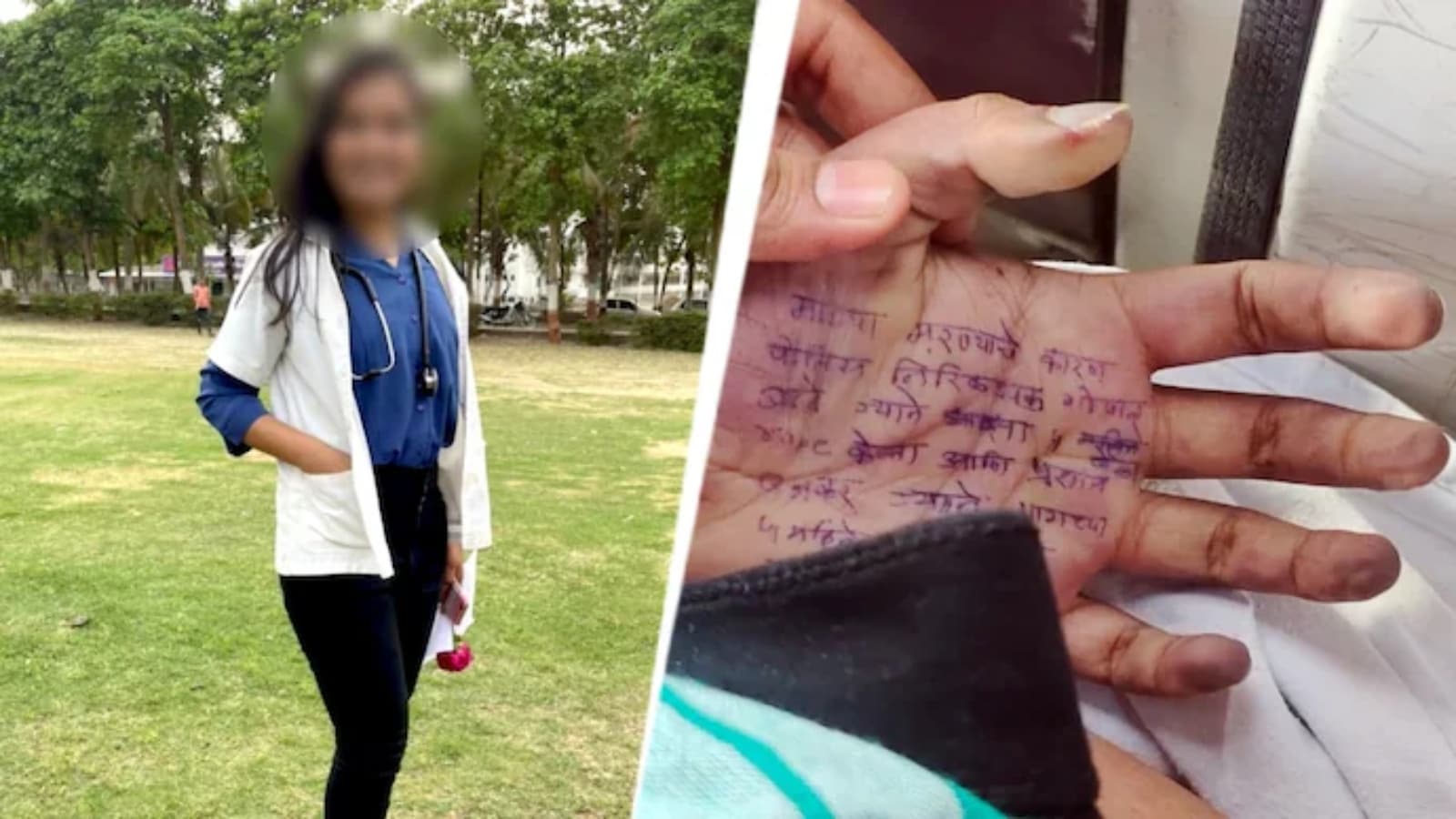
The doctor’s death has already triggered widespread outrage in Maharashtra. She reportedly took her own life last week after writing multiple suicide notes — one on her palm, and another detailed four-page letter — in which she accused police sub-inspector (PSI) Gopal Badane of sexual assault and software engineer Prashant Bankar of prolonged mental harassment.
She also named a former Member of Parliament and two of his personal assistants, alleging that they pressured her to declare an accused, Malhari Channe, “medically fit.”
Quoting a relative, Press Trust of India reported that the doctor frequently faced pressure from influential individuals to alter medical and autopsy reports. “Political people in Phaltan often asked her to change medical reports as she was regularly on autopsy duty. She had complained against the PSI mentioned in her note, but no action was taken,” the relative told PTI.
The mother’s claim: “My daughter was murdered”
Bhagyashree Pachangne has now come forward with explosive claims linking her daughter’s death to the same systemic coercion the doctor faced. Her daughter Deepali, married to Ajinkya Hanmant Nimbalkar, an Indian Army officer, allegedly endured mental and physical abuse at the hands of her husband and in-laws.
According to Bhagyashree, Deepali was six months pregnant and mother to a one-and-a-half-year-old daughter when she died on August 19. “We were told she had taken her own life, but I do not believe it,” she said. “She was a mother and expecting another child—she would never do this. I believe she was murdered.”
Bhagyashree said the family was not given the postmortem report for five days. When they finally received it a month later, “it was completely fabricated,” she alleged, claiming that her son-in-law used political and police influence to suppress evidence.
Investigation and arrests so far
Police have arrested Prashant Bankar, the tech professional named in the doctor’s suicide note, on charges of mental harassment. PSI Gopal Badane, accused of rape, later surrendered and was suspended from service pending investigation.
The case has quickly spiraled into a major political controversy, with opposition leaders accusing the ruling establishment of shielding those responsible and demanding an independent judicial inquiry.
Growing calls for accountability
The Maharashtra government has yet to announce a formal probe into Bhagyashree Pachangne’s allegations, but the claims have renewed scrutiny of how systemic pressure, political interference, and gender-based workplace harassment intersect in the state’s medical and law enforcement systems.
Civil rights activists and women’s groups have called for the Central Bureau of Investigation (CBI) or an independent judicial inquiry into both the doctor’s suicide and Deepali’s death.
For now, the two cases—linked by the same allegation of coercion and institutional neglect—continue to expose troubling gaps in accountability, transparency, and protection for professionals working within the public health and justice systems.