
Madhya Pradesh voter list revision sees low party objections despite mass deletions
The large-scale removal of 42.74 lakh names from Madhya Pradesh’s draft electoral rolls has triggered allegations of voter manipulation from the opposition, but early official...
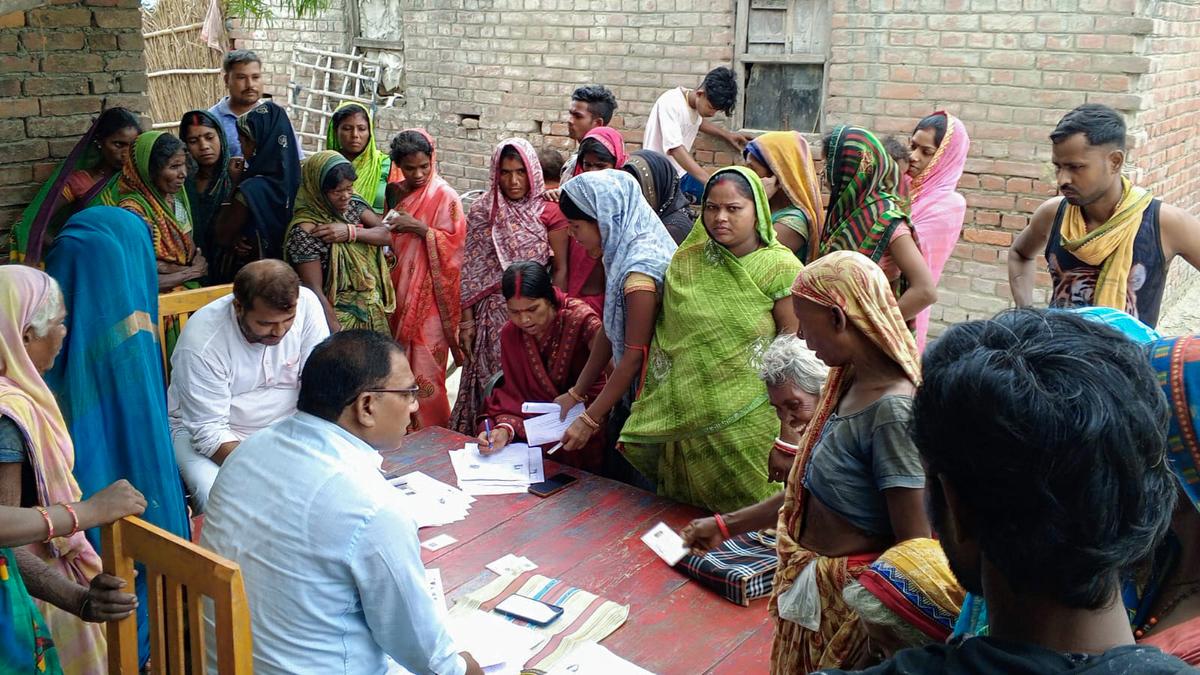
The large-scale removal of 42.74 lakh names from Madhya Pradesh’s draft electoral rolls has triggered allegations of voter manipulation from the opposition, but early official data points to a quieter response on the ground. Despite strong political messaging, recognised political parties have filed a limited number of claims and objections during the ongoing correction phase.
The draft rolls were released on December 23 following a 44-day Special Intensive Revision (SIR) exercise. While the deletions have raised questions in public discourse, election authorities say the process is still open and no change is final at this stage.
What the official data shows so far
According to figures issued by the Office of the Chief Electoral Officer (CEO), Madhya Pradesh, only 1,305 claims and objections were filed by recognised political parties between December 23 and January 1.
-
Bharatiya Janata Party submitted 920 inclusion claims and 27 objections seeking deletions.
-
Congress filed 279 claims for inclusion and 43 objections for removal of allegedly ineligible voters.
Officials noted that this level of participation is modest given the scale of political criticism surrounding the SIR exercise.
Voters, not parties, lead corrections
In contrast to party activity, individual electors have responded in large numbers.
Between December 23 and January 1, election offices received:
-
85,889 Form 6 applications seeking inclusion of names
-
5,894 Form 7 objections requesting deletions
This results in a net request for nearly 80,000 additional voters, signalling strong public engagement with the verification process.
Election officials confirmed that every application will be verified before any approval or rejection.
Why so many names were removed
The SIR drive ran from November 4 to December 18, involving over 65,000 booth-level officers who conducted door-to-door verification across the state.
According to election authorities, deletions were made where voters were found to be:
-
Deceased
-
Shifted outside their constituency
-
Duplicated across rolls
The exercise also flagged around 8.40 lakh “unmapped” voters, whose status is still under examination.
Officials emphasised that the revision is aimed at maintaining legal accuracy and roll integrity ahead of future elections.
Political concerns and official response
Congress state election affairs in-charge JP Dhanopia alleged that the ruling party attempted to add ineligible voters with the help of booth-level officers, a charge the BJP has rejected. The Congress has indicated it may formally challenge specific cases during hearings.
Election authorities, however, reiterated that no addition or deletion is final at this stage and that the process includes individual hearings and reasoned orders by electoral registration officers.
What happens next
The claims and objections window remains open until January 22. After that date:
-
Electoral registration officers will rule on all pending cases
-
Decisions will be documented through official orders
-
Final electoral rolls will be published only after this scrutiny
Officials maintain the SIR exercise is a standard constitutional process designed to ensure a clean, accurate, and credible voter list.
What to watch next
Attention will now shift to January 22, when the correction window closes. How many objections emerge in the final days and how electoral officers rule on disputed names will be crucial for political trust and electoral preparedness in Madhya Pradesh.