
Madhya Pradesh plans joint wildlife safety SOP after cheetah, tiger deaths on roads and rails
Shaken by the road death of a cheetah in Gwalior and a series of tiger fatalities on railway tracks, the Madhya Pradesh Forest Department is...
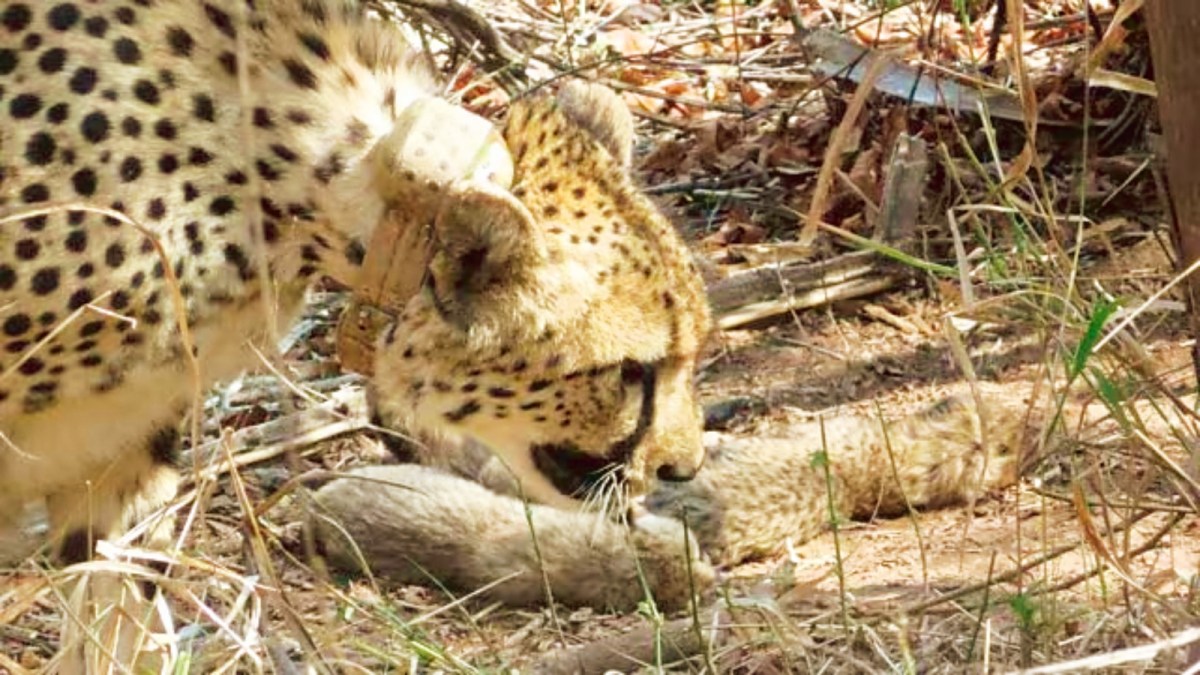
Shaken by the road death of a cheetah in Gwalior and a series of tiger fatalities on railway tracks, the Madhya Pradesh Forest Department is preparing a coordinated plan with the National Highways Authority of India and Indian Railways to standardise how wildlife is protected along transport corridors that cut through forests.
Senior officials say the upcoming framework will replace case-by-case reactions with clear, enforceable protocols on speed regulation, inter-agency coordination, monitoring, and accountability in wildlife-sensitive stretches.
The incident that triggered urgent action
The push follows the death of an adult male tiger struck by a speeding train on the Barkheda–Budhni section near Bhopal, a curve that runs through the core of Ratapani Tiger Reserve. Forest teams discovered the carcass while conducting fieldwork for the All-India Tiger Estimation 2026.
Officers said the body appeared to have been dragged several metres, suggesting high speed and no braking. With this, the Barkheda–Budhni line has recorded 18 tiger and leopard deaths in the past decade.
Statewide, tiger mortality in 2025 reached 56, the highest in the country. Earlier, in July 2024, three tiger cubs were hit on the Budhni–Midghat stretch, killing one and critically injuring two.
What went wrong on the ground
Internal correspondence shows the risks were flagged well before the latest death. In March 2025, the Chief Wildlife Warden warned the state forest department about persistent non-compliance by Indian Railways with conditions attached to the third rail line between Barkheda and Budhni.
Inspection reports cited:
-
Speed violations above the permitted 60 kmph, with freight trains at 65 kmph and passenger trains at 75 kmph.
-
Missing mitigation mandated by NTCA guidelines, including 30-metre animal passages every 1 km, a wildlife overpass, fencing, weed clearance, and garbage removal.
Given the repeat fatalities, officials even considered seizing the train involved, citing a 2020 Assam precedent where a locomotive was impounded after killing an elephant.
The plan: From firefighting to prevention
To turn warnings into action, the State Forest Research Institute, Jabalpur has been tasked with drafting a special mitigation plan for tracks through Ratapani Tiger Reserve and the Satpura Tiger Reserve corridor, one of central India’s most vital wildlife dispersal routes.
The plan will include:
-
Scientific mapping of animal movement and black spot identification.
-
Site-specific engineering such as underpasses, overpasses, and fencing.
-
Operational controls including sensor-based alerts and strict speed enforcement.
Findings will be folded into a unified operating framework during a joint meeting with NHAI and Indian Railways, covering both road and rail corridors.
Why this matters beyond Madhya Pradesh
Public safety: High-speed corridors through forests endanger both animals and commuters.
Governance: A common rulebook will clarify who is responsible, when, and how during wildlife sightings and collisions.
Conservation: Repeated losses of apex predators signal systemic gaps that undermine decades of protection.
Infrastructure planning: Embedding safeguards at the design and operations stage can reduce conflict without halting development.
Wildlife experts see the move as a decisive pivot. One senior official said that without structural mitigation and accountability, linear infrastructure will remain the biggest threat to big cats. If implemented, the SOP could become a national template for wildlife-rich corridors.