
Kuki-Zo MLA Defends Joining Manipur Government Amid Protests: ‘Peace Must Come Through Dialogue, Not Guns’
Amid fresh tensions in Manipur, BJP legislator Ngursanglur Sanate said participation in government is aimed at finding political solutions rather than escalating conflict. What happened:...
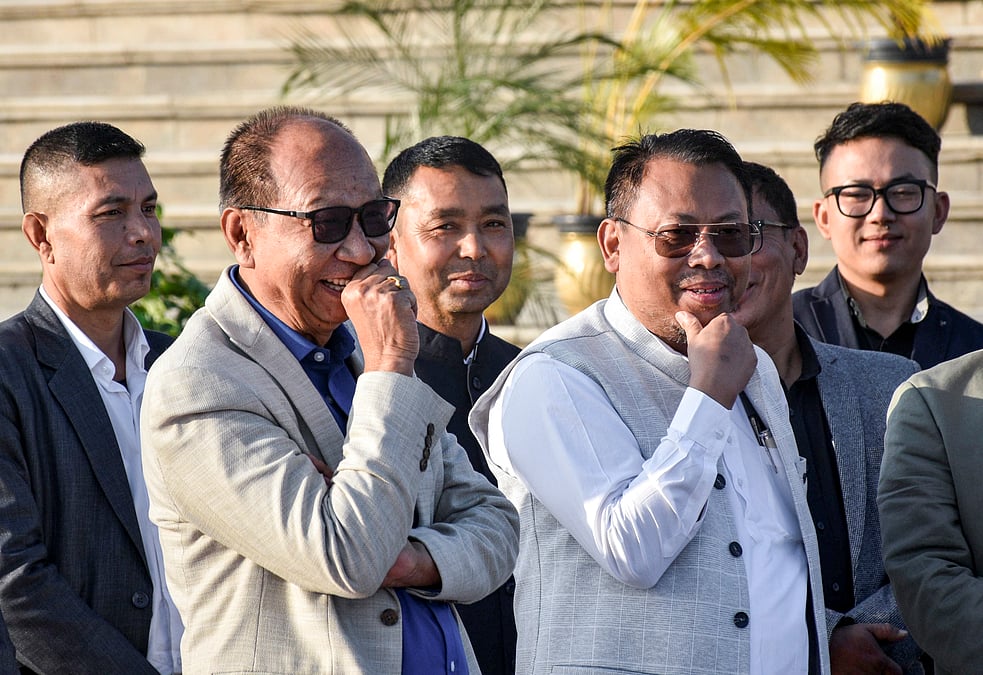
Amid fresh tensions in Manipur, BJP legislator Ngursanglur Sanate said participation in government is aimed at finding political solutions rather than escalating conflict.
What happened:
-
Kuki-Zo MLA Ngursanglur Sanate defended his decision to join the newly formed Manipur government, saying negotiations at the political table are essential to restoring peace.
Why it matters now:
-
His remarks come during ongoing ethnic tensions in Manipur, where political moves by community leaders are closely watched and often spark strong reactions.
What changes for people:
-
The inclusion of Kuki-Zo representatives in governance could influence dialogue processes, policy decisions, and future peace initiatives in the conflict-affected state.
Who is affected:
-
Communities across Manipur, especially Kuki-Zo and Meitei populations, local political groups, security agencies, and residents living in sensitive districts.
MLA faces backlash after joining government
Ngursanglur Sanate, a BJP MLA from Tipaimukh, spoke out after protests erupted in Churachandpur where demonstrators burned effigies of three Kuki-Zo legislators involved in the new government formation.
Sanate clarified that joining the administration does not signal surrender or compromise on community concerns. Instead, he described it as a strategic decision to ensure representation during negotiations.
Key statement: He stressed that lasting peace cannot be achieved without functioning governance and political dialogue.
A fragile political moment in Manipur
Manipur has witnessed prolonged tensions between the Meitei community and several tribal groups collectively referred to as Kuki-Zo or Kuki-Zomi.
Sanate, who belongs to the Hmar tribe within the broader Kuki-Zo umbrella, acknowledged the anger among some supporters but argued that violence cannot deliver sustainable solutions.
Political observers say his decision highlights the difficult balance leaders must maintain — engaging with government structures while addressing the expectations of their communities.
Why dialogue is becoming central to peace efforts
Security experts and policy analysts increasingly emphasise negotiation and political engagement as the only viable path forward in conflict-hit regions.
Sanate’s stance reflects a broader push among some leaders to move discussions away from armed confrontation toward institutional decision-making.
Supporters believe participation in government offers a platform to advocate for development, safety, and administrative reforms. Critics, however, worry that political alliances could dilute community demands or create internal divisions.
Multiple perspectives: representation vs. resistance
Some local voices view the MLA’s move as a pragmatic step that could open doors to dialogue with the state leadership.
Others see it as controversial, arguing that joining the government during ongoing tensions sends mixed signals to grassroots supporters.
Analysts say such political decisions often carry risks, especially in regions where identity politics and security concerns remain deeply intertwined.
Governance and security implications
The participation of Kuki-Zo legislators in the government may shape policy decisions related to rehabilitation, law and order, and inter-community trust-building.
At the same time, protests highlight how fragile public sentiment remains. Authorities will likely face pressure to ensure inclusive governance while maintaining stability across affected districts.
The development also reflects how political negotiations are becoming a key arena in managing regional conflicts, alongside security measures on the ground.