
KL Rahul’s unbeaten 112 in Rajkot sparks debate on his long-term No.5 role in India’s ODI plans
• What happened: KL Rahul scored an unbeaten 112 off 92 balls in Rajkot against New Zealand, rescuing India from early trouble and guiding them...
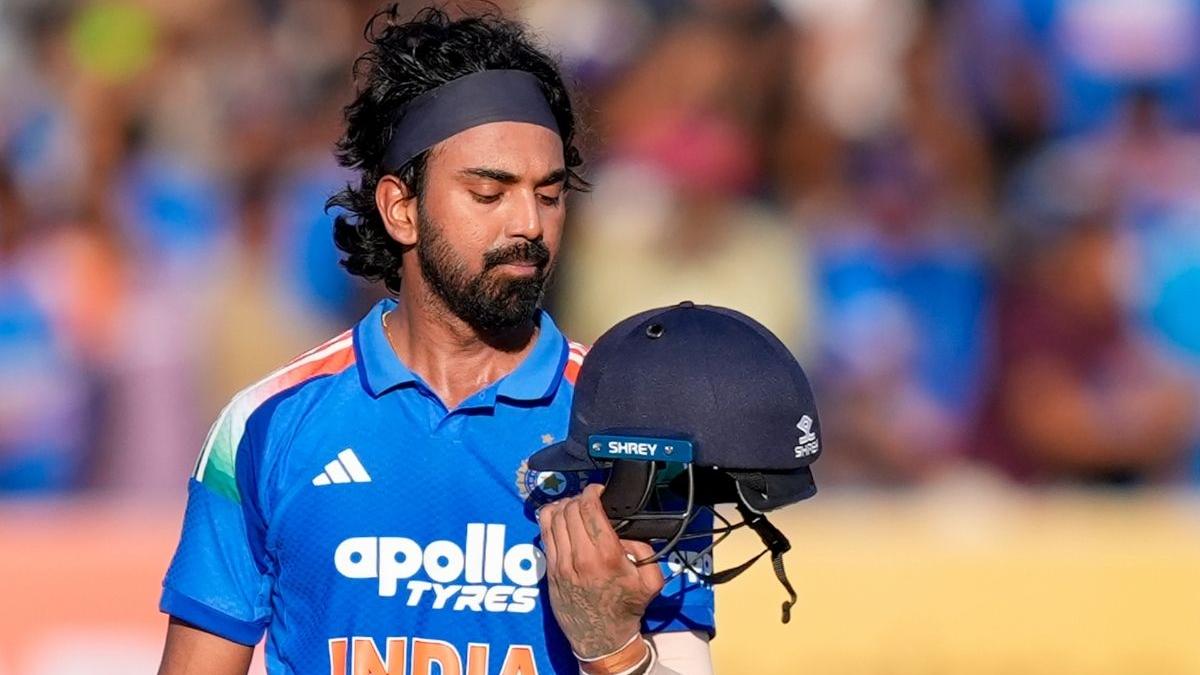
• What happened: KL Rahul scored an unbeaten 112 off 92 balls in Rajkot against New Zealand, rescuing India from early trouble and guiding them to a competitive total.
• Why it matters now: The innings strengthens his case for a permanent middle-overs role at No.5, a spot India has struggled to lock long-term.
• What changes for people: A settled batting order could mean more consistency in India’s ODI approach, especially ahead of major tournaments.
• Who is affected: Selectors, team management and wicketkeeper-batters competing for middle-order spots will feel the impact of Rahul’s form.
Rahul’s Rajkot masterclass blends control, maturity and clarity
In Rajkot on Wednesday, KL Rahul delivered one of his most assured ODI knocks, finishing 112 not out off 92 balls against a disciplined New Zealand attack. Walking in during the 22nd over with India unsettled on a sluggish surface, the soon-to-be 34-year-old absorbed pressure, controlled the chase of the innings tempo and held strike intelligently in the death overs.
There were no animated celebrations when he reached his first ODI hundred since the 2023 World Cup. Rahul simply removed his helmet and mimicked his 10-month-old daughter nibbling her fingers, a gesture symbolising calm rather than bravado.
A career of shifting roles finds new stability
Rahul’s 11-year journey across formats has been marked by positional uncertainty and constant shuffling between opening and the middle order. But under the current team management, he appears to have found balance as a wicketkeeper-batter at No.5, a role he was first tested in at the same venue in January 2020, when he struck 80 off 52 against Australia after Rishabh Pant suffered a concussion.
On Wednesday, team management moved away from its usual left-hander-at-5 strategy, opting to send Rahul at his preferred spot despite Ravindra Jadeja’s presence, indicating strategic trust in his middle-overs control.
Technique, tempo and old-school ODI value
Rahul struck 11 fours and one six, refusing to let the run rate stagnate even as younger partner Nitish Kumar Reddy took time to settle. His innings emphasised strike rotation, placement and boundary picking over power hitting, a template ODI traditionalists value.
He also farmed strike effectively while batting with tailenders Harshit Rana and Mohammed Siraj, underlining clarity in situational batting.
Why this role matters for India right now
A consistently productive No.5 can reshape India’s ODI structure by:
-
Enhancing middle-overs scoring stability
-
Reducing late-innings collapses
-
Giving flexibility around wicketkeeping options
-
Allowing top-order hitters to play freely
Selectors have often debated whether Rahul should open or anchor, but his numbers at No.5 provide strong evidence:
-
64.21 average at No.5
-
1477 runs in 33 innings
-
3 centuries and 10 fifties
-
10 times unbeaten
Those metrics are compelling at a slot where India has historically rotated batters in search of continuity.
Off-field work points to longevity
Rahul has also invested heavily in conditioning and skill refinement. He has reportedly worked with performance specialists linked to Formula One to enhance reaction time and decision speed, crucial for a wicketkeeper-batter anchoring the middle overs.
Crunch numbers from Rajkot
-
112 not out: Rahul’s 8th ODI century
-
2nd ton vs New Zealand (first was 112 in Mount Maunganui on 11 Feb 2020)
-
Both are his career-best ODI scores
-
Marks his first ODI hundred since 2023 World Cup