
Kharge Hits Back at Modi Over Assam Remarks, Says BJP Must Own ‘Double-Engine’ Failures
Congress president Mallikarjun Kharge on Sunday launched a strong rebuttal to Prime Minister Narendra Modi’s accusations that the Congress had neglected Assam and the Northeast...
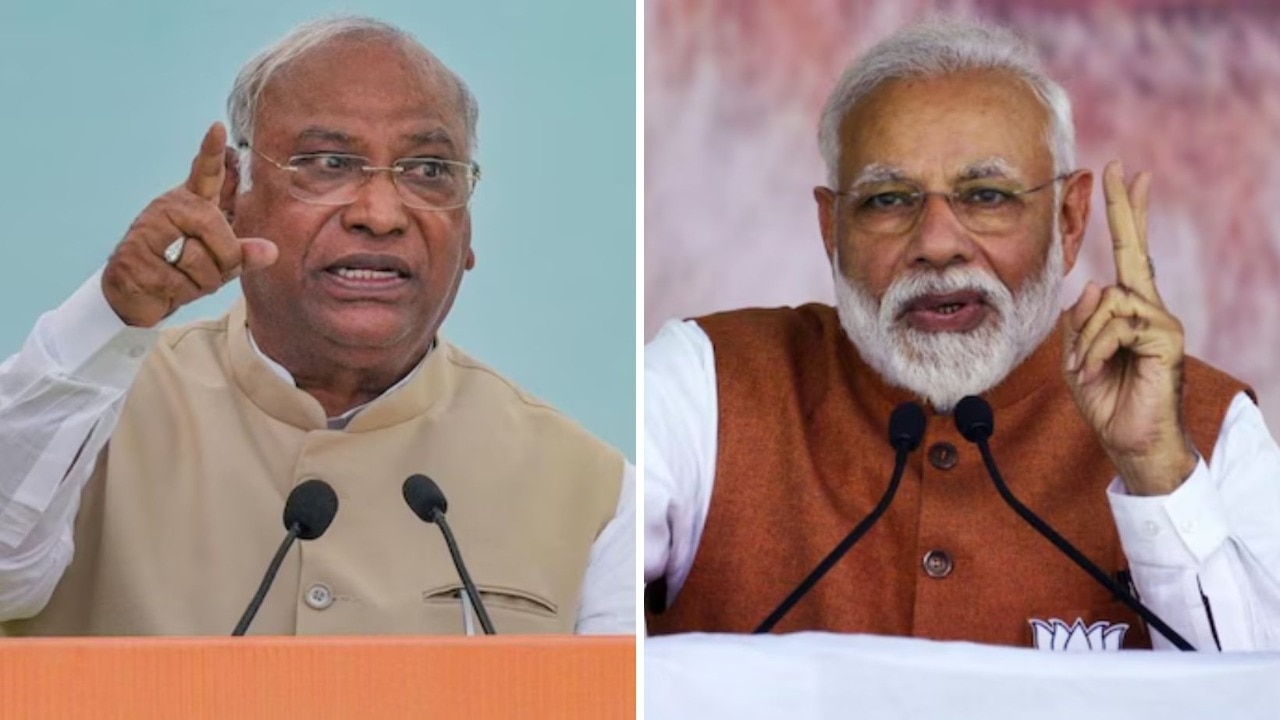
Congress president Mallikarjun Kharge on Sunday launched a strong rebuttal to Prime Minister Narendra Modi’s accusations that the Congress had neglected Assam and the Northeast during its years in power and had compromised the region’s security by allowing infiltration.
A day after the Prime Minister’s remarks at a public rally in Guwahati, Kharge said the BJP could not shift responsibility to the Opposition when it has been in power both at the Centre and in Assam for years.
‘Take Responsibility Instead of Blaming Opposition’
Responding to Modi’s allegations, Kharge pointed out that Assam is currently governed by the BJP, with the party also in power at the Centre — a combination the ruling party frequently describes as a “double-engine government”.
“If there is a failure to protect people or maintain security, how can the Prime Minister blame the Opposition?” Kharge asked. “His government is in Delhi and his government is in Assam as well. Are we ruling there?”
The Congress chief argued that accountability for governance failures lay squarely with the BJP, not with parties that are no longer in office in the state.
Strong Rejection of ‘Deshdrohi’ Charge
Kharge strongly condemned the Prime Minister’s suggestion that “deshdrohis” (traitors) were protecting infiltrators, saying such language was used to deflect attention from the government’s shortcomings.
“When he fails, he puts everything on the Opposition,” Kharge said, according to party statements. “We are not traitors, and we are not defending terrorists or infiltrators. In the interest of the country, we will always do what is right. He is blaming others because he has failed to protect and prevent such issues.”
The Congress leader insisted that his party does not support illegal infiltration or activities that threaten national security.
What PM Modi Said in Guwahati
Prime Minister Modi made the remarks on Saturday while addressing a rally in Guwahati after inaugurating a new terminal at the city’s airport. During his speech, he accused the Congress of ignoring Assam and the wider Northeast for decades and alleged that unchecked infiltration under previous governments had endangered the region’s security and cultural identity.
Referring to the Election Commission’s ongoing Special Intensive Revision (SIR) of electoral rolls, Modi said the exercise was intended to prevent infiltrators from entering the democratic process. He claimed that certain forces were attempting to shield such elements, while asserting that the Centre was taking firm steps to stop infiltration.
The Prime Minister also alleged that infiltrators had encroached on forest land and other areas in Assam, weakening security. According to Modi, the BJP was now correcting “mistakes” made over several decades of Congress rule.
Competing Narratives on Development
Highlighting what he described as the BJP’s governance model, Modi said development under the “double-engine government” in Assam was flowing smoothly and at scale, likening it to the uninterrupted flow of the Brahmaputra river.
Kharge, however, rejected the claim that the Congress had neglected the Northeast, arguing that the BJP was rewriting history to suit its political narrative.
Political Stakes Ahead
The sharp exchange underscores the growing political battle over Assam and the Northeast, regions that have become increasingly significant in national politics. Issues of migration, identity, security and development remain deeply sensitive, often shaping electoral discourse.
With both sides hardening their positions, analysts say the debate is likely to intensify, particularly as voter roll revisions and governance claims become central themes in the run-up to future elections.