
Kailaras Sugar Mill: Hopes and Challenges for Chambal's Industrial Renaissance
The potential revival of the Kailaras Sugar Mill sparks renewed discussions on the Chambal region's industrial future and economy.
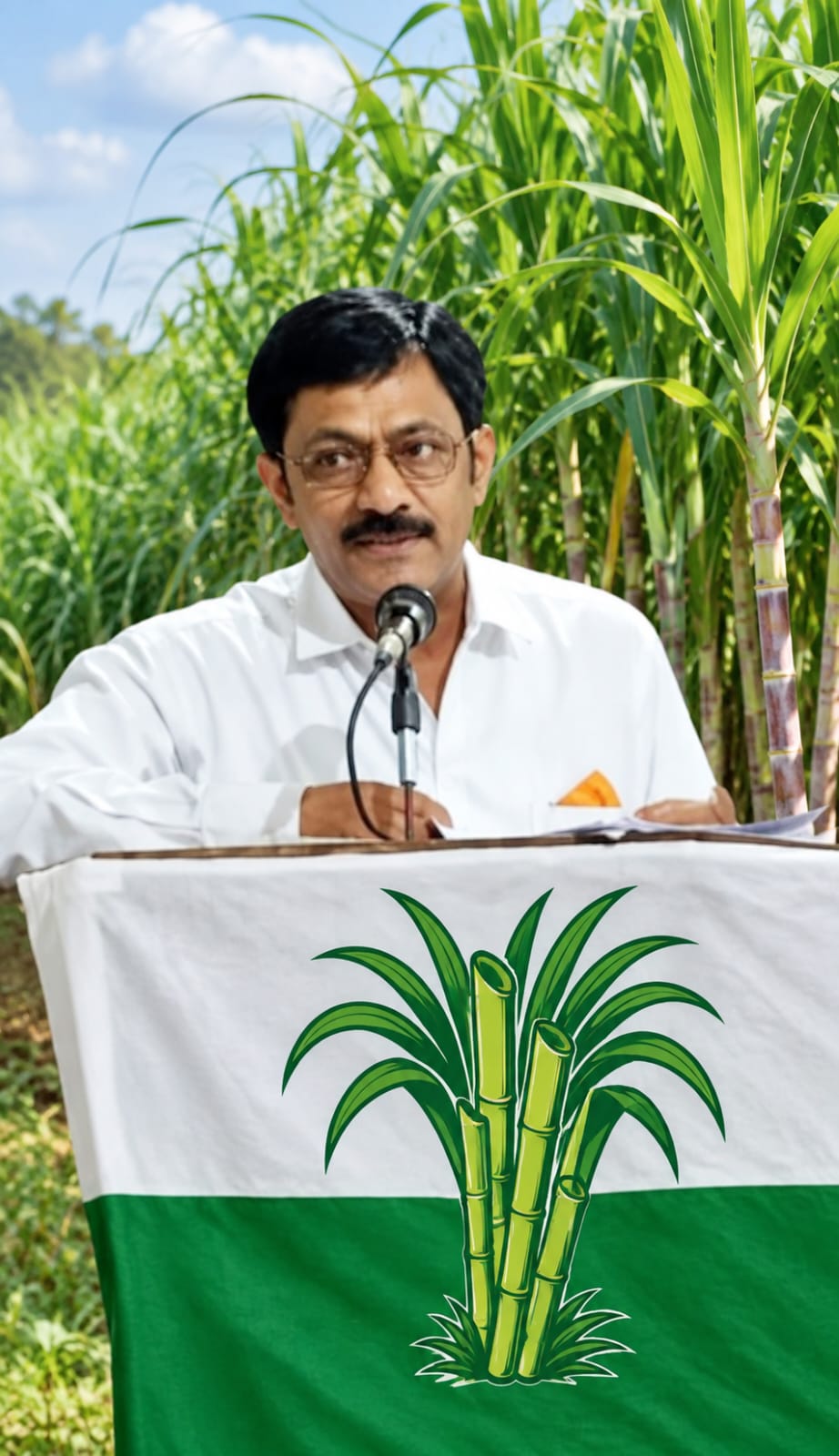
morena | दिनेश सिकरवार
Kailaras Sugar Mill: Hopes and Challenges for Chambal's Industrial Renaissance
The Cliff News | Morena | September 13, 2026 The prospect of the Kailaras Sugar Mill restarting operations has once again opened discussions in Madhya Pradesh's Morena district regarding the industrial future and local economy of the Chambal region.
This discussion extends beyond the recommissioning of a single closed sugar mill; it delves into pressing issues that have plagued the region for decades, including industrial stagnation, capital flight, and the exodus of local talent. Advocate Dinesh Singh Sikarwar, a follower of Gandhian thinker and Mahatma Gandhi Seva Ashram activist Raja Gopal P. V., elaborated on this during a dialogue with young people.
He recalled the industrial heritage of Chambal, which has been severely impacted by the closure of industries and capital flight over past decades. The old chimney of the Kailaras Sugar Mill, now reduced to a mere structure of brick and iron, is seen as a symbol of the region's economic aspirations. During the mill's operational days, everything from sugarcane crops to farmers' economic conditions and local markets was vibrant.
The mill's closure not only led to the loss of employment for workers but also diminished the vibrancy of the transport business and local markets, both large and small. The current expectations of reviving the mill through MSME (Micro, Small and Medium Enterprises) initiatives have sparked new hopes in the region. However, a crucial question remains: will this time only smoke emerge from the chimney, or will farmers and the local economy truly gain energy and benefits?
Farmer Interest and Transparent Payments: A Non-Negotiable Condition
The memories of farmers in the Chambal region are long. Despite changes in various governments, policies, and management systems, farmers have closely experienced prolonged waits for fair prices for their produce and payment uncertainties.
Therefore, the new announcements regarding the recommissioning of the mill cannot be viewed merely as a project. Whether the mill's operation falls into the hands of the private sector or a cooperative model is adopted, farmers will not accept any compromise on receiving fair prices for their sugarcane, transparent weighing processes, and timely payments.
A cooperative model's mere name is insufficient; its success hinges on ensuring transparency, accountability, and a just share in profits in practice.
Lessons from Closed Industries and the Need for Broad Institutional Introspection
The industrial crisis in the Chambal region is not confined to Kailaras alone. Several units that were once the industrial backbone of the region, such as MDS Cement Industry in Banamore, Jaderua Oilseeds Cooperative in Morena, and JS Cotton Mill in Gwalior, have either weakened or shut down.
There is an immediate need for broad institutional introspection into the reasons behind the weakening or closure of these units. Was it due to a lack of capital, absence of technological modernization, or a lack of a secure administrative environment? Without finding answers to these fundamental questions, building a robust industrial framework for the future will be extremely challenging.
There is no shortage of talent in the Chambal region, but many talented individuals born in this land often have to leave the region in search of success. If the experience and knowledge of successful entrepreneurs and professionals from the region are utilized in Chambal's industrial reconstruction, the scenario can certainly be changed.
Importance of Security, Stability, and Infrastructure for Investment
Investment in any region is attracted when investors are assured of security and stability there. The pace of development cannot solely depend on government efforts; it requires the active collective participation of industrialists, academicians, and the youth.
A comprehensive and coordinated strategy is needed for the industrial renaissance of Chambal, one that can connect industrial areas from Banamore to Malanpur and Bhind-Gwalior. Investment security, robust law and order, and improved infrastructure must be given equal importance.
Furthermore, hollow declarations will not suffice for farmers; they must be ensured uninterrupted provision of basic facilities like fertilizers, irrigation, electricity, and markets.
For the Youth: Distinguishing Verified Facts from Viral Content
Today's youth, known as Gen Z and Gen Alpha, are living amidst a vast repository of information. While social media has provided them a platform to voice their opinions, their biggest challenge is learning to clearly distinguish between viral content and verified facts.
Youth must understand that merely making an issue trend on social media is not the ultimate achievement; rather, understanding its root cause and reaching a solution constitutes real success. The language of movements and dialogue is also changing; in today's mobile and data-driven era, factual and measured voices prove more effective and sustainable.
Ignoring Safety Standards and Environmental Responsibility is Unacceptable
If the Kailaras Sugar Mill is successfully restarted, its measure of success should not be solely based on the quantity of sugar produced. It should be evaluated on how many farmers it provided with a secure market, how many workers it employed, and how much economic momentum it generated in local trade.
Tragic examples like the Bhopal Union Carbide disaster constantly remind us that the safety of human life and the protection of the environment are far more important than the pace of industrial production and profits.
Along with the revival of industrial units, strict adherence to safety standards and the determination of environmental responsibilities are also mandatory. History is not for repeating past mistakes but for learning from them to build a secure and prosperous future.
The patience and endurance of farmers should never be mistaken for their weakness. When the soil turns, it transforms the entire geography. If smoke rises again from the chimney of Kailaras, it should not be just a sign of an industrial unit running but a testament to the prosperity of the farmer's hearth and the return of Chambal's glorious industrial past.
This is the current hope for Kailaras and our greatest collective responsibility to the new generation of the entire Chambal region. Chambal now needs to be viewed and developed not just as a political geography but as a vibrant economic geography.