
James Webb Telescope Reveals Best-Ever Look at Distant Planet Kua'kua!
Scientists get unprecedented view of exoplanet Kua'kua using the James Webb Space Telescope.
Top Summary
- What happened: The James Webb Space Telescope provided the best-ever view of the surface of exoplanet Kua'kua (LHS 3844 b), located 48 light-years away.
- Why it matters: This analysis provides insights into the composition and formation of rocky exoplanets and aids in identifying potentially habitable worlds.
- What changes for people: Enhances our understanding of planetary diversity and refines methods for searching for life beyond Earth.
- Who is affected: Astronomers, astrophysicists, and anyone interested in space exploration and the search for extraterrestrial life.
Unveiling Kua'kua: A Dark, Rocky World
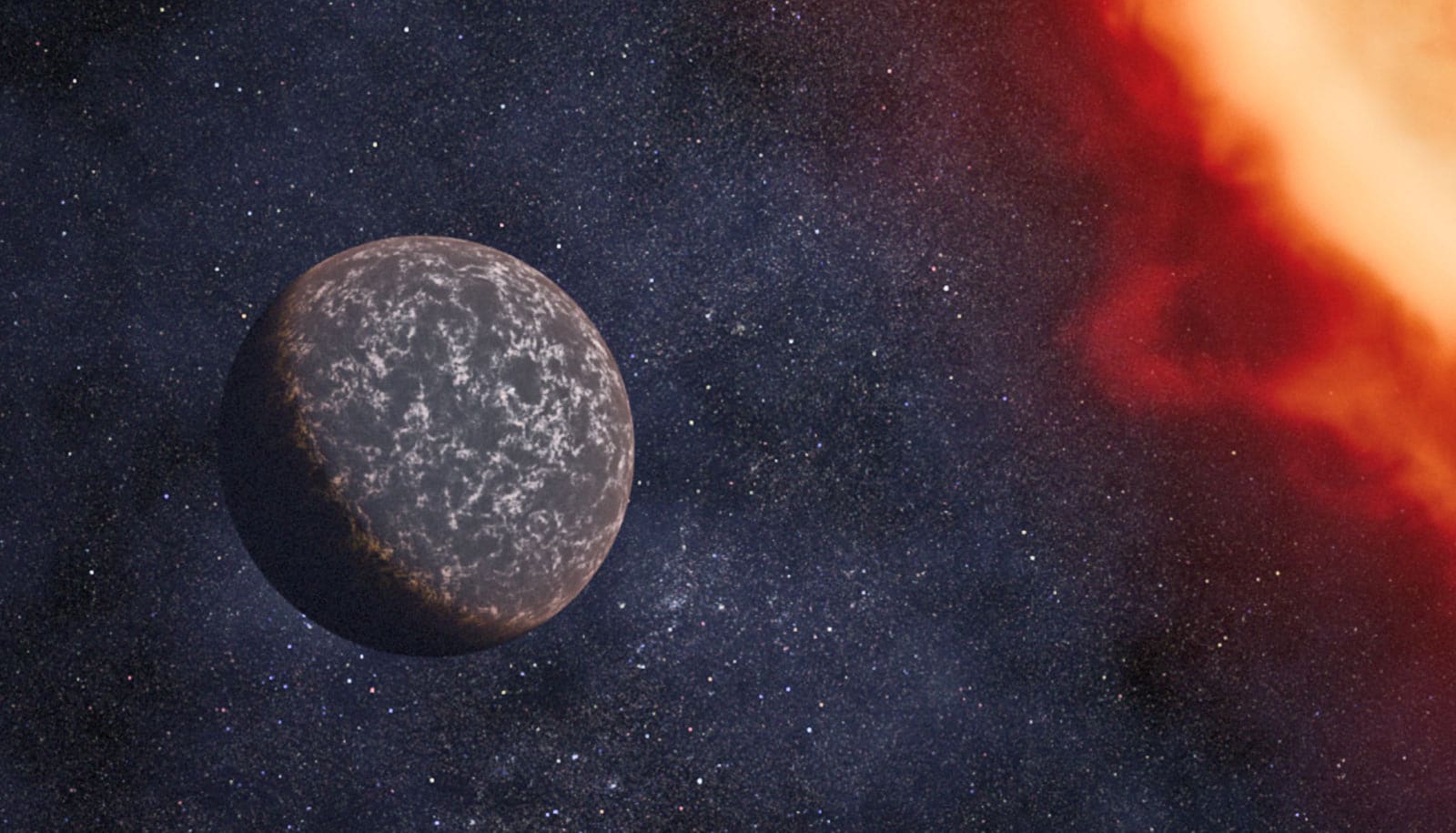
Using data from the James Webb Space Telescope, scientists have achieved an unprecedented glimpse into the surface of a distant planet called Kua'kua. This exoplanet orbits a small star in the constellation Indus.
Researchers analyzed subtle changes in light to determine that Kua'kua has a dark, solid surface. It is likely composed of basalt or similar rock.
The planet probably lacks plate tectonics similar to Earth. Scientists also suspect it has a very thin atmosphere, if any at all.
The Secondary Eclipse Technique
Due to the immense distance, directly observing exoplanets is extremely challenging. Astronomers use clever techniques like the secondary eclipse technique to glean information.
This method involves measuring the light from the star system, then observing the dip in light as the planet passes behind its star. The difference reveals the planet's light, allowing scientists to analyze its atmosphere and other characteristics.
While effective for large gas planets, smaller, rocky worlds like Kua'kua have been harder to study until now.
James Webb Telescope: A Game Changer
The James Webb Space Telescope is revolutionizing exoplanet research. It allows scientists to characterize rocky planets with greater precision.
Kua'kua, also known as LHS 3844 b, is about twice the mass of Earth but orbits its star much faster. Its “year” lasts only 0.5 Earth days.
Surface Composition and Climate
Analysis of data from three secondary eclipses reveals a striking amount of detail about Kua'kua. The surface appears very dark, composed of basalt or similar rock.
The dark surface resembles the rock found in Iceland or Hawaii. It is also likely covered in a dark, weathered powder like the Moon and Mercury.
Scientists found no evidence of an atmosphere with carbon dioxide or volcanic sulfur. A lighter-colored surface could have indicated granite, formed with water and plate tectonics.
Implications for Habitable Planets
The absence of plate tectonics is significant. Earth's plate tectonics help stabilize the climate and make it habitable.
The findings depict Kua'kua as a dark, dry, rocky planet with little to no atmosphere. One side faces the sun constantly, reaching temperatures of 1,300°F, while the other remains in perpetual darkness.
Studying planets like Kua'kua helps us understand planet formation. It also improves our ability to identify planets that could potentially harbor life.
“This technique can tell us about how the rocks on this planet formed and what processes shaped it over the planet’s lifetime,” says Brandon Coy, a graduate student at University of Chicago. “There’s a lot of cool things we can do with this data.”
Edwin Kite, associate professor of geophysical sciences at UChicago, adds:
“The more we learn about these other planets, the better we understand the ingredients that make for stable, habitable planets.”
What to Watch Next
Future observations with the Webb Telescope aim to determine the roughness of Kua'kua's surface. This would provide unprecedented insights into the planet's geological features.
The research appeared in Nature Astronomy and utilized data from the James Webb Space Telescope, the TESS mission, and the NASA Exoplanet Archive.