
Jaishankar Calls for Urgent UN Reform, Highlights India’s Peacekeeping Role
External Affairs Minister S. Jaishankar on Thursday urged the United Nations to modernize its structure to reflect the realities of 2025, warning that failure to...
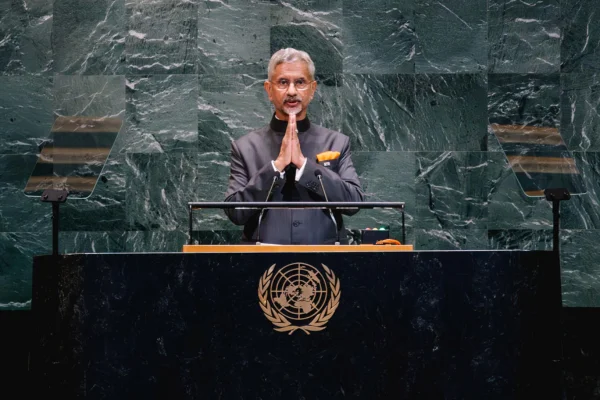
External Affairs Minister S. Jaishankar on Thursday urged the United Nations to modernize its structure to reflect the realities of 2025, warning that failure to adapt risks eroding legitimacy. Speaking at the United Nations Troop Contributing Countries Chiefs’ Conclave (UNTCC 2025) in New Delhi, he emphasized that reform has become urgent but cautioned that the process is often used to "derail the agenda," allowing historical inequities to persist.
India’s Peacekeeping Philosophy
Jaishankar framed India’s approach to UN peacekeeping within its civilizational ethos of “Vasudhaiva Kutumbakam” — the belief that “the world is one family.” He highlighted that India consistently advocates for justice, dignity, and opportunity for all, while relying on multilateralism and international partnerships.
“Peacekeeping has proven what collective action can achieve. Our brave personnel protect civilians, deliver humanitarian aid, and support fragile peace processes,” he said, honoring over 4,000 UN peacekeepers, including 182 Indians, who have lost their lives in the line of duty.
Need for UN Reform
Jaishankar stressed that the UN still reflects the world of 1945, despite a fourfold increase in membership. He called for the organization to become more inclusive, democratic, participative, and representative, particularly by amplifying the voices of developing nations and the Global South.
While acknowledging broad support for Security Council expansion, he warned, “the process of reform itself is being used to derail the agenda, and as a result, historical injustices still continue.” He reiterated India’s readiness to assume greater responsibilities within a reformed UN and multilateral order.
Enhancing Peacekeeping Effectiveness
Jaishankar highlighted several priorities for peacekeeping operations:
-
Consultation with troop-contributing countries and host states when drafting mission mandates.
-
Realistic, clear mandates aligned with available resources.
-
Host-state responsibility for civilian protection, complemented by peacekeepers.
-
Integration of technology as a force multiplier, with India offering to demonstrate innovations.
-
Countering misinformation and ensuring peacekeeper safety, with strict accountability for attacks.
Global Cooperation and Challenges
Addressing modern crises such as pandemics, terrorism, economic instability, and climate change, Jaishankar emphasized that responses must transcend competitive international politics, with the UN as the starting point for cooperative action.
“Institutions that fail to adapt risk irrelevance — not just irrelevance, but eroding legitimacy, leaving us without recourse in times of uncertainty,” he said.