
ISRO Begins Countdown for Heaviest-Ever Satellite Launch from Indian Soil
India is set for another major stride in space technology as the Indian Space Research Organisation (ISRO) began the 24-hour countdown on Saturday for the...
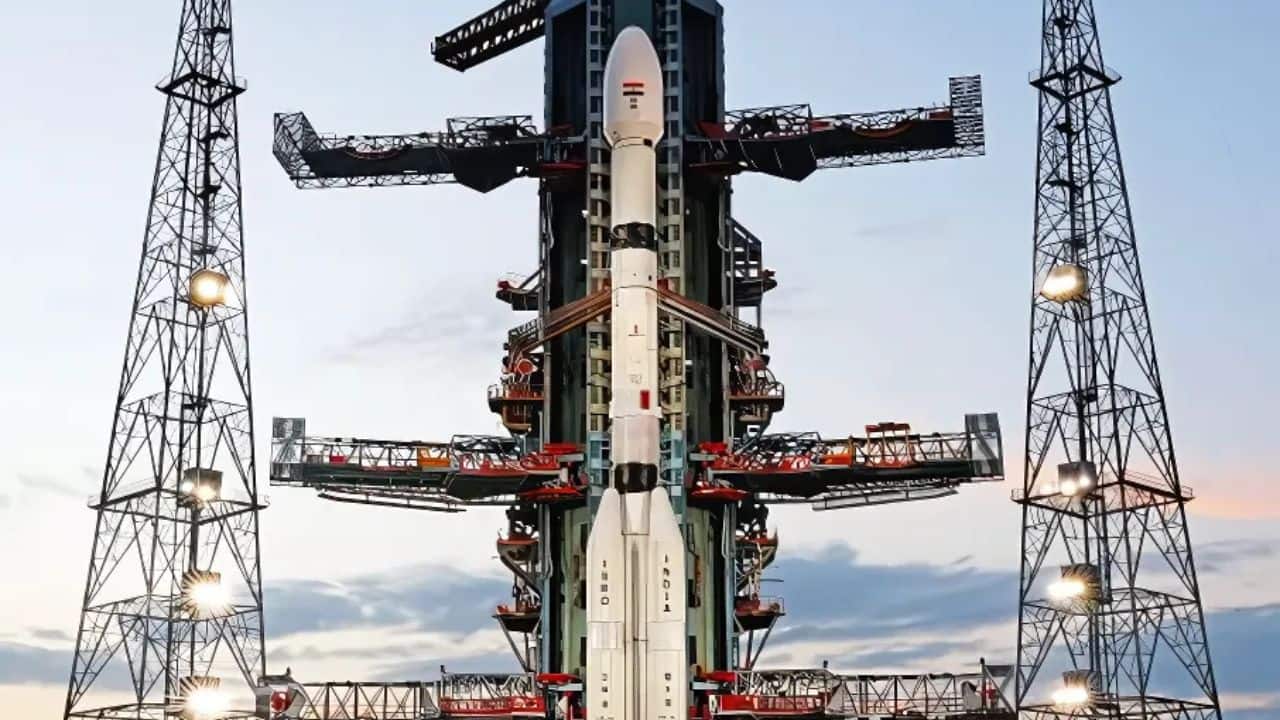
India is set for another major stride in space technology as the Indian Space Research Organisation (ISRO) began the 24-hour countdown on Saturday for the launch of CMS-03, a high-capacity communication satellite weighing over 4,400 kg. The launch marks a new record for the heaviest spacecraft to be lifted from Indian soil.
The mission, scheduled for liftoff at 5:26 p.m. on November 2 from the Satish Dhawan Space Centre in Sriharikota, will use the powerful LVM3-M5 rocket — India’s most capable launch vehicle, often nicknamed ‘Bahubali’ for its heavy-lift strength.
A New Benchmark in India’s Space Capability
In an official update, ISRO announced: “Countdown commences! All systems are GO as we move closer to liftoff.” The agency confirmed that final checks have been completed, with the 43.5-metre-tall launch vehicle fully integrated and positioned on the second launch pad.
The LVM3 (Launch Vehicle Mark-3), also known as GSLV Mk-III, is ISRO’s flagship heavy-lift rocket designed to carry 4,000 kg payloads to Geosynchronous Transfer Orbit (GTO) and up to 8,000 kg to Low Earth Orbit (LEO). Its combination of solid (S200), liquid (L110), and cryogenic (C25) propulsion stages provides India full autonomy in deploying large satellites for communication, navigation, and scientific purposes.
This will be the fifth operational flight of the LVM3, following a flawless record since its first development mission in 2014. Notably, the same rocket powered India’s historic Chandrayaan-3 mission, which made India the first nation to land successfully near the Moon’s south pole in 2023.
About CMS-03: Expanding India’s Communication Reach
According to ISRO, CMS-03 is a multi-band communication satellite designed to deliver high-quality connectivity over a broad oceanic region and the Indian subcontinent. Once operational, it will enhance broadband, television, and telecommunication services — critical for both civilian and strategic communication infrastructure.
While ISRO’s heaviest satellite to date, GSAT-11 (5,854 kg), was launched in 2018 from French Guiana aboard an Ariane-5 rocket, CMS-03 represents a milestone as the heaviest satellite launched entirely from Indian territory, showcasing the agency’s growing launch independence.
Indigenous Strength and Future Missions
Each stage of the LVM3 vehicle has been built using completely indigenised technology. The solid boosters (S200) were developed at the Vikram Sarabhai Space Centre (VSSC) in Thiruvananthapuram, while the Vikas engines powering the L110 liquid stage were designed at the Liquid Propulsion Systems Centre (LPSC). The cryogenic stage, C25, developed domestically, represents one of India’s most complex engineering achievements.
The successful deployment of CMS-03 will further validate the LVM3 platform ahead of its adaptation for Gaganyaan, India’s first human spaceflight mission. For this purpose, ISRO has developed a Human-Rated LVM3 (HRLV) — an upgraded version capable of carrying astronauts safely to space.
Broader Impact and Strategic Significance
Experts say the mission underscores India’s growing stature in global space technology. Beyond commercial satellite services, the CMS-03 will play a key role in national security, disaster management, and maritime communications — essential for India’s expanding footprint in the Indo-Pacific region.
Dr. P. Kunhikrishnan, Director of the U. R. Rao Satellite Centre (URSC), noted that indigenous launches of this scale reduce dependency on foreign launchers and position India as a reliable hub for global satellite deployment.
What’s Next
With LVM3 now operating as a proven, reusable platform for heavy payloads, ISRO is preparing for a new wave of missions — including deep-space exploration, human spaceflight, and commercial launches under its upcoming joint venture, IN-SPACe.
If all goes as planned, Sunday’s liftoff will cement India’s place among the top spacefaring nations capable of launching high-mass communication satellites independently.