
Iran Condemns Trump’s Call to Resume U.S. Nuclear Testing, Calls Move “Regressive and Irresponsible”
Tehran Denounces U.S. Nuclear Test Plans Iran’s Foreign Minister Abbas Araghchi has condemned President Donald Trump’s decision to direct the Pentagon to resume nuclear weapons...
)
Tehran Denounces U.S. Nuclear Test Plans
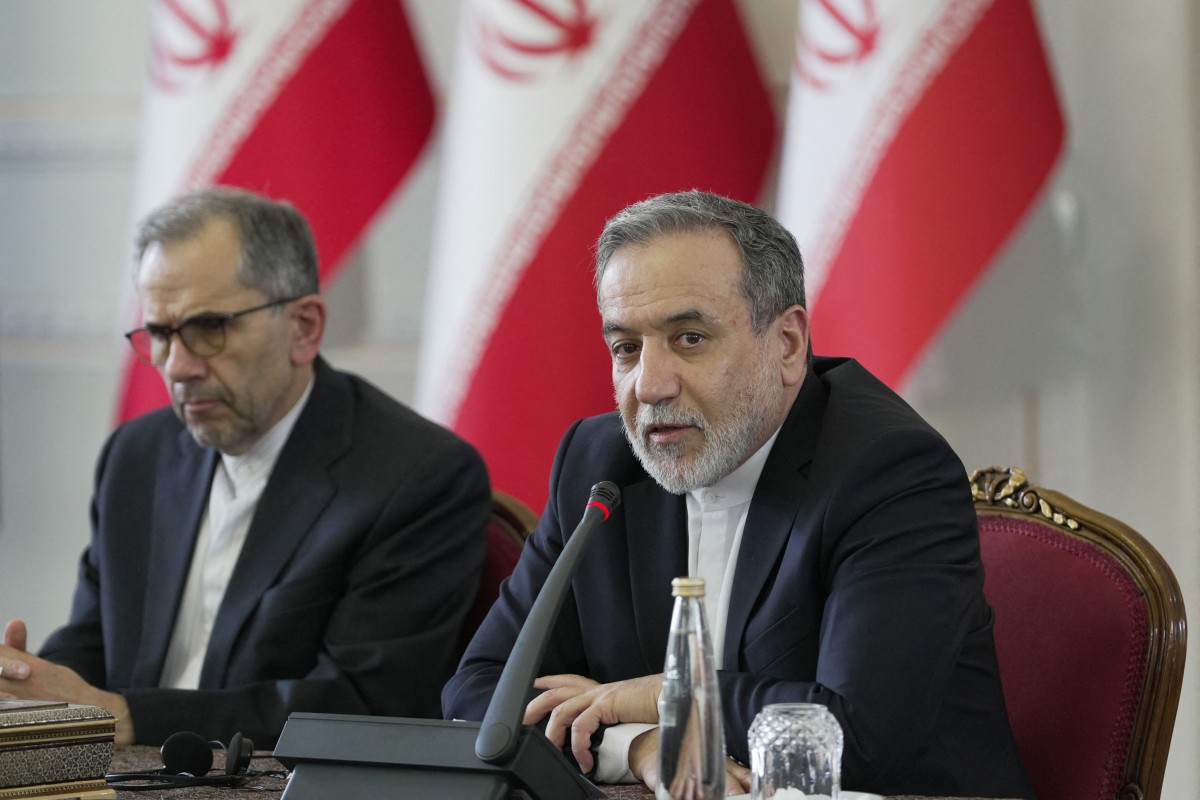
Iran’s Foreign Minister Abbas Araghchi has condemned President Donald Trump’s decision to direct the Pentagon to resume nuclear weapons testing, describing it as a “regressive and irresponsible” act that undermines global security and international law.
Posting on X (formerly Twitter) late Thursday, Araghchi accused Washington of hypocrisy, writing that the United States — “a nuclear-armed bully” — was restarting nuclear testing while “demonising Iran’s peaceful nuclear programme and threatening strikes on safeguarded facilities.”
The comments came hours after Trump announced his decision on Truth Social, stating that the Pentagon would resume nuclear testing “on an equal basis” with rivals such as Russia and China. The U.S. president made the announcement ahead of his scheduled meeting with Chinese President Xi Jinping during the Asia-Pacific Economic Cooperation (APEC) summit in South Korea.
Trump’s Move Rekindles Nuclear Tensions
Trump claimed that the U.S. was at risk of losing its “strategic edge,” asserting that Russia and China could match the American nuclear arsenal “within five years.” The order marks the first time in more than three decades that Washington has formally considered reviving nuclear tests, which were halted in 1992.
Experts say the announcement is likely a response to recent military demonstrations by Moscow and Beijing rather than part of Washington’s dispute with Tehran.
Ankit Panda, a senior fellow at the Carnegie Endowment for International Peace, told Al Jazeera that the move “reflects anxiety in Washington about Russia and China’s expanding nuclear capabilities, not Iran’s civilian programme.”
Russia and China Escalate Show of Force
The announcement followed Russia’s test of its Poseidon nuclear-powered super torpedo, confirmed earlier this week by President Vladimir Putin, and its earlier test of the Burevestnik nuclear-powered cruise missile.
Meanwhile, China showcased several advanced nuclear delivery systems during a September military parade, including upgraded variants of the Dongfeng-5 intercontinental ballistic missile.
However, according to the United Nations, neither Russia nor China has conducted an actual nuclear explosion test in decades. The last nuclear detonations by both nations occurred before the Comprehensive Nuclear Test-Ban Treaty (CTBT) was opened for signature in 1996.
Global Treaty Framework and Legal Implications
The CTBT, which bans all nuclear explosions worldwide, has been signed by the U.S., China, and Iran, though none of them has formally ratified it. Russia withdrew its ratification in 2023, citing U.S. non-compliance.
According to the UN Office for Disarmament Affairs, the U.S. last carried out a nuclear test in 1992, while China and France conducted their final tests in 1996. The United Kingdom last tested in 1991. Since then, North Korea has been the only country to conduct nuclear tests — its most recent in 2017.
Trevor Findlay, a nuclear security expert at the University of Melbourne, said it was unclear what form Trump’s directive would take. “He could mean tests involving launches of nuclear-capable missiles without live warheads — similar to what Russia and North Korea conduct for display,” Findlay told Al Jazeera.
“The U.S. already performs such missile tests periodically but doesn’t dramatize them. A full-scale nuclear explosion, however, would break decades of restraint and carry major diplomatic consequences,” he added.
Iran Reaffirms Peaceful Intentions
Tehran maintains that its nuclear programme is purely civilian, focused on energy and medical research. “Iran has never carried out a nuclear test and continues to cooperate with the International Atomic Energy Agency (IAEA),” Araghchi stated.
Ankit Panda echoed that assessment, saying, “Iran has enriched uranium but has neither tested a nuclear weapon nor developed a nuclear-capable ballistic missile. Its programme remains non-military in character.”
Nonetheless, U.S.–Iran relations have deteriorated sharply in recent months. Washington and Tel Aviv jointly struck Iranian military and nuclear sites in June, in what they called preemptive action to slow Iran’s enrichment progress — an operation Tehran denounced as an “act of aggression.”
Analysts Warn of Global Fallout
Security analysts warn that a U.S. return to nuclear testing could trigger a new arms race, embolden other nuclear powers to resume testing, and undermine decades of disarmament progress.
“The symbolism of U.S. nuclear testing cannot be overstated,” said Elena Sokova, executive director of the Vienna Center for Disarmament and Non-Proliferation. “It risks legitimizing similar actions by other states and eroding international trust in non-proliferation commitments.”
As global reactions intensify, diplomats fear the move could also complicate ongoing U.S.–China negotiations and further polarize international efforts to prevent nuclear escalation.