
India's Trans Bill 2026: Rights Rolled Back, Community Protests
The Trans Bill 2026 passed, limiting transgender identity and sparking outrage.
Top Summary
- What happened: Parliament passed the Transgender Persons (Protection of Rights) Amendment Bill on March 25, 2026, restricting the definition of transgender identity.
- Why it matters: The Bill reverses decades of progress in transgender rights, potentially invalidating dignity and erasing sections of the community.
- What changes for people: The Bill mandates a government-appointed Medical Board for legal recognition, removing the right to self-declaration.
- Who is affected: Transgender individuals, particularly those with non-traditional identities, trans men, and intersex individuals, face increased vulnerability.
Trans Bill 2026 Sparks Uproar
The Transgender Persons (Protection of Rights) Amendment Bill, passed on March 25, 2026, has ignited widespread protests.
Christy Raj, a Bengaluru-based trans rights activist, expressed dismay, highlighting the Bill's restrictive definition of "transgender person."
The legislation limits the definition to socio-cultural identities and intersex variations at birth, depriving gender minorities of the right to self-declare their identities.
Karnataka's Role in Trans Rights Movement
Karnataka, home to an estimated 20,266 transgender persons (according to the 2011 Census, a figure widely considered an undercount), has been a key battleground for trans rights.
Organizations like Sangama and individuals like Kokila have played pivotal roles in documenting violence and advocating for legal recognition.
"In 2008, we held a huge rally in Bengaluru against Section 377, in which around 2,000 people participated. Then there was no looking back," recalls Manohar Elavarthi, who founded Sangama in 1999.
State Policy and Quota
Karnataka introduced its State Policy on Transgender Persons in 2017 and a 1% reservation for transgender individuals in government jobs in 2021.
These efforts contrast sharply with the national trend of the new Bill.
The NALSA Vs. Union of India judgment in 2014 recognized the right to self-identify, a principle now challenged by the 2026 Bill.
Concerns Over Nuances and Exclusion
Activists are concerned about the Bill overlooking regional nuances and excluding trans men.
Karnataka is home to regional identities such as jogamma, jogappa, mangalamukhi, marladi, kothi, and shivshakti.
"I identify as a woman. I don’t want to be recognised as a Hijra, Jogta, Kinner or Eunuch. I decide my identity and not the State," reiterates Akkai Padmashali.
Impact on Individuals
Nathaan, a trans right activist, reports receiving numerous calls from people worried about their existing transgender cards and pending applications.
The requirement for a medical board recommendation is seen as a violation of personal liberty.
The Bill's rationale is ostensibly to prevent misuse of schemes and protect genuine transgender persons, but activists argue it achieves the opposite.
Protests and Opposition
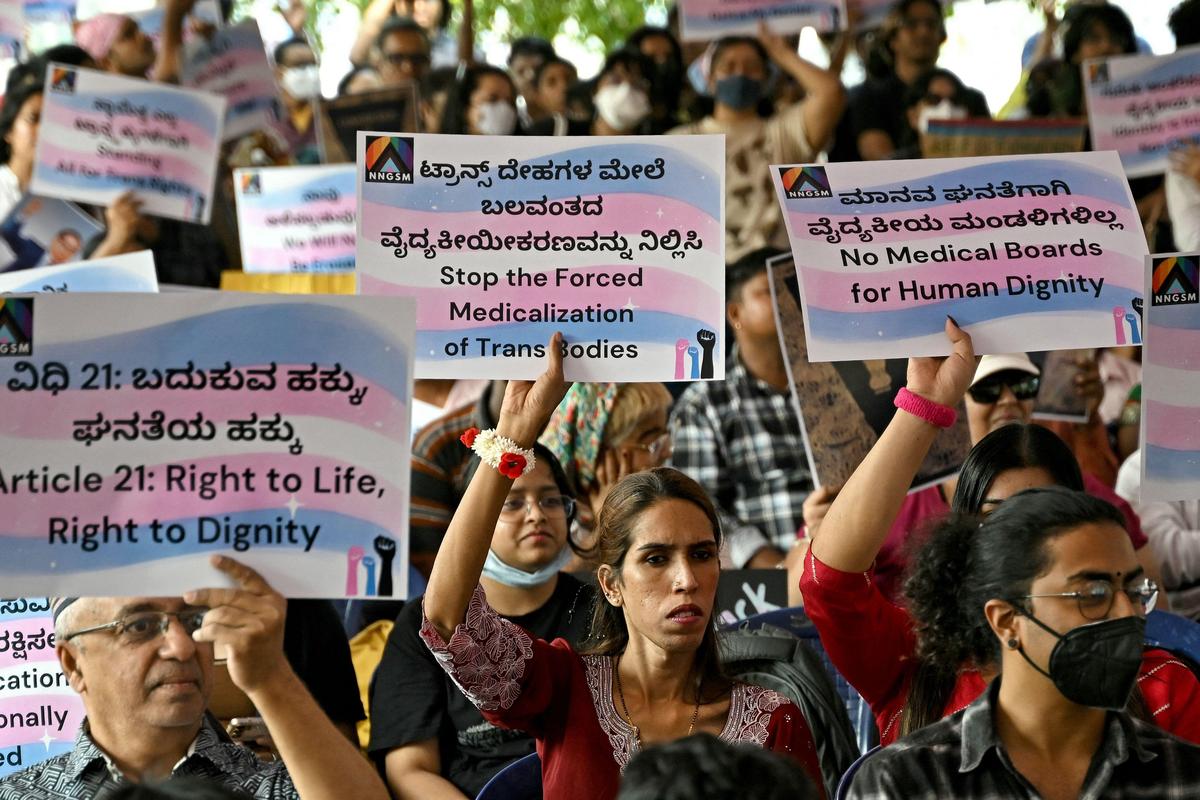
The Bill triggered protests across India, including Karnataka.
Transgender rights organizations and civil rights organizations wrote an open letter to the Prime Minister to withdraw the Bill.
Despite the opposition, the Bill passed Parliament.
What to Watch Next
The focus will likely shift to legal challenges to the Bill and continued advocacy efforts by transgender rights organizations.
Monitoring the implementation of the Bill and its impact on transgender individuals' access to rights and services will be crucial.