
Indian Dads Tying Ponytails? A Modern Parenting Shift Emerges
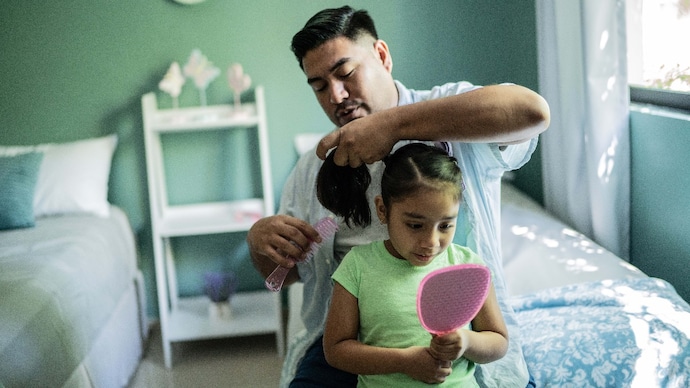
Indian fathers are embracing caregiving roles, challenging traditional norms.
Top Summary
- What happened: Western fathers are attending hair-braiding lessons, sparking reflection on Indian parenting norms.
- Why it matters: Challenges traditional gender roles and promotes emotional development in children.
- What changes: Fathers become more involved in daily caregiving, fostering stronger emotional bonds.
- Who is affected: Children, fathers, and mothers, reshaping family dynamics and societal expectations.
The Western Trend: Dads and Braids
In the West, fathers are learning to style their daughters' hair. This includes attending hair-braiding lessons. These sessions are seen as more than just styling; they are a shift in parenting.
Imagine men gathering for beer and hair-braiding lessons. It signals millennial dads are stepping up. The beverage is for fun, while the hairstyle session is a parenting class.
Indian Parenting: Unsaid Norms
Traditionally, Indian fatherhood focused on provision and authority. Grooming and emotional care were often left to mothers or grandmothers. These are unsaid norms in many Indian families.
Many parenting classes focus on diet, habits, and screen-time battles. However, smaller moments like braiding are often overlooked. These small acts hold immense significance.
The Power of Micromoments
Ketika Kapoor, co-founder of ProEves, emphasizes that grooming is intimate and repetitive.
"It’s not a ‘once-in-a-while’ heroic act, it’s everyday care—and that is gender-neutral."
Children observe and mimic what they see. When fathers participate, children see these as life skills. This challenges traditional gender roles. As Dr Pallavi Chaturvedi notes, boys learn that empathy and emotional expression are strengths.
Emotional Access and the Modern Dad
The "mard ko dard nahi hota" mentality has impacted generations. It makes it difficult for men to express emotions. Father's participating in caregiving makes them emotionally available to children.
These tiny moments build trust for tough conversations in the future. This includes topics like menstruation and puberty. Millennial dads are ditching rigid masculinity ideas.
The Indian Parenting Scene Today
Harpreet Singh Grover, a parenting researcher, believes parenting is becoming harder for both parents. He also observes both parents questioning old parenting methods.
He also highlights the importance of everyday routines. For example, he drops his daughter to school daily.
"Being tough is not about not showing emotions... the more involved the father is, the better."
Social Media and Dual-Income Households
Kapoor identifies two catalysts: social media and dual-income households. Social media makes engaged fatherhood more visible. With dual-income households becoming the norm, shared caregiving is practical.
Indian fatherhood is evolving. It is slow but definite. Millennial and Gen Z dads are embracing new roles.
Workshops and the Future of Fatherhood
Dr Himani Narula Khanna suggests emotional communication workshops for fathers. These workshops can discuss understanding a child's behavior. They can also discuss gender-sensitive parenting and navigating adolescence.
Kapoor suggests workshops are community-led. They should focus on becoming a more involved dad. Interactive sessions can include cooking and storytelling. Social media coaching can address body image issues and peer pressure.
Showing up emotionally is just as important as providing financially. The goal is to make involvement normal and consistent.
What to Watch Next
Keep an eye on evolving family dynamics as fathers embrace more caregiving roles. The future may include more workshops and resources designed to support fathers in developing emotional intelligence and practical parenting skills.