
India Condemns Demolition of Hindu Deity Amid Thailand–Cambodia Border Tensions
New Delhi calls the act deeply offensive, urges restraint and dialogue as regional conflict flares again India has strongly criticised the reported destruction of a...
New Delhi calls the act deeply offensive, urges restraint and dialogue as regional conflict flares again
India has strongly criticised the reported destruction of a Hindu deity statue in Cambodia’s border region, calling the incident disrespectful and harmful to religious sentiments worldwide. The development comes against the backdrop of renewed military tensions between Thailand and Cambodia, raising concerns about the protection of cultural and religious sites during armed conflicts.
India’s Official Response
In a statement issued on Wednesday, the Ministry of External Affairs (MEA) said it had taken note of reports showing the demolition of a Hindu deity statue in an area affected by the ongoing Thailand–Cambodia border dispute. MEA spokesperson Randhir Jaiswal emphasised that Hindu and Buddhist deities are held in profound reverence across South and Southeast Asia and form part of a shared civilisational heritage.
New Delhi underlined that actions perceived as disrespectful to religious symbols risk hurting the sentiments of millions of followers across the world and should be avoided, particularly in conflict zones. India also urged both Thailand and Cambodia to prioritise dialogue and diplomacy to restore calm and prevent further loss of life or damage to property.
What Happened on the Ground
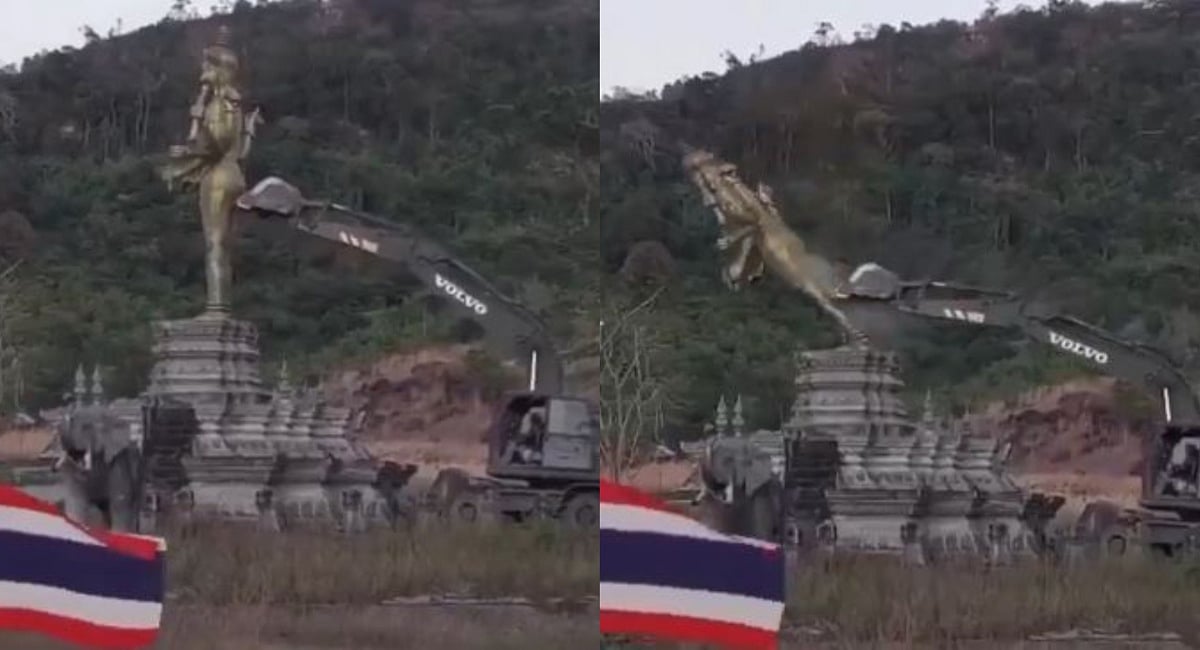
Videos circulating on social media platforms show a statue of Lord Vishnu being brought down with heavy machinery, reportedly a backhoe loader. The footage has sparked outrage among religious communities and drawn international attention.
According to a report by the AFP news agency, Cambodian officials said the statue was located within Cambodian territory, in the An Ses area near the border. Preah Vihear province spokesperson Lim Chanpanha stated that the statue, constructed in 2014, stood roughly 100 metres from the Thailand–Cambodia boundary and was demolished earlier this week.
Chanpanha condemned the act, stressing that temples and statues revered by Buddhist and Hindu devotees must be protected, regardless of ongoing political or military disputes.
A Sensitive Border With a Fraught History
The Thailand–Cambodia border has long been a source of friction, particularly around areas near historic temples such as Preah Vihear, a UNESCO World Heritage site. Disagreements over territorial claims in this region have periodically escalated into military stand-offs, affecting local communities and cultural landmarks.
Clashes reportedly began earlier this year and, despite attempts at de-escalation through international mediation, tensions have flared up again. Analysts note that cultural and religious symbols often become unintended casualties in such disputes, amplifying public anger and complicating diplomatic efforts.
Broader Implications
Experts in international relations warn that damage to religious sites can have repercussions beyond the immediate conflict. Such incidents may inflame public opinion, strain bilateral ties, and invite diplomatic pressure from countries with cultural or religious links to the affected heritage.
For travellers and local residents, renewed instability in border regions also raises security concerns. Governments typically advise caution in areas close to active disputes, and prolonged tensions can disrupt tourism and cross-border trade.
Call for De-escalation
India’s intervention reflects its broader position on safeguarding cultural heritage and promoting peaceful resolution of disputes in the region. By urging restraint and dialogue, New Delhi signalled that respect for shared history and religious traditions should remain paramount, even amid geopolitical rivalries.
As Thailand and Cambodia navigate the latest phase of their border dispute, the international community will be watching closely to see whether diplomatic channels can prevent further escalation—and ensure that cultural and religious heritage is not caught in the crossfire.