
India, Bangladesh Trade Sharp Words After Protest Outside Dhaka’s Mission in New Delhi
Diplomatic friction between India and Bangladesh intensified on Sunday after New Delhi rejected Bangladeshi media reports of an alleged “breach” at Bangladesh’s diplomatic mission in...
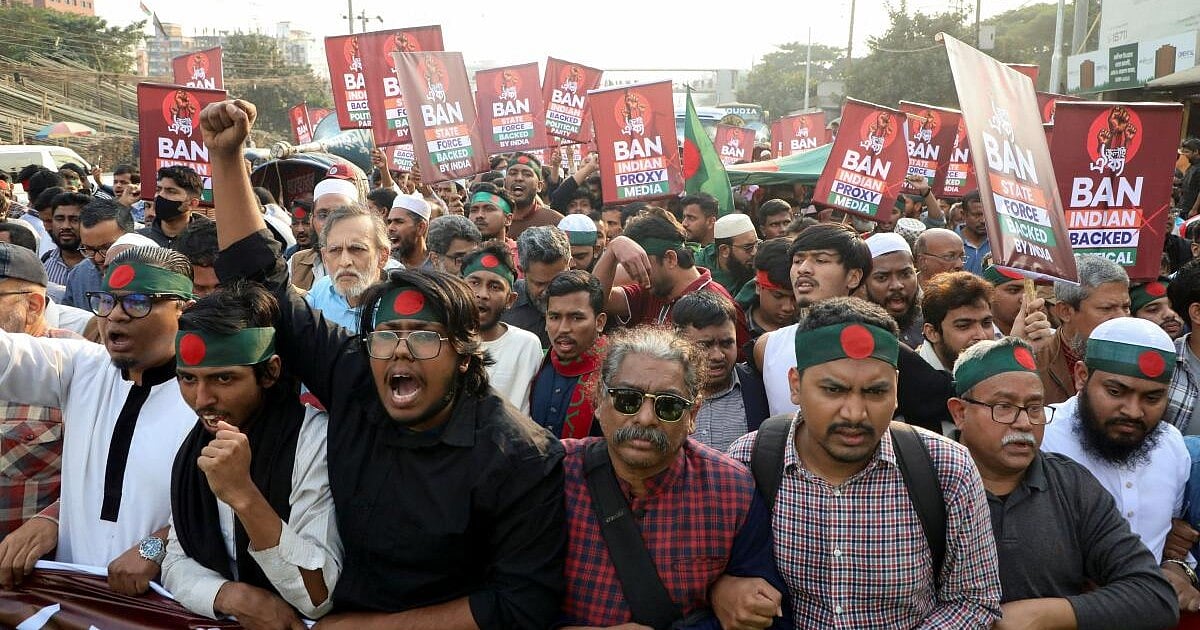
Diplomatic friction between India and Bangladesh intensified on Sunday after New Delhi rejected Bangladeshi media reports of an alleged “breach” at Bangladesh’s diplomatic mission in the Indian capital, calling them “misleading propaganda,” while Dhaka issued a formal rebuttal.
The exchange came amid India’s strong expression of concern over the lynching of a Hindu man in Bangladesh and what it described as continued attacks on religious minorities, remarks that drew a sharp response from Bangladeshi authorities.
India Rejects ‘Breach’ Claims
Responding to media questions, External Affairs Ministry (EAM) spokesperson Randhir Jaiswal said reports in sections of the Bangladeshi press had distorted the events surrounding a small protest outside the Bangladesh High Commission in New Delhi on Saturday.
“There was no breach of the mission,” Jaiswal said, according to the official briefing. He clarified that around 20 to 25 young demonstrators had gathered outside the High Commission to raise slogans condemning the killing of Dipu Chandra Das in Bangladesh’s Mymensingh district and to demand better protection for minorities.
Indian officials maintained that the protest remained peaceful and that security arrangements ensured the safety and dignity of the diplomatic premises, in line with India’s obligations under the Vienna Convention on Diplomatic Relations.
Lynching Case Triggers Diplomatic Sensitivity
India’s response was also shaped by the killing of Dipu Chandra Das, which the EAM described as “barbaric.” New Delhi said it was deeply concerned by reports of violence targeting minority communities in Bangladesh, an issue that has periodically surfaced in bilateral exchanges.
Indian officials stressed that raising concerns over human rights and minority safety should not be construed as interference, but rather as an expression of concern between close neighbours with deep people-to-people ties.
Dhaka Pushes Back
Bangladesh, however, reacted strongly to India’s remarks. Dhaka has maintained that its law enforcement agencies are taking appropriate action in the lynching case and has objected to what it sees as India amplifying isolated incidents in a manner that could harm Bangladesh’s international image.
Bangladeshi authorities also defended their media coverage of the New Delhi protest, asserting that any demonstration near a foreign mission is a sensitive matter and warrants scrutiny.
Broader Context in Bilateral Relations
India and Bangladesh share one of South Asia’s most extensive bilateral relationships, spanning trade, connectivity, water-sharing, border management and security cooperation. While ties have generally remained stable and cooperative in recent years, episodes involving domestic political sensitivities and minority rights have occasionally strained diplomatic exchanges.
Foreign policy analysts note that public statements and media narratives on such issues can quickly escalate tensions, particularly when they intersect with domestic opinion in both countries.
The Way Forward
Despite the sharp exchange, officials on both sides signalled that diplomatic channels remain open. Observers say the episode underscores the need for careful communication and restraint, especially given the strategic importance of India-Bangladesh relations in the region.
For now, the incident serves as a reminder that even long-standing partnerships can be tested by sensitive domestic developments—and how they are portrayed across borders.