
Hamas Agrees to Release All Hostages, Signals Willingness to Negotiate Trump’s Gaza Plan
In a dramatic turn in the Gaza crisis, Hamas on Friday announced it would release all Israeli hostages—alive or dead—and expressed readiness to negotiate the...
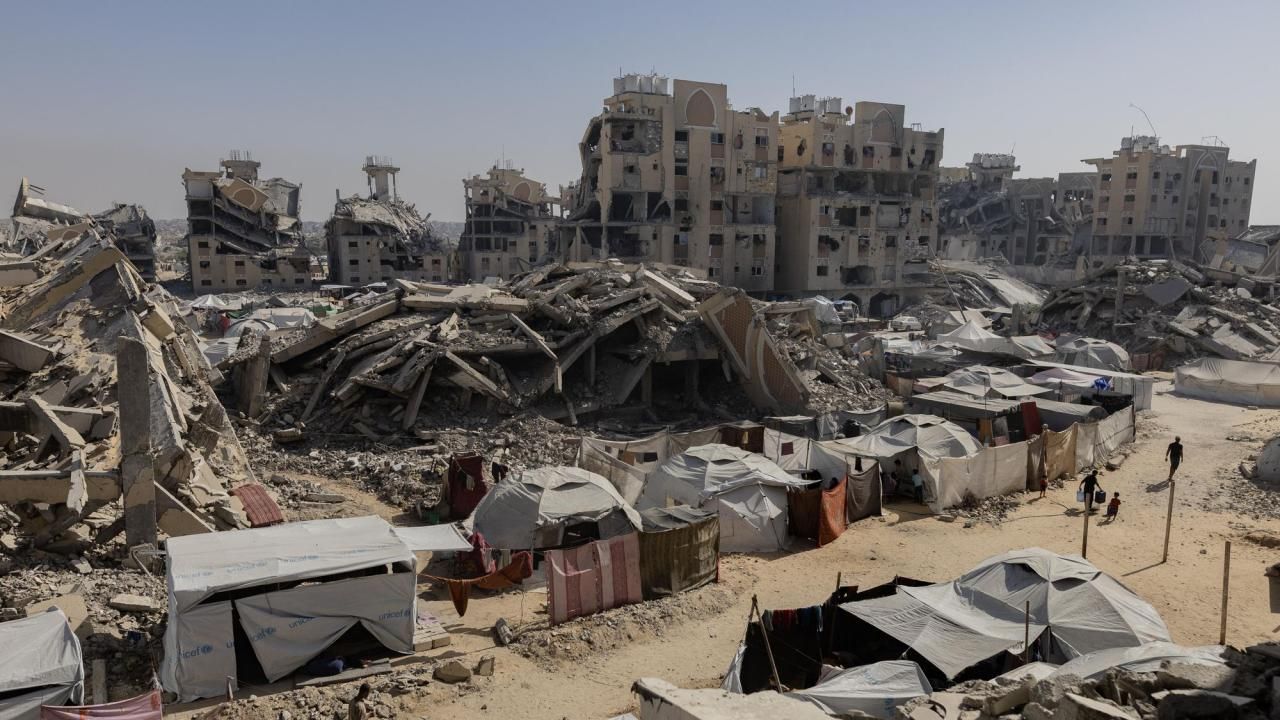
In a dramatic turn in the Gaza crisis, Hamas on Friday announced it would release all Israeli hostages—alive or dead—and expressed readiness to negotiate the details of U.S. President Donald Trump’s Gaza Plan, marking a potential breakthrough after months of conflict.
The announcement came hours after President Trump issued a stern ultimatum, warning Hamas to accept his plan by Sunday, 6 p.m. Washington time, or face consequences “like no one has ever seen before.” Trump asserted that “every country has signed on,” describing this as the “last chance” for peace in the Middle East.
The Gaza Plan, developed through U.S.-Israel-Qatar negotiations, includes 20 key points, among them an Israeli commitment not to strike Qatar. It builds upon the July New York Declaration, co-sponsored by France and Saudi Arabia, but introduces stricter conditions—chief among them the disarming and political dismantling of Hamas, a long-standing Israeli demand now supported by several Arab and Islamic nations, including Saudi Arabia.
For the Palestinian National Authority (PNA), led by Mahmoud Abbas, the plan offers an opportunity to regain control of Gaza, which Hamas seized in 2007. Abbas has not visited the Strip since then. Ironically, the U.S. plan could help the PNA restore its authority over Gaza through international consensus.
President Trump has reportedly secured backing from eight Muslim-majority nations—Egypt, Indonesia, Jordan, Pakistan, Qatar, Saudi Arabia, Türkiye, and the UAE—for his proposal. Notably, Pakistan’s inclusion is drawing attention, given its historic opposition to Israel and vocal support for Hamas. Analysts say Islamabad’s support for the Trump Plan could be a strategic move to align more closely with Washington amid regional rivalries.
India, though not a signatory to the New York Declaration, maintains positions closely aligned with it: condemning the October 7 Hamas attacks as terrorism, supporting the PNA’s legitimacy, and backing a two-state solution. However, New Delhi remains cautious, balancing relations with Israel and Arab partners while avoiding direct confrontation over multilateral resolutions such as those naming East Jerusalem as a future Palestinian capital.
While the New York Declaration emphasises the two-state solution as a political goal, Trump’s Gaza Plan prioritises economic reconstruction, stating that Palestinian statehood would remain an “aspiration” rather than an immediate “right.” The plan envisions rebuilding Gaza and reforming the PNA before discussions of sovereignty resume.
For India, this evolving framework presents strategic clarity: continued support for peace, humanitarian aid, and reconstruction in Gaza, while firmly opposing terrorism and maintaining neutrality on territorial issues pending bilateral talks.
As Hamas signals potential engagement under immense military and diplomatic pressure, questions remain whether this moment marks a genuine turning point or another false dawn in the long quest for Middle East peace.