
Gukesh’s Testing Year: How the Chess World Champion’s Longest Journey Became His Hardest Battle
A Marathon Journey to Goa When D. Gukesh arrived in Goa for the 2025 Chess World Cup, he had already logged an astonishing 22,000 kilometres...
A Marathon Journey to Goa
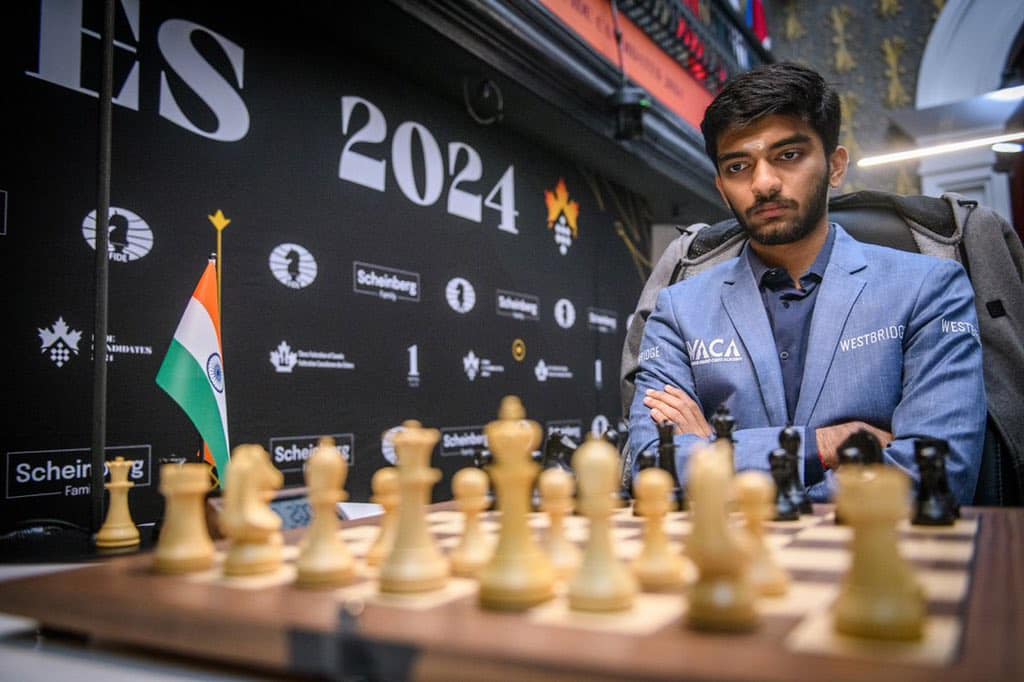
When D. Gukesh arrived in Goa for the 2025 Chess World Cup, he had already logged an astonishing 22,000 kilometres in air travel. From clinching double gold at the European Club Championships in Greece, he flew straight to St. Louis for the Clutch Championships, where he faced Magnus Carlsen, Hikaru Nakamura, and Fabiano Caruana — the modern chess elite. Despite flashes of brilliance, Gukesh couldn’t register a win against Carlsen and ended last. His journey from New York to Goa — via several time zones and tournaments — reflected not only physical exhaustion but also the burden of expectations that accompany a reigning world champion.
Curiously, Gukesh didn’t even need to play the World Cup. As World Champion, he is already exempt from the Candidates Tournament, whose winner will challenge him for the crown in 2026. His participation, however, underlines his commitment to constant improvement and competitive sharpness. “He wants to test himself under all conditions,” said a senior official from the All India Chess Federation (AICF).
In contrast to his predecessor Ding Liren — whose form plummeted after his 2023 world title — Gukesh has chosen to stay active, sometimes to his detriment.
From Triumph to Turbulence
In 2024, Gukesh’s meteoric rise symbolised a new era for Indian chess. He became the youngest world champion in history and led India to double gold at the Chess Olympiad in Budapest, ending an eleven-year wait since Viswanathan Anand’s dominance.
But success, as it often does, brought scrutiny. The 2025 season began promisingly at the Tata Steel Chess Tournament in the Netherlands — often dubbed the “Wimbledon of chess.” For most of the event, Gukesh seemed poised to win, but a final-round defeat to Arjun Erigaisi pushed him into tiebreaks. His discomfort with faster time controls proved costly; compatriot Praggnanandhaa seized the title.
The result rattled him. “He’s still adapting to the psychological demands of being champion,” noted Grandmaster Nihal Sarin in a commentary for ChessBase India. “Gukesh’s style is built on calculation and precision — not the kind of aggression tiebreaks reward.”
Pressure, Perception, and Public Judgment
What followed was a series of underwhelming performances in freestyle and rapid formats across Europe. Online critics began to question whether Gukesh’s world title — won during Magnus Carlsen’s absence from the cycle — truly reflected supremacy.
Carlsen’s own remarks added fuel to the fire. Without naming names, he said that “titles don’t always tell the full story,” a statement widely interpreted as a dig at both Ding Liren and Gukesh. The comments reignited debate over whether modern world champions can command the same aura as their predecessors in the pre-digital era.
A Glimmer in Norway
One tournament, however, restored a measure of Gukesh’s pride — Norway Chess 2025. Competing on Carlsen’s home turf in Stavanger, Gukesh produced a brilliant win over the five-time world champion. Carlsen’s visible frustration — slamming the table after his defeat — evoked memories of Anand’s loss in Chennai in 2013.
It was poetic symmetry: the Indian beating the Norwegian in Norway, twelve years after the reverse. Though Gukesh finished third overall, his wins against Carlsen and Nakamura reminded the chess world why he had become champion.
Learning from the Lows
The months that followed undid much of that momentum. A disappointing 41st-place finish at the Grand Swiss and a third-round exit from the World Cup in Goa exposed cracks in form and focus. His defeat to Germany’s Frederik Svane — caused by declining a threefold repetition that would have drawn the game — highlighted an all-too-human flaw: the urge to win when patience is needed.
Chess commentator Sagar Shah observed, “The thin line between confidence and overreach defines champions. Gukesh’s aggression is his strength, but it can also turn into self-destruction when he’s under pressure.”
The Challenge of 2026
History is not kind to defending champions. Of the eighteen world champions in history, fewer than a dozen have managed to retain their title. In the modern era, only Anand and Carlsen have done so. The challenge, experts say, is not just technical — it’s psychological.
“Defending a world title requires emotional endurance,” said sports psychologist Dr. Shyamala Ramesh, who has worked with elite athletes. “Every move is analysed, every slip magnified. The fatigue is as mental as it is physical.”
For Gukesh, who turned 19 this year, the road to 2026 is as uncertain as it is fascinating. If he can overcome this slump and defend his crown, it would rank among the greatest achievements in Indian sporting history — not just for chess, but for a nation that has long revered quiet excellence over flash.