
Ex-Pak Envoy Threatens India Amid US-Iran Tension: Mumbai & Delhi at Risk?
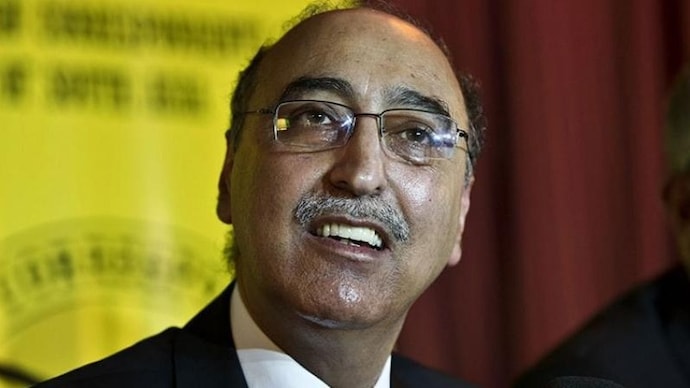
Abdul Basit warns of targeting India if US attacks Pakistan's nuclear program.
Top Summary
- What happened: Former Pakistani envoy Abdul Basit stated Pakistan might target Mumbai and Delhi if the US attacks its nuclear program.
- Why it matters: This escalates regional tensions amid the ongoing US-Iran conflict and raises serious security concerns for India.
- What changes for people: Heightened security alerts in major Indian cities are possible. The threat adds uncertainty to the already volatile geopolitical landscape.
- Who is affected: Indian citizens, especially those in Mumbai and Delhi, and the broader South Asian region facing increased instability.
Basit's Hypothetical Threat
Former Pakistani High Commissioner to India, Abdul Basit, made a controversial statement regarding a hypothetical conflict involving the United States.
He outlined a worst-case scenario where the US targets Pakistan's nuclear program. He suggested Pakistan would retaliate against India.
“Suppose there is a scenario where the US views our nuclear programme in a negative light or tries to destroy our nuclear capability. It is unlikely, but I am talking about a worst-case scenario. Let’s imagine that the US tries to attack us. Even if the US is not within our nuclear range, what options do we have?” he said.
India as a Target?
When asked if India would be involved in such a scenario, Basit explicitly stated that Pakistan would target Indian cities.
“India. We would not have to do anything else. Even if we do not have the range to target the US, we would have to strike India’s Mumbai and New Delhi without thinking. We have no other option, since the US is not within our range, then we would have no choice but to attack India. Then let’s see what happens. We do not want that to happen.”
Escalating Middle East Tensions
Basit's comments come amidst escalating tensions in the Middle East, primarily involving the US and Iran.
Joint US-Israeli strikes on Tehran on February 28th triggered a wider conflict. It has now entered its fourth week.
Donald Trump issued a stark warning to Iran regarding the Strait of Hormuz:
“If Iran doesn't FULLY OPEN, WITHOUT THREAT, the Strait of Hormuz, within 48 HOURS from this exact point in time, the United States of America will hit and obliterate their various POWER PLANTS, STARTING WITH THE BIGGEST ONE FIRST!”
Iran's Response and Regional Impact
Iran responded by threatening to target US infrastructure in the region if its facilities are attacked.
Iranian missile strikes on Israeli towns, including Dimona and Arad, caused injuries and damage. Over 100 were reportedly injured in Israel amid Iran's missile attack.
In Arad, a teenager recounted, "There was a 'boom, boom!', my mother was screaming. This was terrifying... this town had never seen anything like this."
The Strait of Hormuz, a crucial global oil route, remains disrupted, pushing oil prices higher and raising concerns about broader economic impact.
What to Watch Next
The international community will be closely monitoring the US response to Iran's actions and any further escalation in the Middle East. India will likely reassess its security posture in light of Basit's comments and the evolving regional situation.