
Delhi’s Air Quality Improves Slightly, But Toxic Haze Continues to Choke the Capital
Delhi woke up to marginally better air on Sunday, but the capital remains trapped under a blanket of hazardous smog as pollution levels stay well...
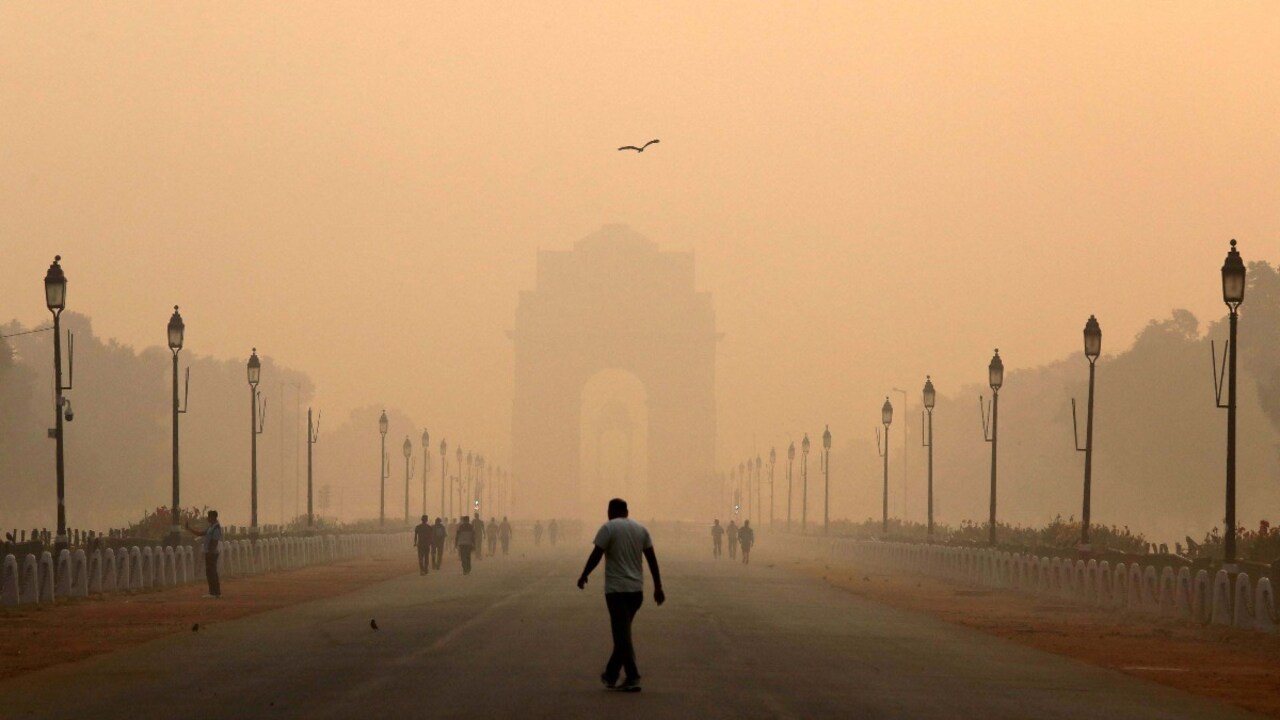
Delhi woke up to marginally better air on Sunday, but the capital remains trapped under a blanket of hazardous smog as pollution levels stay well above safe limits. Data from the Central Pollution Control Board (CPCB) showed the Air Quality Index (AQI) at 269 at 7 am, shifting the city from the “very poor” to “poor” category. The improvement, however, has brought little relief on the ground, where visibility remained low and the air continued to carry a sharp toxic bite.
City Still Engulfed in Smog
Even with the numerical improvement, several neighbourhoods continued to experience “very poor” air.
-
Shadipur recorded one of the worst readings at 335.
-
Jahangirpuri (324), Nehru Nagar (319), RK Puram (307) and Dilshad Garden’s IHBAS (303) also remained deep in the danger zone.
A few stations fared better—Mandir Marg logged an AQI of 158, the only major site to fall in the “moderate” band.
Most of the city continued to fall under the “poor” category, including Bawana, Sirifort, Rohini, Vivek Vihar, DTU, Burari Crossing, Mundka, Dwarka Sector 8, Chandni Chowk, Patparganj, Wazirpur, Anand Vihar, Sonia Vihar, Narela, Ashok Vihar, ITO, JLN Stadium, Punjabi Bagh, Pusa, and Mathura Road, with AQI values ranging between 262 and 295.
Why Delhi’s Air Crisis Persists
Despite periodic improvements driven by shifting wind patterns, Delhi’s winter air remains a dangerous mix of vehicle emissions, industrial pollution, construction dust, and seasonal biomass burning in neighbouring states. Low temperatures and stagnant air trap pollutants close to the ground, creating the city’s familiar and persistent winter smog.
Environmental experts say that while weather-driven improvements are temporary, structural emissions control remains the real challenge.
Government Response and Political Reactions
The Delhi government said it is monitoring AQI levels daily and adjusting its emergency response measures as needed. Officials reiterated that steps such as restricting construction activity, controlling road dust, and deploying anti-smog guns remain in force.
But the worsening air has triggered intense political criticism.
Congress leader Sandeep Dikshit accused the government of mishandling the crisis, comparing long-term exposure to toxic air to “slow poisoning” and arguing that the impact on health is severe enough to be considered a form of “murder.” He referenced warnings from health specialists who say that continuous exposure to high pollution levels is linked to reduced life expectancy.
Leader of the Opposition Rahul Gandhi echoed the alarm, urging Parliament to hold a debate on the national capital’s deteriorating air and the urgent need for coordinated action across states.
Health Concerns Intensify
Doctors warn that even short-term exposure to air in the “poor” or “very poor” categories can trigger respiratory distress, aggravate asthma, and raise risks for heart patients. Children, the elderly, and outdoor workers remain the most vulnerable.
Hospitals have reported an uptick in cases of chronic cough, breathlessness, and eye irritation, a trend that typically intensifies between November and January.
Looking Ahead
Meteorologists expect only gradual improvement unless wind speeds increase significantly. Pollution control agencies are urging residents to limit outdoor activity, use N95 masks, and keep air purifiers running indoors.
Environmental policy experts say Delhi’s pollution problem requires long-term, interstate coordination, including reforms in transport, cleaner industrial practices, stricter enforcement, and large-scale urban greening.