
Convenience Clash: India's On-Demand Culture vs. the World
India's culture of instant services faces reality checks abroad.
Top Summary
- What happened: An article compares India's readily available, affordable convenience services (delivery apps, house help) with the higher costs and effort required for similar services abroad.
- Why it matters: Challenges the assumption that life abroad is automatically easier, highlighting the value of India's unique service ecosystem.
- What changes for people: Indians moving abroad may face logistical adjustments and increased personal responsibility for everyday tasks.
- Who is affected: Primarily urban Indians accustomed to on-demand services, as well as those considering or currently living abroad.
The Indian Convenience Bubble
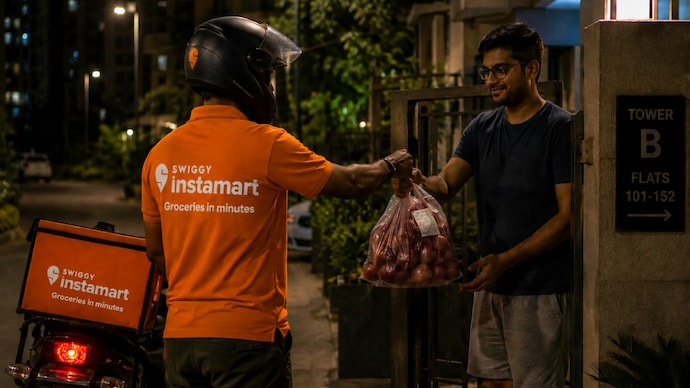
An X post sparked a reflection on the ease of life in India, challenging the notion that moving abroad automatically equates to an easier life. The post showcased the affordability and accessibility of home delivery in India.
India's culture of instant convenience, fueled by apps like Blinkit and Swiggy, provides unparalleled ease, especially in Tier 1 and 2 cities. This level of service is often unmatched or significantly more expensive abroad.
The Cost of Convenience Abroad
In Halifax, Canada, Gavin Sharma notes that while delivery services like Uber Eats and Instacart exist, tipping is essential. A minimum wage of CAD $16.75 (Rs 1,115 approx) per hour and a living wage near $29 (Rs 2,021 approx) make convenience a considered expense.
Hiring house help is even pricier.
"A friend paid around CAD $100 to $150 (Rs 6,972-Rs 10,458) just to get one room cleaned while moving out,"
Sharma explained.
In Johannesburg, Tamogni Das reports that grocery delivery via Checkers Sixty60 incurs costs, with delivery charges around R35–R36 (Rs 210 approx) per order plus tips.
Minimum Orders and Labor Costs
Harshita Mathur in Hong Kong points out minimum delivery orders can range from $500–$600 (Rs 6,125–Rs 7,350). A Rs 100-Rs 200 minimum order in India appears remarkably affordable in comparison.
In the US, labor costs significantly impact convenience. Michigan-based Rima Moitra states that hiring a cleaner can cost $15–$20 (Rs 1,439-Rs 1919) per hour, often with a minimum of several hours.
"It’s almost like paying someone your own salary,"
she says.
The 10-Minute Mindset vs. Reality
What Indians might perceive as inconvenience abroad is often standard practice. Weekly supermarket runs are typical in London, not last-minute orders. Consultants Shreyashi Sarkar and Rana Saha note that shops also close earlier than in India.
While Hong Kong offers high accessibility with grocery stores within a 2–5 minute walk, doorstep delivery isn't as common as in India, according to Mathur.
The Return Process
Returning items is another contrast. While India often provides doorstep returns, abroad, one typically goes to drop-off points like UPS stores or post offices for Amazon returns.
In Hong Kong, doorstep returns are not typical. Mathur says,
"You have to go yourself to the nearest post office or pickup point."
Independence and Responsibility
Life abroad fosters independence but offers less convenience.
"You structure your life your way,"
says Sharma,
"But everything becomes your responsibility."
This includes waste segregation, assembling furniture, and extensive travel for groceries. Social dynamics also shift, with guests pitching in more due to the increased individual workload.
The Indian Advantage
While acknowledging differences in wage rates and work-life balance, the article highlights India's unique position in everyday convenience.
Cheap data, dense cities, a vast service economy, and competitive apps have created an environment where time and effort can be outsourced affordably.
The Culture Shock is Logistical
For many Indians, adjusting abroad involves realizing the necessity of planning for groceries, expensive help, and the overall cost of convenience. Missing the option to order a samosa at 3 am can be a stark realization.
What to Watch Next
Future articles may delve into the potential exploitation of gig workers within India's convenience economy. Further discussions could explore the trade-offs between convenience and other factors, such as work-life balance and labor standards.