
CM Mohan Yadav Raises Solar Pump Subsidy to 90%, Calls Farmers “Energy Providers” of Madhya Pradesh
Farmers to Get 90% Subsidy on Solar Pumps Madhya Pradesh Chief Minister Mohan Yadav on Saturday unveiled a major step toward agricultural energy reform, announcing...
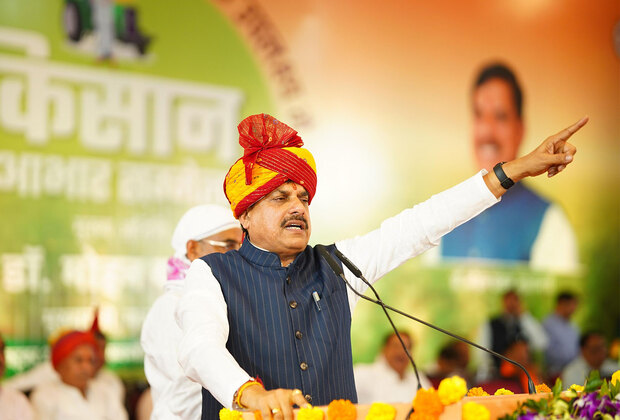
Farmers to Get 90% Subsidy on Solar Pumps
Madhya Pradesh Chief Minister Mohan Yadav on Saturday unveiled a major step toward agricultural energy reform, announcing a substantial increase in the state subsidy for solar-powered irrigation pumps—from 40% to 90%. The announcement came during the Kisan Aabhar Sammelan held to mark payments under the Bhavantar Scheme for soybean farmers.
Yadav described the initiative as a transformative measure to make farmers “energy self-reliant,” reducing their dependence on temporary electricity connections and cutting recurring power costs. “When a dry field gets water, the crop turns to gold,” Yadav said, emphasizing that his government’s foremost goal is to ensure water reaches every farm in the state.
Boost for Energy-Independent Agriculture
Under the expanded solar scheme, farmers using conventional electric pumps will receive higher-capacity solar pumps — for instance, those using 3 HP electric pumps will be upgraded to 5 HP solar models, and 5 HP users will receive 7.5 HP systems.
According to officials from the state energy department, nearly 32 lakh solar pumps will be distributed under the 90% subsidy plan. Farmers will also have the option to sell surplus solar power to the state grid, offering them an additional income stream.
“The vision is to transform our farmers into both food and energy providers,” a senior official in the renewable energy division told The Cliff News. “This aligns with India’s national solar mission and the state’s commitment to sustainable rural electrification.”
Expanding Irrigation and Rural Prosperity
Madhya Pradesh’s irrigated area has already expanded to 52 lakh hectares under the current administration, with a target of reaching 100 lakh hectares in the coming years. The state government is also working on three river-linking projects designed to ensure sustainable irrigation and better water management.
Yadav noted that Madhya Pradesh, the land of over 250 rivers, relies heavily on the Narmada and its tributaries for irrigation. “Our rivers are the lifelines of our farmers. The Narmada has been a blessing for our fields,” he said.
Agricultural Strength and Economic Impact
The Chief Minister highlighted that agriculture contributes more than 39% to the state’s Gross Domestic Product (GDP). Madhya Pradesh ranks among the top producers of foodgrains, pulses, and oilseeds, and leads nationally in the production of oranges, garlic, ginger, spices, and coriander.
Yadav said the state has earned several distinctive titles — from Soybean State to Millets State and Garlic State — establishing Madhya Pradesh as one of India’s key agricultural powerhouses.
Bhavantar Scheme: Shielding Farmers from Market Volatility
The Kisan Aabhar Sammelan also celebrated the expanded rollout of the Bhavantar Scheme, which compensates farmers for the difference between the market price and the government’s Minimum Support Price (MSP).
Yadav said the inclusion of soybean under the Bhavantar Scheme for the first time in Madhya Pradesh’s history was a major milestone. “This ensures farmers never lose out because of volatile market rates,” he said.
According to officials, over 9 lakh soybean farmers have registered for the scheme this year — up from 2 lakh last year. Farmers registered on the e-Uparjan portal by October 17 will be eligible to sell their produce between October 24, 2025, and January 15, 2026, at designated agricultural mandis. The differential payment between the MSP of ₹5,328 per quintal and the actual market price will be transferred directly to farmers’ Aadhaar-linked accounts within 15 days of sale.
The Bigger Picture
The move to boost solar subsidies is being seen as part of Madhya Pradesh’s broader shift toward sustainable agriculture and clean energy adoption. Experts say it could significantly reduce the state’s rural electricity burden while empowering farmers economically.
Agricultural economist Dr. Suresh Chand from Rani Durgavati University noted, “This policy could serve as a model for other states. It combines clean energy goals with social welfare, which is the future of agricultural policy in India.”
With the solar subsidy increase and expanded Bhavantar support, Madhya Pradesh is positioning itself not just as India’s Food Basket, but also as a leader in farmer-centric energy innovation.