
CJI B.R. Gavai Bench Allows In-Service Judicial Officers with Prior Bar Experience to Become District Judges
In a landmark ruling aimed at rejuvenating the district judiciary, a Constitution Bench led by Chief Justice of India B.R. Gavai on Thursday, October 9,...
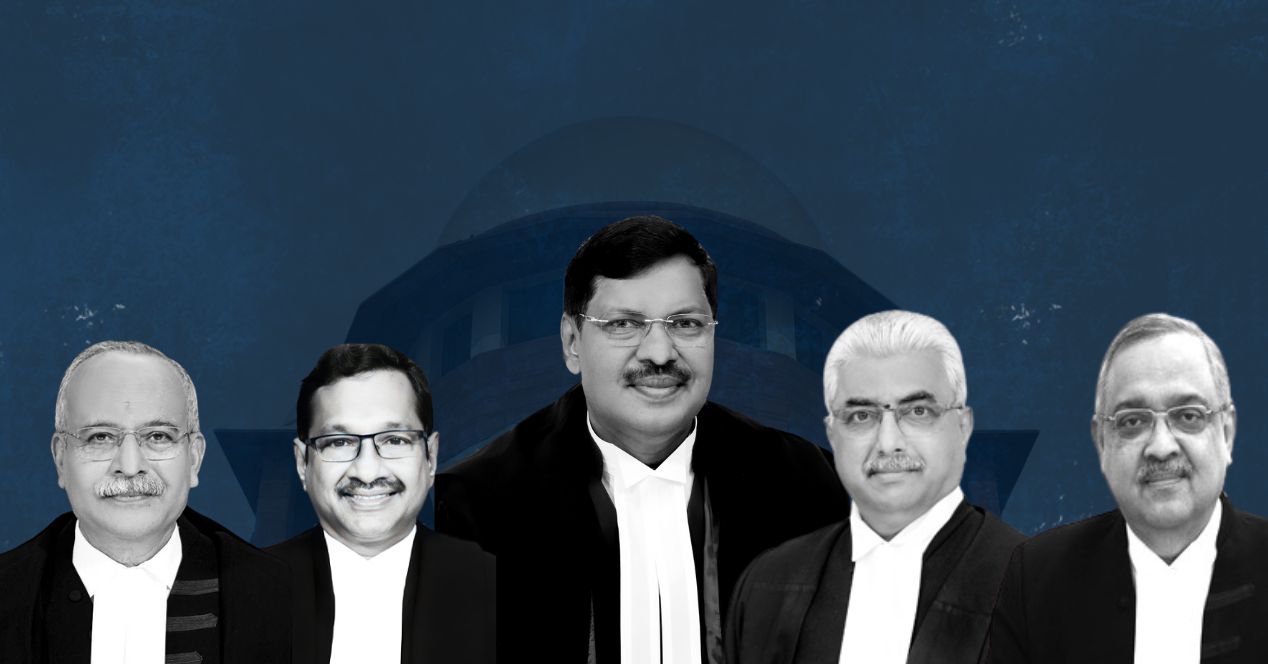
In a landmark ruling aimed at rejuvenating the district judiciary, a Constitution Bench led by Chief Justice of India B.R. Gavai on Thursday, October 9, 2025, held that judicial officers with seven years of prior experience as advocates are eligible for appointment as District or Additional District Judges. The judgment broadens eligibility beyond practising lawyers, allowing in-service judicial officers with prior Bar experience to ascend to higher judicial positions.
Expanding the Talent Pool
Until now, only practising lawyers with seven years’ experience were considered for direct recruitment as District Judges, while in-service judicial officers with similar experience were excluded. This restriction often led to stagnation in lower courts and contributed to case backlogs.
Chief Justice Gavai emphasized that “a lawyer does not cease to be a lawyer once recruited as a judicial officer,” underscoring that combined experience as a lawyer and judicial officer should count toward eligibility.
Constitutional Basis
The court noted that Article 233 (2) of the Constitution does not prescribe separate eligibility criteria for those already in judicial service. The Bench clarified:
“A person who has been or who is in judicial service and has a combined experience of seven years or more as an advocate or Judicial Officer would be eligible for being considered and appointed as a District Judge/Additional District Judge under Article 233 of the Constitution.”
Additionally, the Bench directed that minimum age for appointment for both advocates and judicial officers should be 35 years as on the date of application.
Next Steps for States
The court instructed State governments, in consultation with their respective High Courts, to amend or frame rules in accordance with the judgment within three months. Legal experts say this move could streamline promotions, motivate officers, and reduce pendency in lower courts.
Implications:
-
Broader eligibility: In-service judicial officers can now climb the judicial ladder without being sidelined.
-
Talent infusion: Experienced lawyers-turned-officers bring valuable courtroom insight to district judiciary.
-
Judicial efficiency: Reduced stagnation at lower levels may help tackle pending cases.