
Centre plans 40-km underground rail corridor to connect Northeast with rest of India: Ashwini Vaishnaw
Strategic four-line upgrade in West Bengal aims to secure uninterrupted rail access to the Northeast Top Summary What happened: The Centre unveiled plans for a...
Strategic four-line upgrade in West Bengal aims to secure uninterrupted rail access to the Northeast
Top Summary
-
What happened: The Centre unveiled plans for a 40-km underground rail corridor to strengthen connectivity between the Northeast and mainland India.
-
Why it matters now: The corridor addresses strategic vulnerability and capacity constraints on the only land rail link to the Northeast.
-
What changes for people: Faster, safer, and more reliable train movement; reduced disruption during floods and emergencies.
-
Who is affected: Passengers, freight operators, industries, and states across Assam and the Northeast.
What happened:
Railway Minister Ashwini Vaishnaw announced that Indian Railways is planning to lay underground railway tracks along a 40-km strategic corridor in West Bengal.
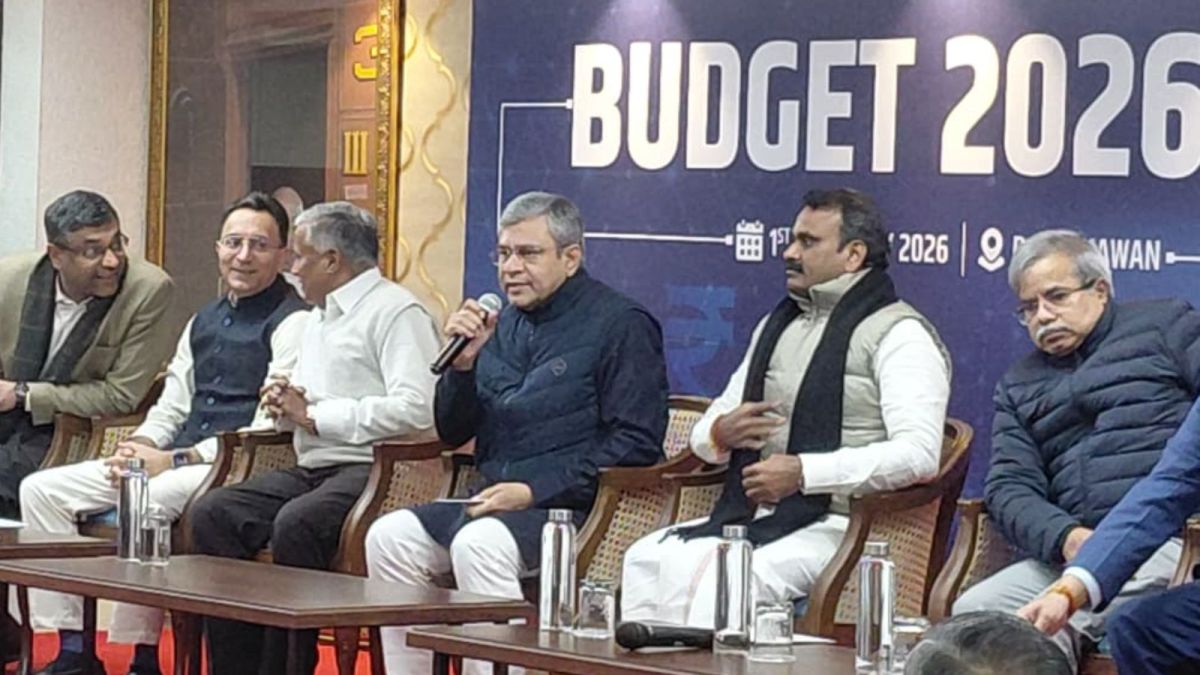
Addressing a press conference on the Union Budget allocation for Railways, Vaishnaw said special planning is underway to convert the existing line into a four-line corridor, ensuring uninterrupted rail connectivity to the Northeast.
Why it matters now:
The Northeast depends heavily on a narrow rail corridor through West Bengal for passenger movement, essential supplies, and freight.
This route is:
-
Prone to flooding and landslides
-
A single-point failure risk during natural disasters
-
Strategically sensitive from a national security perspective
An underground, multi-line corridor reduces disruption risk and boosts national integration.
What changes for people:
-
Higher train frequency and reduced congestion
-
Improved safety and resilience during monsoons
-
Faster movement of goods, lowering logistics costs
-
Greater reliability for long-distance passenger services
Who is affected:
-
Commuters and traders in Assam and Northeast states
-
Industries dependent on rail freight
-
Indian Railways’ operations and maintenance ecosystem
-
Border and remote regions relying on steady supply chains
Big budget push for Assam and the Northeast
The Railway Minister said the Union Budget has allocated ₹11,486 crore specifically for Assam and the Northeast.
Additionally:
-
Railway projects worth ₹72,468 crore are currently under execution in the region
-
Surveys for new projects are also underway
The investment spans track creation, station redevelopment, and safety upgrades.
Rapid network expansion since 2014
Indian Railways highlighted the scale of growth in the region:
-
~1,900 km of new tracks laid since 2014
— more than the entire rail network of Sri Lanka -
2,839 km of rail lines electrified in Assam and the Northeast
-
100% electrification achieved in Arunachal Pradesh, Meghalaya, Nagaland, Tripura, and Mizoram
-
98% electrification completed in Assam
Modern trains reach the Northeast
Premium and semi-high-speed services are already operating:
-
One pair of Vande Bharat Express
-
One pair of Vande Bharat Sleeper trains
-
Three pairs of Amrit Bharat Express
These services aim to cut travel time and improve passenger comfort in the region.
Strategic and economic implications
The underground corridor is expected to:
-
Strengthen national security logistics
-
Support Act East Policy goals
-
Enable industrial growth and tourism
-
Improve disaster resilience for the Northeast
Bottom line
The proposed 40-km underground rail corridor marks a decisive shift from incremental upgrades to strategic infrastructure hardening. Backed by massive funding and rapid electrification, the plan signals the Centre’s intent to make Northeast connectivity robust, scalable, and future-proof.