
Bihar’s Final Poll Phase Pits Legacy Against Change as Nitish Faces Defining Battle
As Bihar heads into the final phase of its assembly elections on Tuesday, the state finds itself at a political crossroads — torn between calls...
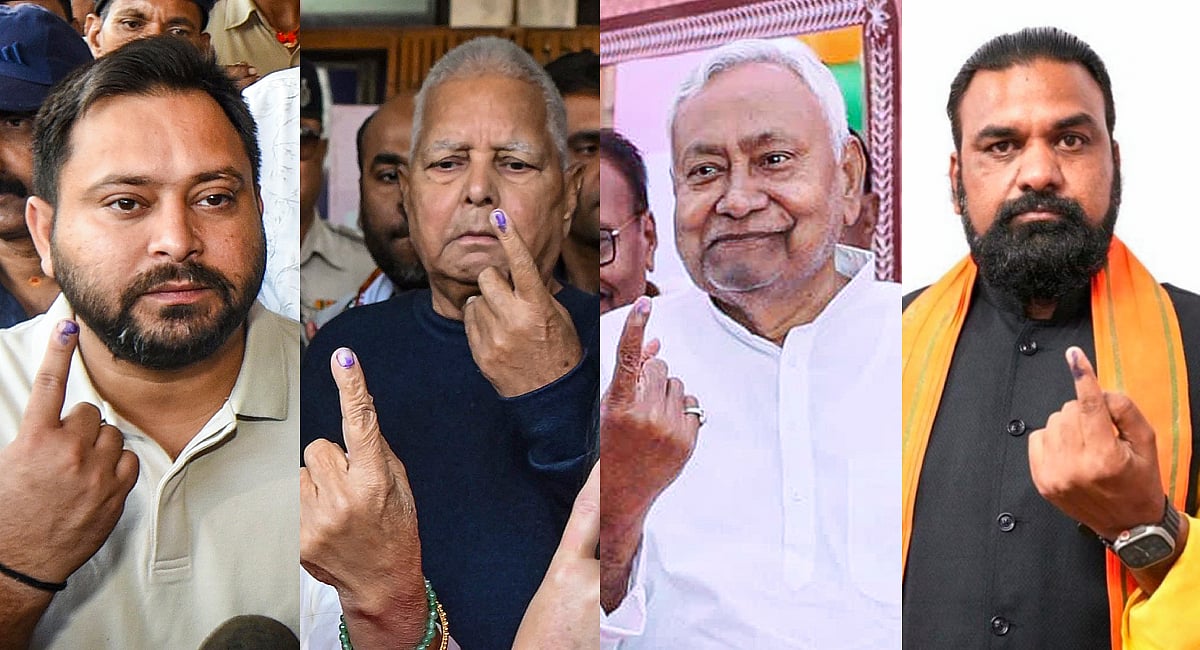
As Bihar heads into the final phase of its assembly elections on Tuesday, the state finds itself at a political crossroads — torn between calls for change and deeply rooted caste loyalties. Votes will be cast in 122 constituencies, marking the last leg of polling across the state’s 243-member assembly.
The first phase on November 6 witnessed a record voter turnout of 65.08%, signaling heightened political engagement and a fiercely contested battle between the ruling NDA and the Mahagathbandhan alliance.
Nitish Kumar’s Final Act?
For Chief Minister Nitish Kumar, this election could be a defining chapter — and possibly his last. After two decades at the helm, the 74-year-old JDU leader, once hailed as Bihar’s “sushasan babu” (man of good governance), faces both physical fatigue and political fatigue.
Kumar continues to lead the NDA, but questions about succession loom large. The Narendra Modi–Amit Shah leadership in the BJP is eyeing an opportunity to reshape Bihar’s political order by consolidating backward caste votes traditionally aligned with the JDU.
Political observers say this election may determine whether Nitish remains the pivot of Bihar’s politics or cedes space to a younger generation and a more centralized BJP command.
Tejashwi Yadav’s Challenge and the Mandal Equation
On the opposition front, Tejashwi Yadav — the 35-year-old face of the Mahagathbandhan — is seeking to fill the post-Nitish vacuum with an assertive campaign aimed at reclaiming the Mandal-era social justice base.
Yadav has sought to frame the BJP’s campaign, led by Amit Shah, as an “outsider’s attempt” to dominate Bihar’s politics. His speeches have struck a chord among youth voters frustrated by unemployment and stagnant infrastructure, but his challenge lies in breaking through entrenched caste arithmetic that continues to define electoral outcomes in the state.
The Jan Suraaj Factor: Disruption or Mirage?
Adding intrigue to the contest is the Jan Suraaj Party, founded by political strategist Prashant Kishor, who once helped Modi, Nitish, and Mamata Banerjee shape electoral victories. His movement — positioned as a citizen-driven alternative — has found resonance among Bihar’s youth and middle class, who seek a break from decades of caste-based politics.
However, analysts caution that while Jan Suraaj has energized discourse, its ability to convert that energy into votes remains uncertain. “Kishor’s entry may influence margins in some urban constituencies, but not necessarily the final seat tally,” said political analyst Prof. Ajay Kumar of Patna University.
Allegations, Tensions, and Poll Security
The final phase has also been shadowed by allegations of electoral malpractice. On Monday, Tejashwi Yadav accused the Union Home Minister Amit Shah of attempting to influence officials during his recent visit to Patna.
Yadav claimed that a large number of security personnel deployed for poll duty were drawn from BJP-ruled states, warning them against any attempt to manipulate voting. “We will not tolerate any dishonesty,” he said at a press conference.
The Election Commission of India (ECI) has dismissed such allegations, reiterating that security forces are deployed “based on operational requirements, not political considerations.”
Strain Within the NDA
A subtle but growing tension within the NDA has also become evident. Shah’s comment during the campaign — suggesting that the next chief minister would be decided by elected MLAs — sparked unease within the JDU, fueling speculation that the BJP may seek to sideline Nitish after the polls.
Although the BJP later clarified that Nitish would remain chief minister if the alliance returns to power, the remark has deepened mistrust between the two allies. Party insiders admit that in several constituencies, JDU’s core OBC vote base may not have fully transferred to BJP candidates.
“Nitish skipped PM Modi’s rallies in the final phase, officially citing scheduling issues — but politically, it’s a signal,” said a senior JDU functionary requesting anonymity.
What’s at Stake
The November 14 counting will determine more than just who governs Bihar. It will reveal whether the BJP can finally overtake its senior partner within the NDA, or whether Nitish Kumar — despite advancing age and alliance fatigue — can once again prove his enduring political instinct.