
Bhopal’s Unfinished SCADA Project Raises Alarms After Indore Water Crisis
Smart City-era safeguards remain incomplete years after launch, exposing gaps in water safety and citizen alerts The recent water contamination crisis in Indore has cast...
Smart City-era safeguards remain incomplete years after launch, exposing gaps in water safety and citizen alerts
The recent water contamination crisis in Indore has cast a harsh spotlight on a long-delayed safety net in neighbouring Bhopal: a Supervisory Control and Data Acquisition (SCADA) system that was meant to continuously monitor the city’s drinking water network and prevent precisely such emergencies.
Conceived under the Smart City Mission in 2017, Bhopal’s SCADA project was projected as a game-changer for urban water management. It promised real-time monitoring of water quality, early detection of leaks, automated alerts, and tighter control over disinfection and distribution. Nearly a decade later, however, the system remains incomplete, raising questions about oversight, accountability and public safety.
Big Promises, Partial Implementation
According to officials of the Bhopal Municipal Corporation (BMC), 162 of the city’s 173 overhead water tanks have been connected to the SCADA network. Yet even this coverage has not translated into a fully functional system. The first phase of the project itself is still unfinished, limiting SCADA’s ability to deliver on its core objectives.
On paper, the system was designed to enable remote monitoring of water flow, pressure, energy consumption and quality parameters, with instant alerts for any abnormal readings. Authorities also projected that it would help reduce non-revenue water, improve asset management and allow faster responses to faults in the distribution network.
In practice, officials concede, many of these capabilities are either only partially operational or not being used effectively.
Warning Signs Ignored
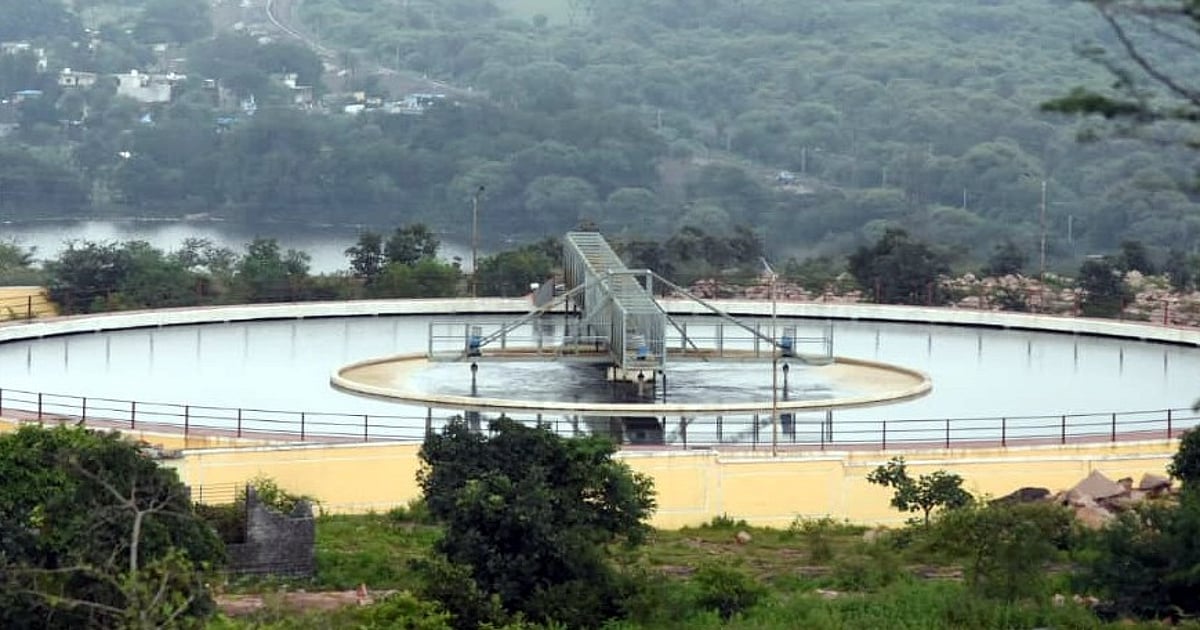
The consequences of these gaps became evident in 2023, during a chlorine gas leak at the Idgah Hills water filtration plant. Excessive chlorine—used to disinfect drinking water—escaped into the surrounding area, triggering panic among nearby residents and forcing authorities to respond to a public safety scare.
The incident exposed the absence of real-time monitoring and automated controls that could have flagged abnormal chlorine levels before they became dangerous. Water supply engineers and safety experts later pointed out that a fully functional SCADA system should have detected the anomaly and initiated corrective action immediately.
Lessons From Indore
The Indore contamination episode has intensified scrutiny of water safety systems across Madhya Pradesh. Public health experts say that without reliable, automated monitoring, cities remain dependent on manual checks and delayed responses—an approach ill-suited to dense urban environments where contamination can spread quickly.
“SCADA is not a luxury; it is a basic requirement for modern water utilities,” said an urban infrastructure specialist familiar with Smart City projects. “If implemented properly, it reduces human error and provides early warnings that save lives.”
Citizen Interface Also Falls Silent
The Smart City blueprint for Bhopal also included public participation through digital tools. Residents were meant to receive updates, lodge complaints and track services through the ‘Bhopal Plus’ mobile application. That interface, however, is no longer functional, cutting off a key channel of communication between citizens and civic authorities.
For residents, this means little visibility into water quality issues and no real-time alerts during emergencies—another promise left unfulfilled.
An Incomplete Safety Net
As Bhopal continues to grapple with aging infrastructure, water contamination risks and fragmented oversight, the unfinished SCADA project stands as a reminder of stalled reforms. Officials acknowledge that while incremental improvements have been made, the city still lacks a fully integrated, real-time monitoring system capable of preventing or mitigating crises.
With Indore’s experience fresh in public memory, pressure is mounting on authorities to complete and operationalise SCADA—not as a showcase Smart City project, but as a critical safeguard for public health.