
Bhopal to Test Cow Dung–Based Paint in City Beautification Drive Ahead of Swachh Bharat Survey 2026
As Bhopal prepares for the Swachh Bharat Mission (SBM) Survey 2026, the civic body is exploring an unconventional but environmentally driven idea: painting public walls...
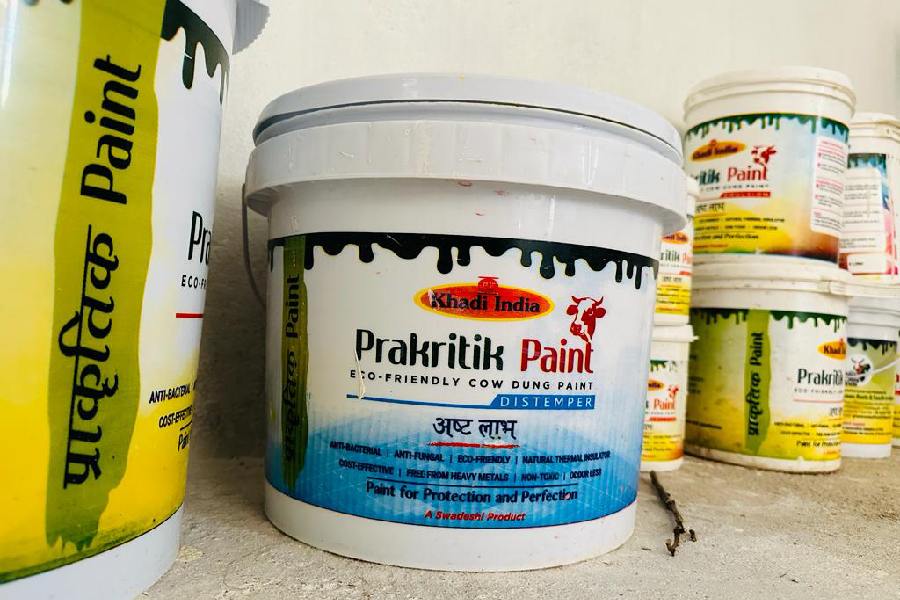
As Bhopal prepares for the Swachh Bharat Mission (SBM) Survey 2026, the civic body is exploring an unconventional but environmentally driven idea: painting public walls with paint made from cow dung. The proposal, currently at the pilot stage, reflects both the city’s sustainability ambitions and the broader political push towards a cow-based economy promoted by the BJP-led state government.
Known as the “City of Lakes,” Bhopal has consistently ranked among India’s cleanest state capitals. Municipal officials now believe that adopting greener materials could further strengthen the city’s standing in national cleanliness rankings while reducing environmental impact.
From Jaipur to Bhopal: A Sustainable Experiment
Officials at the Bhopal Municipal Corporation (BMC) confirmed that the initiative draws inspiration from similar experiments conducted in Jaipur, where cow dung-based paints were used for selective public spaces. Bhopal Mayor Malti Rai said the city is closely evaluating a pilot project, and its performance will determine whether the idea is scaled up.
According to Rai, the long-term vision is to develop a self-sustaining local model. Cow dung sourced from city-run gaushalas would be used to manufacture paint locally through a cooperative society framework. “The objective is not just beautification,” she said, “but also self-reliance, job creation, and innovation rooted in sustainable practices.”
Building on Earlier ‘Go-Kashth’ Initiatives
The proposed paint project builds on BMC’s earlier ‘Go-Kashth’ programme, which introduced cow dung-based alternatives to wood for cremations, Holika Dahan rituals, boilers, and tandoors. Municipal officials say that model helped reduce dependence on firewood, limited deforestation, and provided financial support to gaushalas.
Civic leaders argue that extending the same philosophy to urban beautification could align environmental protection with livelihood generation.
Reducing Chemical Load on a Fragile Ecosystem
BMC officials say the move is also driven by environmental concerns linked to conventional paints. Ahead of the SBM survey, the corporation typically undertakes large-scale painting of public infrastructure. A recent proposal worth nearly ₹3 crore earmarked repainting of around 20,000 square metres of walls and structures—an area comparable to several football fields—using traditional black Japan paint.
According to municipal assessments, such paints often contain volatile organic compounds (VOCs) and heavy metals, which can affect air quality and eventually leach into soil and water bodies. Officials said this is a particular concern for Bhopal, given its network of lakes and dependence on them for drinking water and ecological balance.
Cost Advantage and Local Industry Push
Entrepreneur Durga Priyadarshini, who is associated with eco-friendly paint production, said cow dung-based paints are typically priced about 20% lower than conventional alternatives. She added that local manufacturing could further reduce costs while supporting small-scale enterprises.
BMC additional commissioner and SBM in-charge Varun Awasthi confirmed that several proposals from manufacturers had been received. “Initial feedback is encouraging,” he said, adding that the corporation is closely evaluating how such paints perform under Bhopal’s specific climatic conditions, especially heat and monsoon exposure.
Questions Over Transparency and Durability
Despite official enthusiasm, the proposal has drawn scepticism from some quarters. Critics have repeatedly demanded greater transparency from manufacturers regarding the actual proportion of cow dung used in the paint, arguing that vague claims undermine credibility.
Some technical experts have also cautioned that cow dung-based paints may perform better in interior or shaded applications. Prolonged exposure to harsh sunlight, rain, and pollution could affect durability, they say, potentially limiting its use on exterior walls.
A Balancing Act Ahead
As Bhopal moves closer to the SBM Survey 2026, the cow dung paint experiment highlights a broader challenge faced by Indian cities: balancing traditional practices, political ideology, environmental responsibility, and practical urban management.
Whether the initiative becomes a defining feature of Bhopal’s green branding or remains a limited pilot will depend on its real-world performance—and on whether sustainability claims can stand up to public scrutiny.