
Bhopal gas leak appeals: HC orders 30-day deadline
Madhya Pradesh High Court directs sessions court to expedite criminal appeals related to the 1984 Bhopal gas tragedy, stressing victims' long wait for justice.
The Cliff News | 24 November 2026
In a significant development nearing four decades after the devastating Bhopal gas tragedy, the Madhya Pradesh High Court has issued a strong directive to a sessions court in Bhopal. The court has ordered the sessions court to endeavour to conclude the pending criminal appeals against convictions in the 1984 Bhopal gas leak case, preferably within 30 days.
This crucial order, delivered by a single-judge bench of Justice Himanshu Joshi on November 18, came as the High Court dismissed three petitions filed by convicts S.P. Choudhary, J. Mukund, and Kishor S. Kamdar. These convicts had challenged a previous order by the sessions court that refused to grant a separate hearing on their applications concerning alleged fundamental defects in the charges framed against them.
Challenges to Criminal Charges
The applications, filed under Section 464 of the Criminal Procedure Code (CrPC) in April 2022, argued that the charges were vague and failed to specify individual acts attributable to each convict. The defence contended that these alleged defects prejudiced their ability to mount a proper defence and ultimately resulted in a failure of justice.
However, the High Court ruled that the convicts could not demand a separate adjudication of their objections to the charges prior to the hearing of the main criminal appeals. The court clarified that the sessions court could consider these objections during the appeal proceedings, leaving the ultimate decision on the validity of the charges to the sessions court itself.
Background of the Bhopal Gas Tragedy Case
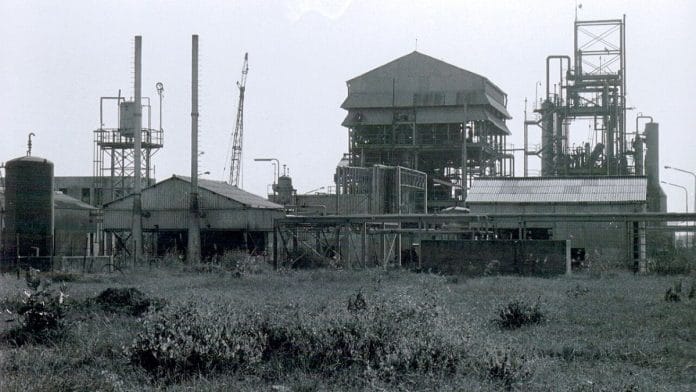
The criminal case stems from the catastrophic leakage of methyl isocyanate (MIC) gas from the Union Carbide India Limited (UCIL) plant in Bhopal on the night of December 2-3, 1984. This incident is considered one of the world's worst industrial disasters.
Following a lengthy trial that involved the prosecution examining 178 witnesses and presenting approximately 3,000 documents, the Chief Judicial Magistrate of Bhopal delivered convictions on June 7, 2010. The convicted individuals subsequently filed their criminal appeals before the sessions court in 2010, which have remained pending for an extended period.
Convicts' Objections to Charge Framing
Initially, charges were framed against the accused under Section 304(II) of the Indian Penal Code (IPC), pertaining to culpable homicide not amounting to murder. However, a Supreme Court order dated September 13, 1996, led to the proceedings continuing under Section 304-A IPC, which addresses causing death by a rash or negligent act. The revised charges were formally framed by the Chief Judicial Magistrate on August 29, 1997.
The convicts, in their applications under Section 464 CrPC, categorized the alleged defects in the charges into two types: a 'macro error' and a 'micro error'. The 'macro error' related to the fundamental basis for framing the charges, while the 'micro error' pertained to the alleged vagueness and the failure to clearly delineate the specific actions of each individual.
Furthermore, the convicts challenged the prosecution's narrative of the events leading to the gas leak, arguing that the charges should have been limited to two specific aspects: the ingress of water or contaminants into the MIC storage tank and the alleged deficiencies in maintaining positive nitrogen pressure.
The defence also indicated their intention to present findings from an independent inquiry into the incident as additional evidence. They highlighted that arguments on their applications had already consumed 36 days before the sessions court, expressing concern that delaying a decision until the final appeal hearing could necessitate repeating the exercise if the presiding officer were to be transferred or elevated.
Official Opposition and High Court's Stance
The Central Bureau of Investigation (CBI), the Union government, and the Madhya Pradesh government had opposed the convicts' plea. Their argument was that determining whether any defects in the charges led to a failure of justice would require a comprehensive review of the entire trial record, including witness testimonies and the statements made by the convicts.
Justice Joshi, referencing landmark Supreme Court decisions in cases such as State of Andhra Pradesh v. Thakkidiram Reddy (1998), Kamil v. State of Uttar Pradesh (2018), and Kalicharan v. State of Uttar Pradesh (2023), explained the scope of Section 464 CrPC. The court reiterated that mere irregularities in framing charges do not automatically invalidate a conviction; the convicts must demonstrate that such defects prejudiced their defence and resulted in a miscarriage of justice.
The High Court noted that assessing prejudice would necessitate an examination of trial evidence, the defence presented by the convicts, and the findings of the trial court – all elements that are intrinsic to the pending criminal appeals. The court distinguished the present case from the Supreme Court's ruling in Asim alias Munmun alias Asif Abdulkarim Solanki v. State of Gujarat (2020), which dealt with Section 391 CrPC regarding the appellate court's power to take additional evidence. The High Court determined that the principle of expediting decisions on such applications could not be automatically extended to applications filed under Section 464 CrPC.
Considerations for Expediting Justice
The court outlined six key considerations for appellate courts when dealing with such applications:
- Whether the objection was raised at an earlier stage.
- Whether the objection reiterates previous grounds already considered.
- Whether the alleged defect can be examined independently of the main appeal.
- Whether the defect has demonstrably resulted in a failure of justice.
- Whether the objection significantly overlaps with the grounds of appeal.
- Whether a separate adjudication would genuinely advance justice or lead to further delays.
The High Court observed that the convicts were not solely pointing out minor errors in the wording of the charges. Instead, they were questioning the very basis of the prosecution's case, the evidence presented, and the circumstances surrounding the gas leak. These broader issues, the court stated, are inherently part of the criminal appeals that are yet to be heard.
Acknowledging that the framing of charges had previously reached the Supreme Court, the High Court affirmed that this did not preclude the convicts from raising objections under Section 464 CrPC. However, in dismissing their petitions, the court explicitly stated that it had not made any pronouncements on the validity of the charges, the presence of prejudice, or the legitimacy of the convictions. These determinations remain the prerogative of the sessions court.
"The judicial process must not become an endless journey; it must remain a path towards a lawful and just determination," the High Court remarked, emphasizing the need for timely resolution. The directive to the Sessions Court includes avoiding unnecessary adjournments to ensure the appeals are decided within the stipulated 30-day timeframe upon receipt of the court's order.