
Bhopal E-Rickshaw Ban Ignored: Traffic Chaos Persists, Rules Flouted
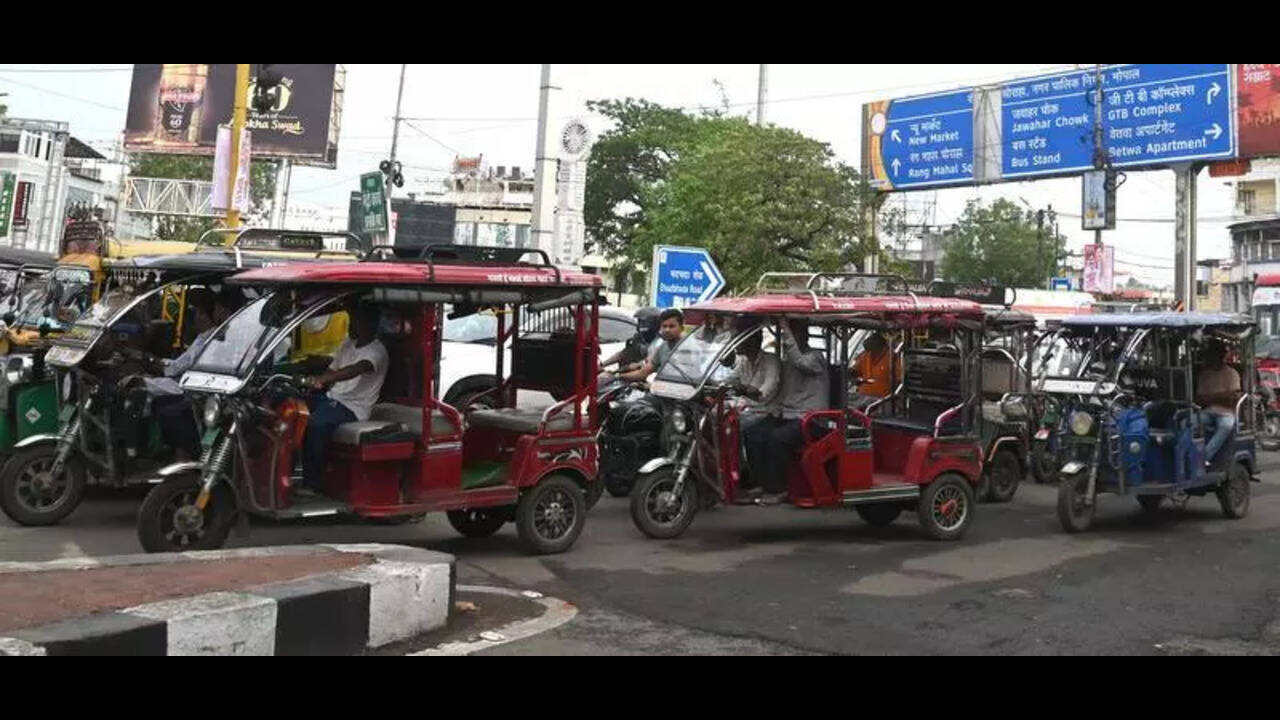
E-rickshaws in Bhopal openly defy regulations, causing traffic disruptions.
Top Summary
- What happened: E-rickshaws in Bhopal are ignoring designated routes and traffic laws despite an existing ban and restrictions.
- Why it matters: The lack of enforcement leads to traffic congestion, safety hazards, and public frustration, undermining the environmental benefits of e-rickshaws.
- What changes: Commuters face increased traffic chaos and potential accidents due to unregulated e-rickshaw operations.
- Who is affected: Motorists, two-wheeler riders, pedestrians, and daily commuters in Bhopal are negatively impacted by the situation.
E-Rickshaw Regulations Crumble in Bhopal
The ban and route restrictions on e-rickshaws in Bhopal, implemented last year, are largely ignored. Thousands of e-rickshaws are openly flouting traffic rules and operating outside designated zones.
Despite the allocation of 12 exclusive routes, e-rickshaws operate with impunity, disrupting traffic flow. The situation is particularly acute on busy roads, causing frustration for commuters.
Traffic Chaos and Commuter Frustration
E-rickshaws frequently stop in the middle of the road, at bus stops, and even on footpaths. This forces other vehicles to swerve dangerously.
"These e-rickshaws stop anywhere—middle of the road, bus stops, even footpaths—forcing everyone to swerve dangerously," complains Atul Agnihotri, a daily commuter from Arera Colony.
Similar complaints are common in MP Nagar, a commercial hub where e-rickshaws exacerbate traffic congestion during peak hours. The chaos is palpable across Bhopal's arteries.
Failed Enforcement and Route Viability
Last July, the district administration issued a notification mapping out dedicated corridors for e-rickshaws. These corridors included key areas like Bittan Market, Lily Square, and DB City.
However, enforcement has crumbled. Field observations indicate that e-rickshaws are rampant on forbidden stretches like VIP Road, Hoshangabad Road, and the airport corridor. Unions representing e-rickshaw drivers claim that the designated routes are "unviable.""
They cite low ridership and competition from autos as reasons for the non-compliance.
Environmental Gains Undermined
Bhopal now hosts over 15,000 registered e-rickshaws, a significant increase from previous years. This growth has been fueled by cheap operations and government subsidies for green transport.
Environmental gains from e-rickshaws, estimated at a 20% reduction in emissions in inner-city zones, are undermined by the widespread disorder.
A traffic constable estimates that ninety percent of e-rickshaws ignore the designated routes. Fines are almost non-existent due to understaffed squads and drivers' ability to escape into narrow alleys.
Near-Misses and Public Safety Concerns
Rashmi Patel, a college student, recounted a near-miss when an e-rickshaw braked suddenly near Rangmahal talkies, causing a multi-vehicle pile-up. Commuters bear the brunt of the unregulated e-rickshaw operations.
What to Watch Next
City officials have promised a crackdown on e-rickshaw violations. It remains to be seen whether these efforts will be effective in restoring order and ensuring compliance with traffic regulations and whether the routes will be re-evaluated or enforced more stringently.