
Bangladesh Unrest Triggers Diplomatic Strain as India Raises Alarm Over Minority Attacks
Political unrest in Bangladesh has begun to reverberate beyond its borders, prompting Dhaka to suspend visa services at key Indian missions and triggering a sharp...
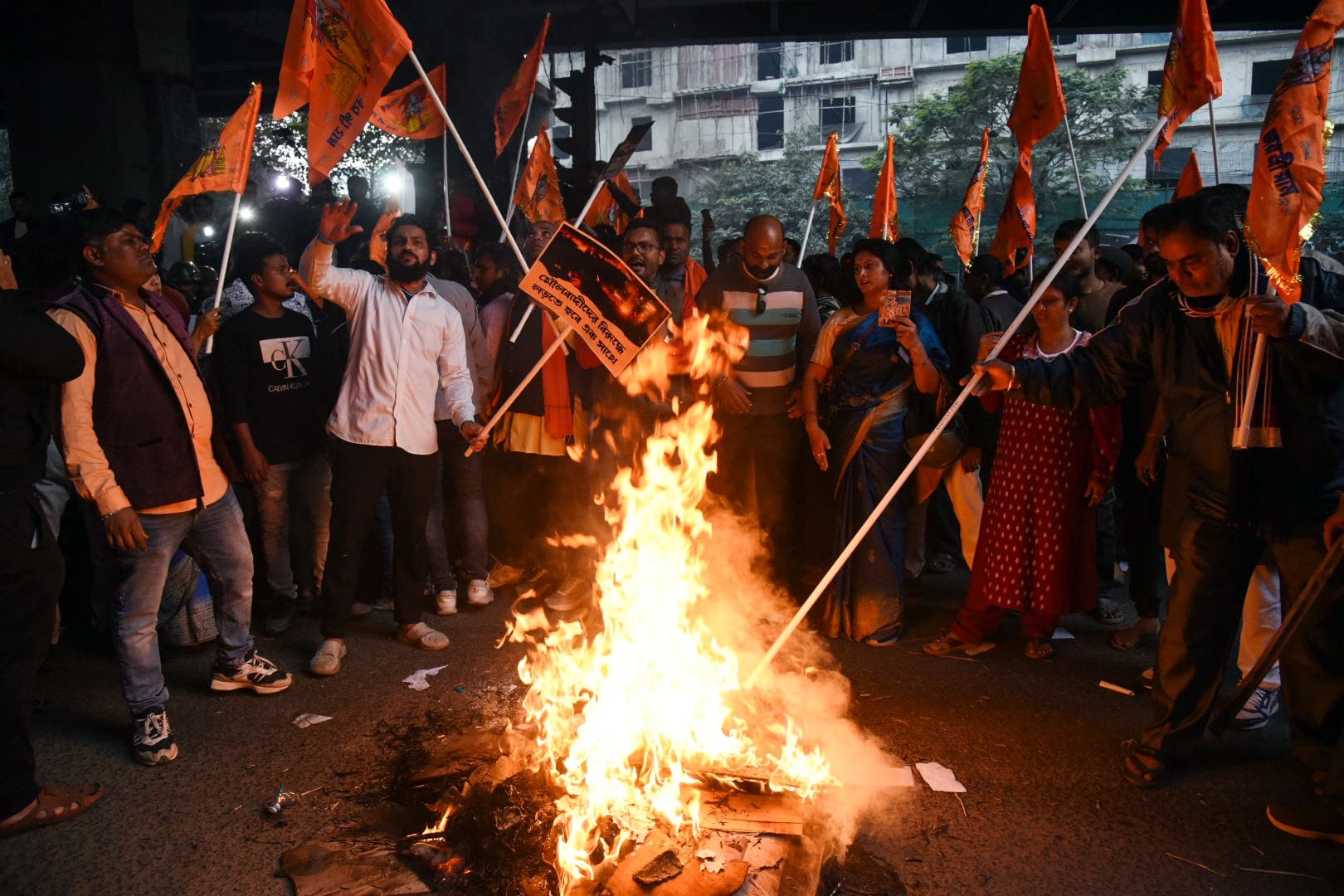
Political unrest in Bangladesh has begun to reverberate beyond its borders, prompting Dhaka to suspend visa services at key Indian missions and triggering a sharp diplomatic response from New Delhi. The escalation follows protests near Bangladesh’s High Commission in India and growing anger over a series of violent incidents inside Bangladesh, including the lynching of a Hindu garment worker and attacks on media houses.
Officials on both sides say the developments underline a rapidly deteriorating security environment in Bangladesh, with potential consequences for bilateral ties, cross-border travel, and regional stability.
Visa Services Halted Amid Security Concerns
Bangladesh has indefinitely suspended visa services at its High Commission in New Delhi and at consulates in Tripura and Siliguri, citing security risks after small groups of protesters gathered near diplomatic premises. The decision was confirmed by officials familiar with the matter.
In response, India summoned Bangladesh’s envoy to the Ministry of External Affairs and conveyed what officials described as “strong objections” to recent attacks on religious minorities and threats to diplomatic missions. New Delhi has reiterated its expectation that Dhaka will ensure the safety of minorities and protect foreign diplomatic establishments, in line with international obligations.
Protests Erupt in Kolkata
The fallout has been most visible in Kolkata, where hundreds of protesters assembled outside the Bangladesh Deputy High Commission. Demonstrations were led by members of Hindu organisations under the leadership of West Bengal’s Leader of the Opposition, Suvendu Adhikari.
Protesters condemned the killing of Dipu Chandra Das, a Hindu garment worker from Mymensingh, and warned of intensified agitation, including possible border blockades. Visuals from the protests, distributed by news agencies PTI and ANI, showed demonstrators burning effigies of Bangladesh’s Chief Adviser, Muhammad Yunus, and accusing the interim administration of failing to protect minorities.
Lynching Case Becomes Flashpoint
At the centre of the unrest is the killing of Dipu Chandra Das, who was beaten by a mob, dragged from his workplace, and later set on fire. Bangladeshi police and Rapid Action Battalion (RAB) officials have told local media that the violence unfolded over several hours and was not a spontaneous outburst.
Investigators have since stated that claims Das made blasphemous remarks—initially used to justify the attack—have not been supported by evidence. According to officials, no incriminating social media posts or statements were found. A workplace dispute is now being examined as a possible trigger.
At least 12 people, including factory supervisors and colleagues, have been arrested. Law enforcement officials have said Das was forced to resign and expelled from the factory instead of being handed over to police, a delay they believe contributed to his death.
Killing of Protest Leader Fuels Wider Unrest
The situation worsened following the death of Osman Hadi, a radical youth leader associated with last year’s July uprising against former prime minister Sheikh Hasina. Hadi was shot in Dhaka, flown to Singapore for treatment, and died days later.
His death has become a rallying point for nationwide protests. A protest platform known as Inquilab Mancho, led by Hadi’s associates, has issued an ultimatum to the interim government, warning of a mass movement to unseat it if justice is delayed. The group has demanded a special fast-track tribunal and has even called for foreign assistance in the investigation.
Media Under Attack, Journalists Trapped
Press freedom has also come under strain. On Monday, mobs vandalised and set fire to the offices of leading Bangladeshi newspapers The Daily Star and Prothom Alo. According to editors and eyewitnesses quoted by the Associated Press, journalists were trapped inside the buildings for hours before being rescued.
Media organisations have described the attacks as deliberate attempts to intimidate and silence independent reporting rather than spontaneous reactions to coverage.
Minorities Voice Growing Fear
Hindu and other minority groups have taken to the streets in Dhaka and other cities, accusing the interim government of failing to curb targeted violence. Rights organisations warn that minorities feel increasingly vulnerable since the collapse of Sheikh Hasina’s administration, citing a pattern of mob attacks and slow enforcement.
Community leaders say the lynching of Das has become emblematic of deeper anxieties about law and order and equal protection under the law.
Yunus Reaffirms Election Timeline
Amid mounting unrest, Chief Adviser Muhammad Yunus has reiterated that general elections will be held on February 12. In public statements, he has said the administration is prepared to manage security challenges and ensure a democratic transition.
However, political analysts and opposition voices have questioned whether free and peaceful elections are feasible in an environment marked by assassinations, mob violence, and attacks on the press.
Regional Implications
For India, the crisis raises concerns beyond immediate protests. Diplomatic sources note that prolonged instability in Bangladesh could affect cross-border movement, trade, and security cooperation, particularly in eastern India. The suspension of visa services has already disrupted travel and people-to-people exchanges.
As protests continue on both sides of the border, officials and observers agree that how Dhaka restores order and addresses minority protection will be critical—not only for domestic stability, but also for maintaining trust with regional partners.