
Balasaheb’s legacy fuels fresh Sena versus Sena battle after BJP’s sweeping BMC win
• What happened: BJP and Eknath Shinde’s Shiv Sena secured a dominant win in the BMC elections, triggering allegations of betrayal from Shiv Sena (UBT).•...
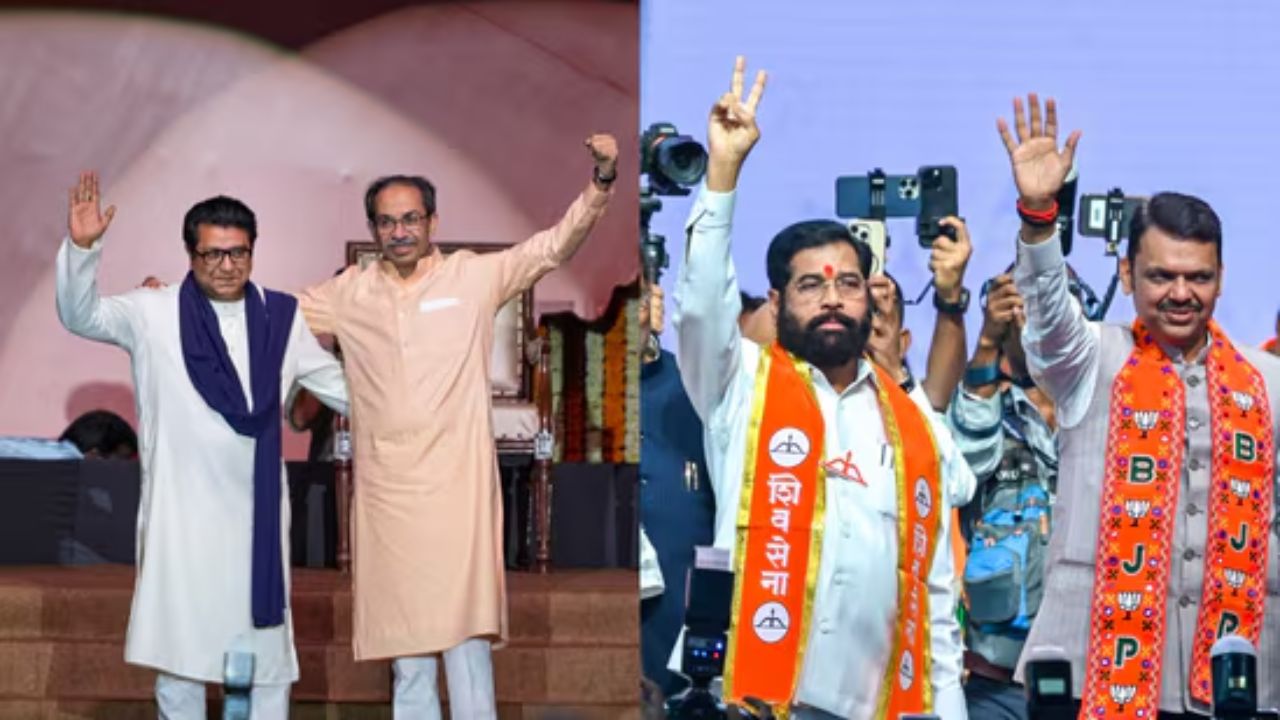
• What happened: BJP and Eknath Shinde’s Shiv Sena secured a dominant win in the BMC elections, triggering allegations of betrayal from Shiv Sena (UBT).
• Why it matters now: The results have revived an emotional fight over Balasaheb Thackeray’s legacy and control of Mumbai’s civic power.
• What changes for people: A BJP-led administration is expected to push infrastructure and governance upgrades, including commitments to pothole-free roads and hospital improvements.
• Who is affected: Mumbai’s Marathi voters, traditional Sena supporters, and residents depending on BMC-controlled urban services.
A decisive saffron wave in Mumbai’s Brihanmumbai Municipal Corporation (BMC) elections has reopened one of Maharashtra’s most emotional political rivalries, with Shiv Sena (UBT) accusing Chief Minister Eknath Shinde of enabling the BJP to take control of the city’s most powerful civic body for the first time. The outcome combines political symbolism with real implications for governance, urban planning, and Mumbai’s future identity.
A battle for legacy and the city’s political heart
For Uddhav Thackeray’s Shiv Sena (UBT), the BMC poll was not just a civic contest but a fight to defend Balasaheb Thackeray’s legacy, rooted in Marathi identity and Mumbai’s cultural fabric. Party leaders argued that the 2022 split within the Sena fractured their traditional vote base, weakening the organisation and allowing the BJP to consolidate control.
Senior leaders from the Shiv Sena (UBT) accused the Shinde-led faction of dismantling a movement built by Balasaheb Thackeray, claiming that the divide benefited the BJP and reshaped political power without reflecting a genuine shift among Mumbai’s Marathi electorate.
The party highlighted that the Shinde faction secured only 29 corporators despite earlier defections of 56 sitting members, framing it as proof that the core Sena vote did not approve the realignment.
Shinde counters with development pitch
Responding to criticism, Eknath Shinde said voters had chosen development over emotional politics, stressing that the alliance between the BJP and his faction was building a triple engine government in Mumbai aligned with the state and central administrations.
He pointed to infrastructure work undertaken in the last three-and-a-half years and reaffirmed commitments to make Mumbai pothole-free, upgrade Balasaheb Thackeray Aapla Dawakhana, and accelerate the city’s push toward becoming an international financial hub.
Shinde also argued that parties invoking Marathi pride were now struggling for organisational survival, not representing the interests of Marathi-speaking residents.
Expert analysis: Votes split, outcomes reshaped
Political analyst Pranay Bhise, speaking to CNN-News18, noted that the election map of 2026 was fundamentally shaped by a fragmented Shiv Sena, creating a fractured mandate across key wards.
According to Bhise, in at least 33 critical seats, the combined vote share of the Opposition alliances exceeded the winning candidates’ totals, showing how the split acted as a vote-transfer mechanism benefiting the BJP-led alliance.
Why the fight matters beyond politics
The BMC is India’s wealthiest civic body, commanding a budget larger than several states and controlling critical functions such as:
• Roads and transport
• Public hospitals
• Disaster management
• Water and sanitation
• Urban planning
• Local revenue and licensing
A change in control can influence:
• Governance standards such as road maintenance and civic services
• Business and real estate through project clearances and infrastructure pipelines
• Healthcare access through municipal hospitals and clinics
• Employment and contracts linked to BMC tenders
The BJP’s entry into this space for the first time is being described as a strategic breakthrough in Maharashtra’s ongoing political realignment.
Identity versus administration: The new Mumbai equation
While Shiv Sena (UBT) frames the moment as a historic political rupture, the BJP–Shinde camp is positioning it as a shift toward governance-centric politics. The contrasting narratives signal that the Sena vs Sena conflict will not end with the BMC polls but will likely intensify ahead of upcoming state and national elections.
For Marathi voters who traditionally shaped Mumbai’s political base, the outcome has sparked fresh debate over whether the city’s identity is being redefined by political alliances or absorbed into a broader development-driven agenda.