
Ayurveda Day Highlights Importance of Yoga and Ayurveda
A special yoga session on Ayurveda Day in Guna emphasized the scientific significance of yoga and Ayurveda for a healthy future.
गुना | राजा हतम वेग
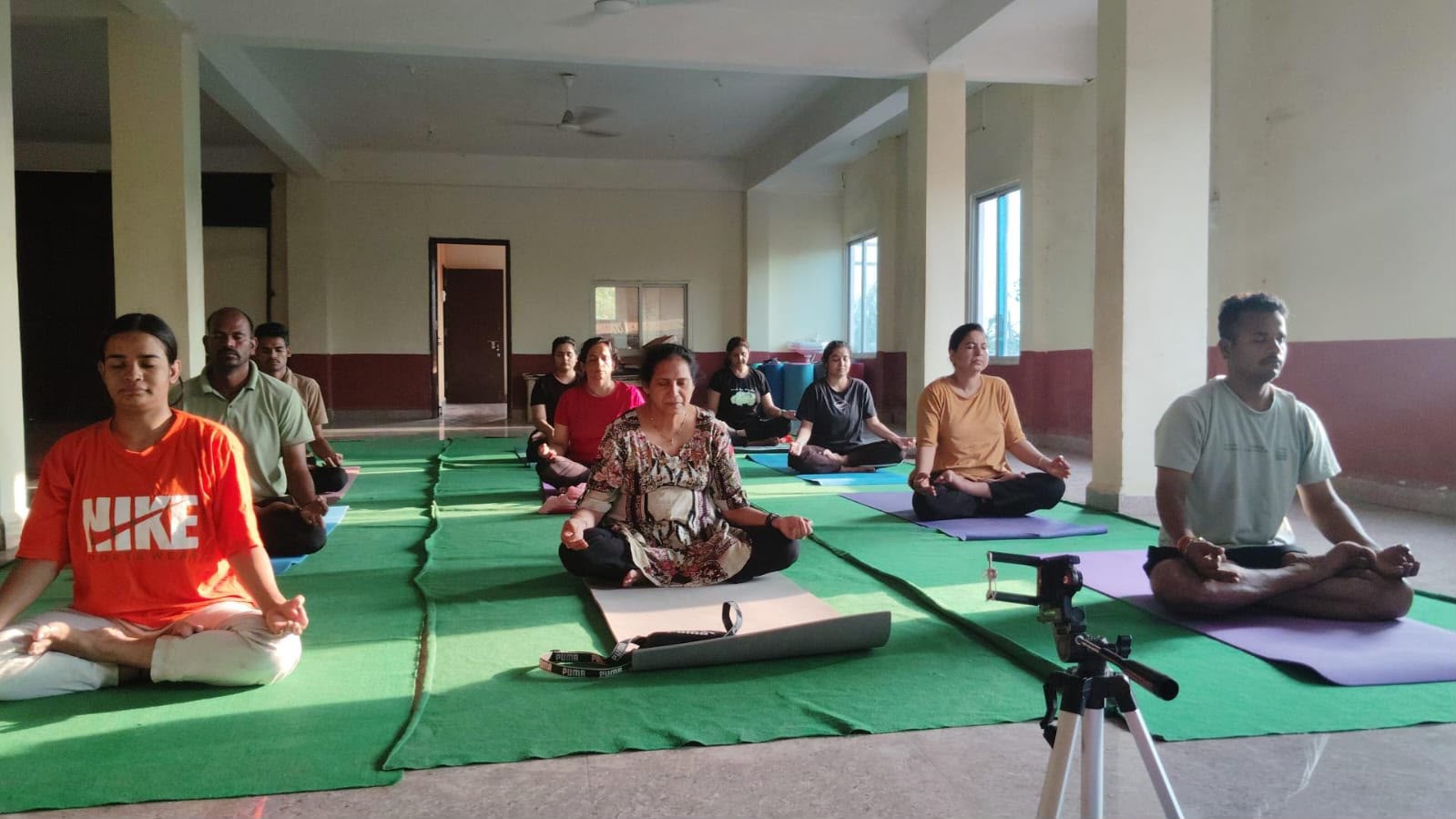
Ayurveda Day Celebrated with Special Yoga Session
On the occasion of Ayurveda Day, a special yoga session was organized at the Gayatri Mandir in Guna on September 23, 2026. During the event, Yogaacharya Mahesh Pal enlightened the attending yoga practitioners about the scientific importance of Ayurveda and yoga.
He stated that Dhanvantari is considered the prime propagator of Ayurveda in Indian tradition. This year, the message for Ayurveda Day is 'Ayurveda for a Healthy Future'.
Modern Lifestyles and Ancient Wisdom
Yogaacharya Mahesh Pal shed light on modern lifestyles, noting that while today's fast-paced life has provided many conveniences, it has also brought about serious challenges like irregular routines and increasing mental stress. In these circumstances, India's ancient health traditions, such as yoga and Ayurveda, are proving their relevance with a renewed scientific perspective.
Government's Recognition of Ancient Knowledge
Highlighting the importance of adopting ancient knowledge in a modern context, the Yogaacharya mentioned that the Government of India has decided to celebrate every year on September 23 as 'Ayurveda Day'. This decision aims to ensure the continuity and promotion of Ayurveda at national and international levels, making this ancient medical system accessible to more people.
Yoga and Ayurveda for Holistic Health
Yogaacharya Mahesh Pal emphasized that yoga and Ayurveda should be viewed not merely as traditional healing methods, but as part of a holistic health approach. He explained that yoga practices like asanas, pranayama, and meditation are extremely helpful in reducing stress.
The World Health Organization (WHO) has also recognized balanced diet and regular physical activity as important pillars of a healthy lifestyle. However, the Yogaacharya clarified an important point: in case of any illness, seeking advice from a qualified physician is mandatory, rather than attempting self-treatment.
He also suggested that yoga and Ayurveda should not be adopted only when one is ill, but should be made an integral part of daily life habits. He believed that health is not just the absence of disease, but the ability to live a better and active life. By adopting these ancient practices with the right guidance and a scientific approach, today's society can undoubtedly achieve a positive direction.