
3,000 Dhakis Set Guinness World Record
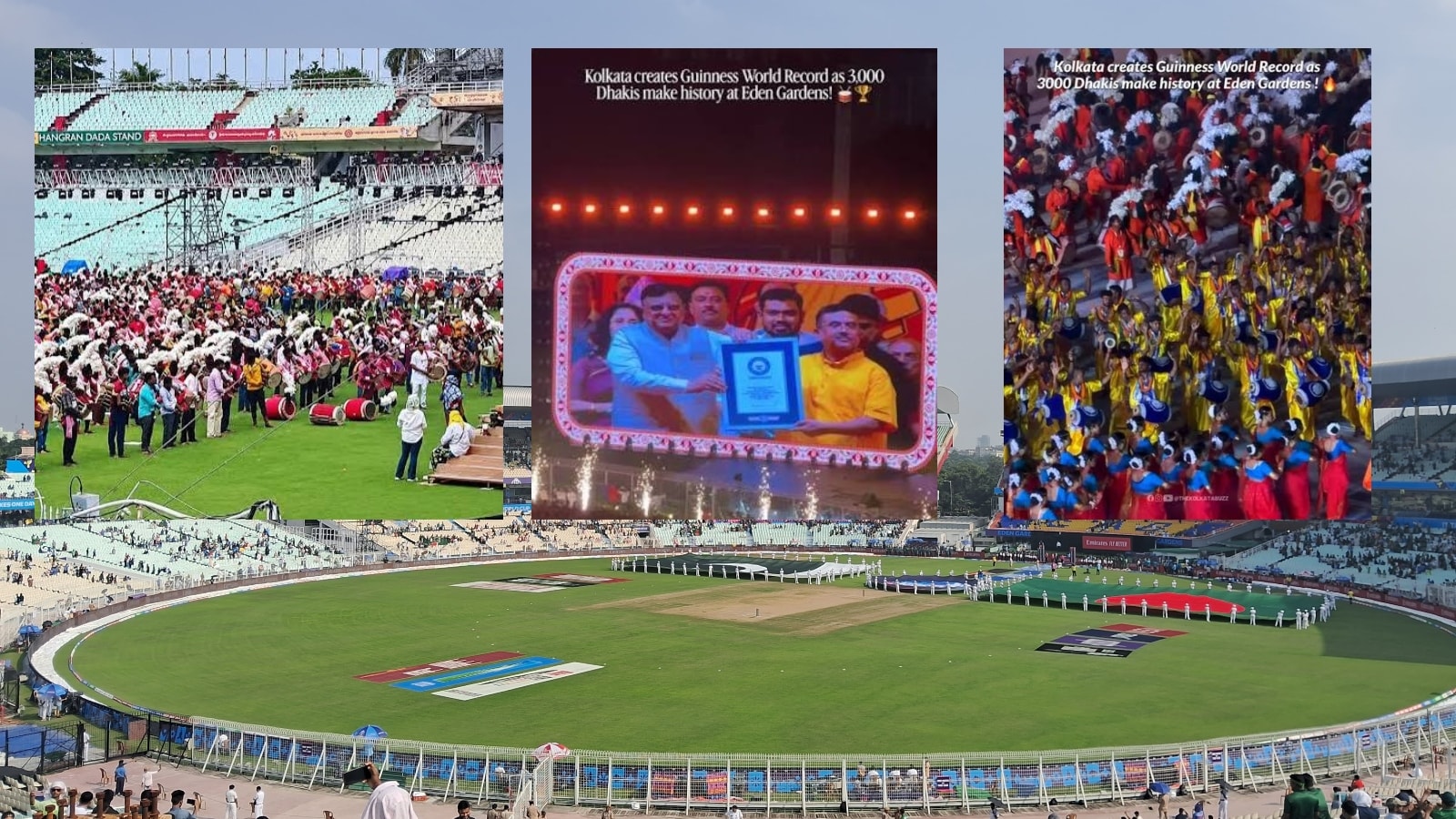
3,000 traditional Bengali drummers, known as dhakis, set a Guinness World Record at Kolkata's Eden Gardens on Mahalaya, a significant day marking Goddess Durga's arrival.
The Cliff News | 11 October 2026
In a spectacular display of cultural heritage and unified performance, 3,000 dhakis, traditional Bengali drummers, achieved a monumental feat by setting a Guinness World Record at Kolkata's iconic Eden Gardens stadium. The historic event took place on Mahalaya, a significant day in the Bengali calendar that heralds the arrival of Goddess Durga.
The mass performance saw an unprecedented number of dhakis gather to play their signature beats, creating a powerful and resonant atmosphere. This ambitious attempt to create a world record, coupled with a simultaneous drone show featuring 3,000 drones, aimed to mark the auspicious occasion with an unforgettable spectacle.
The Heartbeat of Durga Puja: Who Are Dhakis?
Dhakis are indispensable traditional musicians in Bengal, renowned for their mastery of the dhak, a large, barrel-shaped drum. Their energetic drumming forms the quintessential soundtrack to Durga Puja and other significant Bengali festivals. The tradition of playing the dhak is passed down through generations, typically within a male-dominated craft.
Interestingly, the profession of dhakis is seasonal. Many agricultural labourers migrate to major urban centers like Kolkata specifically for the 5-to-7-day duration of Durga Puja or Kali Puja. They play traditional beats known as pujar badyo, which are integral to key rituals such as Bodhon (the invocation of Goddess Durga), Sandhi Puja, Sandhya Arati, and Visarjan (immersion).
Beyond their rhythmic contributions, dhakis are central to the Dhunuchi Nritya, a devotional dance where participants balance flaming incense burners. This performance, often done in front of Durga idols, is a cherished part of the pujo celebrations and highlights the profound cultural significance of the dhakis.
Mahalaya: A Sacred Omen and Cultural Dawn
Mahalaya holds profound importance in Bengali culture as it signifies the end of Pitru Paksha, a period dedicated to ancestral remembrance, and the commencement of Devi Paksha. This day marks the beginning of Goddess Durga's journey from Mount Kailash to her earthly abode, a prelude to the grand Durga Puja festivities.
The occasion is also dedicated to the invocation of Goddess Durga, celebrated as Mahishasuramardini – the ten-armed warrior deity who vanquishes the demon Mahishasura. This narrative symbolizes the eternal triumph of good over evil, a core tenet of the festival. For Bengalis, Maa Durga is not merely a deity but revered as a daughter returning to her maternal home, making the period one of joyous celebration rather than solemn observance.
Historically, during India's struggle for independence from British colonial rule, Durga Puja celebrations in Kolkata fostered a sense of community and unity across diverse neighborhoods. These collective gatherings served as a powerful platform to disseminate revolutionary messages and strategize resistance against colonial oppression. Prominent Bengali literary figures like Rabindranath Tagore and Kazi Nazrul Islam further reinforced the ideology, equating Goddess Durga's divine victory over evil with India's own liberation.
Eden Gardens: A Sporting Icon Hosts Cultural Milestone
The historic Eden Gardens stadium, renowned globally as India's oldest and most iconic international cricket venue, provided a monumental backdrop for this cultural achievement. Often referred to as the 'Mecca of Indian cricket' and the 'Lords of the East', the stadium is India's second-largest cricket ground and the third-largest worldwide.
Established in 1864, the origins of the stadium's name are steeped in folklore. While some attribute it to its geographical location, others suggest it was named after the sisters of George Eden, 1st Earl of Auckland, the Governor-General of India from 1836 to 1842. The grounds were initially known as the 'Auckland Circus Gardens' before being renamed 'Eden Gardens' in 1841.
The convergence of 3,000 dhakis in this hallowed sporting arena underscores the deep integration of cultural celebrations with public spaces in Kolkata, creating an unforgettable event that resonated with both tradition and modernity. The record-setting performance on Mahalaya has further cemented the importance of these traditional art forms in contemporary Bengali life.