
Tibetan Plateau Lakes: Thawing Accelerates Greenhouse Gas Release
Tibetan lakes are now major greenhouse gas sources due to climate warming.
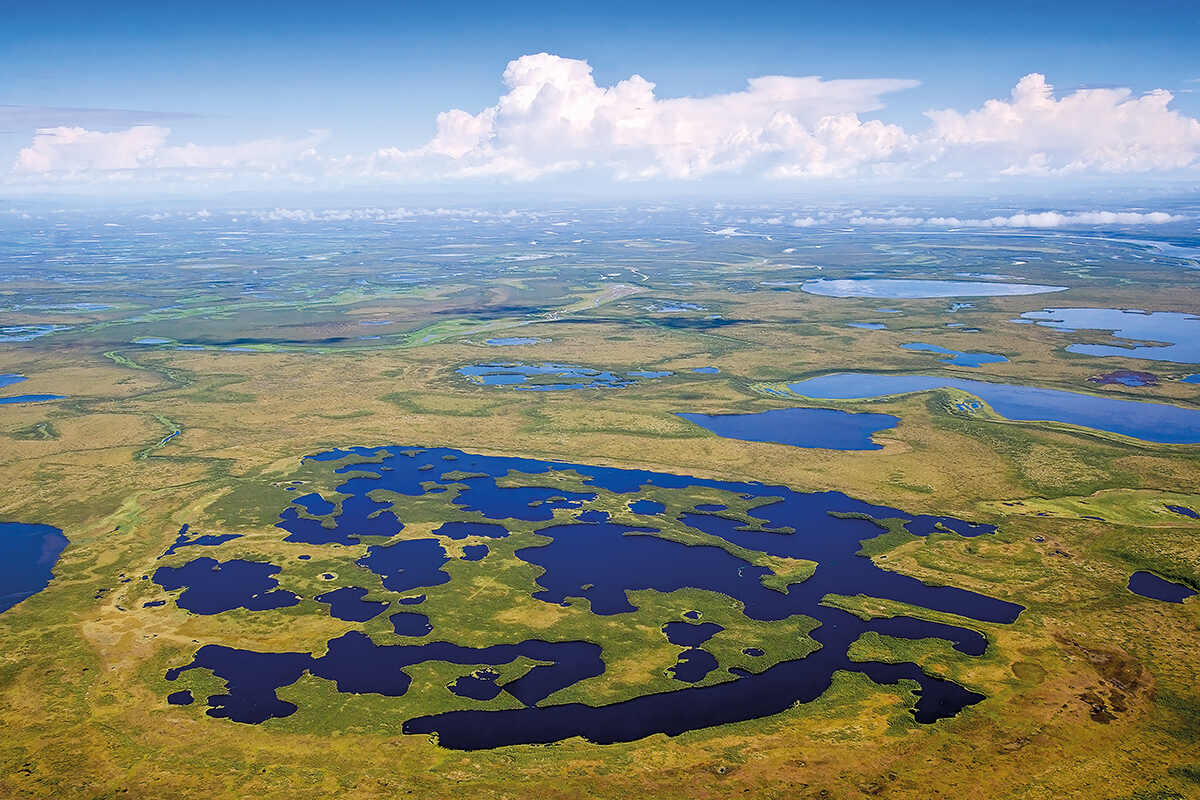
Top Summary
- What happened: A new review of nearly 400 scientific papers shows Tibetan Plateau lakes are shifting from carbon sinks to greenhouse gas sources due to thawing permafrost and glacier retreat.
- Why it matters: Increased methane emissions from these lakes could exacerbate global warming, creating a dangerous feedback loop.
- What changes for people: The study calls for new management strategies to mitigate emissions from high-emitting lakes and protect carbon sinks.
- Who is affected: Regional green development, global carbon neutrality strategies, and communities vulnerable to climate change.
Thawing Lakes: A Greenhouse Gas Threat
Climate warming is transforming Tibetan Plateau lakes into major greenhouse gas sources. Rising temperatures are accelerating permafrost thaw and glacier retreat.
This process feeds the expansion of thermokarst lakes, which release ancient carbon as both carbon dioxide (CO2) and methane (CH4).
Methane Emissions: A Potent Danger
Methane is a greenhouse gas 28 times more potent than CO2. Thermokarst lakes are critical hotspots for methane emissions.
The study, published in Watershed Ecology and the Environment, analyzed nearly 400 scientific papers.
The Role of Microorganisms
Microbes act as the “core engine” driving these emissions. They decompose organic matter and cycle key nutrients.
Warming extends the growing season for algae (which absorb CO2), but simultaneously supercharges microbial decomposition.
Call for Integrated Models
Dr. Yang Liu, the corresponding author of the study, emphasizes the need for typology-based management strategies.
"Our review shows that the role of these plateau lakes is not uniform. They have differentiated into distinct types, ranging from significant carbon sinks to powerful carbon sources."
The authors call for an integrated, multi-factor model incorporating microbial functional genes, nutrient coupling, and climate drivers.
Lake-Type Zoning Management
Such a model would allow for “lake-type zoning” management. This would protect lakes that remain carbon sinks while mitigating emissions from thermokarst and other high-emitting lakes.
This research provides critical scientific support for regional green development and global carbon neutrality strategies.
What to Watch Next
Future research will focus on developing integrated models that incorporate microbial processes and climate drivers to better predict and manage greenhouse gas emissions from Tibetan Plateau lakes. The implementation of lake-type zoning management strategies will be crucial in mitigating the impact of these emissions on global climate change.