
OpenAI Unveils ChatGPT Speaker: Not a Phone, But a Moving AI Companion
OpenAI's first device is a ChatGPT-powered speaker designed to feel alive, aiming for enhanced user proactivity and productivity.
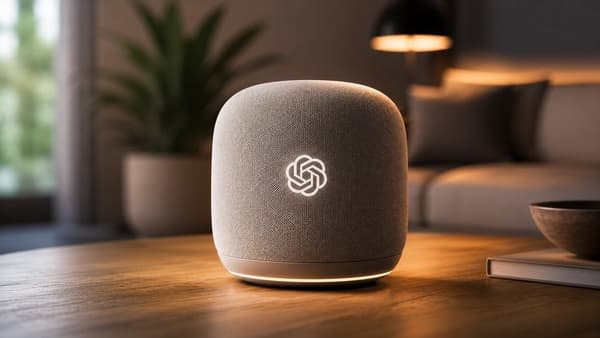
OpenAI's Bold Entry: A Proactive AI Companion, Not a Smartphone
- What happened: OpenAI has revealed its first hardware device is a portable, screenless ChatGPT-powered speaker that moves, rather than the anticipated smartphone.
- Why it matters: This marks OpenAI's significant move into hardware, aiming to redefine personal AI interaction beyond current smart speaker capabilities.
- What changes: Users can expect a more proactive and personalized AI experience, with the device learning habits and anticipating needs, potentially boosting productivity.
- Who is affected: Tech giants like Apple and established smart home companies such as Sonos are directly impacted, facing new competition in the AI-driven hardware space.
A New Kind of Computer
Contrary to widespread expectations of a smartphone, OpenAI's inaugural hardware offering is a portable, screenless speaker. Internally referred to as a "humanlike AI companion," this device is designed to feel more present and alive.
The speaker will perform typical smart home functions, including appliance control, music playback, and message handling, all powered by ChatGPT. Its unique feature lies in its mechanical components that allow it to move autonomously, creating a sense of animation.
Anticipating User Needs
The core innovation of this device lies in its proactivity. Over time, it learns user habits and can even access emails to anticipate needs and surface information before being asked. This aims to position it as an AI assistant that already knows the answers.
Equipped with a camera and sensors, the device can analyze its surroundings, providing context that current smart speakers lack. It utilizes GPT-Live, OpenAI's advanced voice mode that enables simultaneous listening and speaking, with seamless mid-conversation adjustments.
Design and Development Prowess
Significant design expertise underpins this project. OpenAI has enlisted former Apple design chief Jony Ive through his studio, LoveFrom. Furthermore, Apple's former industrial design head, Evans Hankey, is leading the speaker's development.
This venture into hardware is substantial, with OpenAI reportedly spending $6.5 billion to acquire hardware startup io Products. The company has also hired over 400 former Apple employees.
Facing Legal Scrutiny
OpenAI's hardware ambitions have immediately drawn legal challenges from Apple, which alleges trade-secret theft. OpenAI asserts that its speaker "veers significantly" from existing market offerings, particularly Apple's HomePod line.
OpenAI denies wrongdoing and states it has seen no evidence to support Apple's claims.
Despite OpenAI's claims of differentiation in audio systems and hardware, Apple views the products as comparable. The legal dispute could impact the product's launch timeline.
Future Outlook
The company is targeting a reveal later this year, with a planned shipment in 2027. This speaker is the first of approximately five devices in OpenAI's hardware pipeline.
The move into proactive AI hardware marks a critical step for OpenAI, potentially influencing the future of smart home technology and personal computing. Competitors, especially Apple, are also reportedly developing similar advanced home devices.
What to Watch Next
The ongoing legal battle between OpenAI and Apple will be crucial in determining the 2027 launch schedule. Additionally, market reaction to the device's proactive capabilities and its ability to truly feel "alive" will be closely observed.