
NASA Ends Decade-Long MAVEN Mars Mission After Spacecraft Loss
NASA has officially terminated its highly successful MAVEN Mars mission after failing to re-establish contact with the decade-old spacecraft.
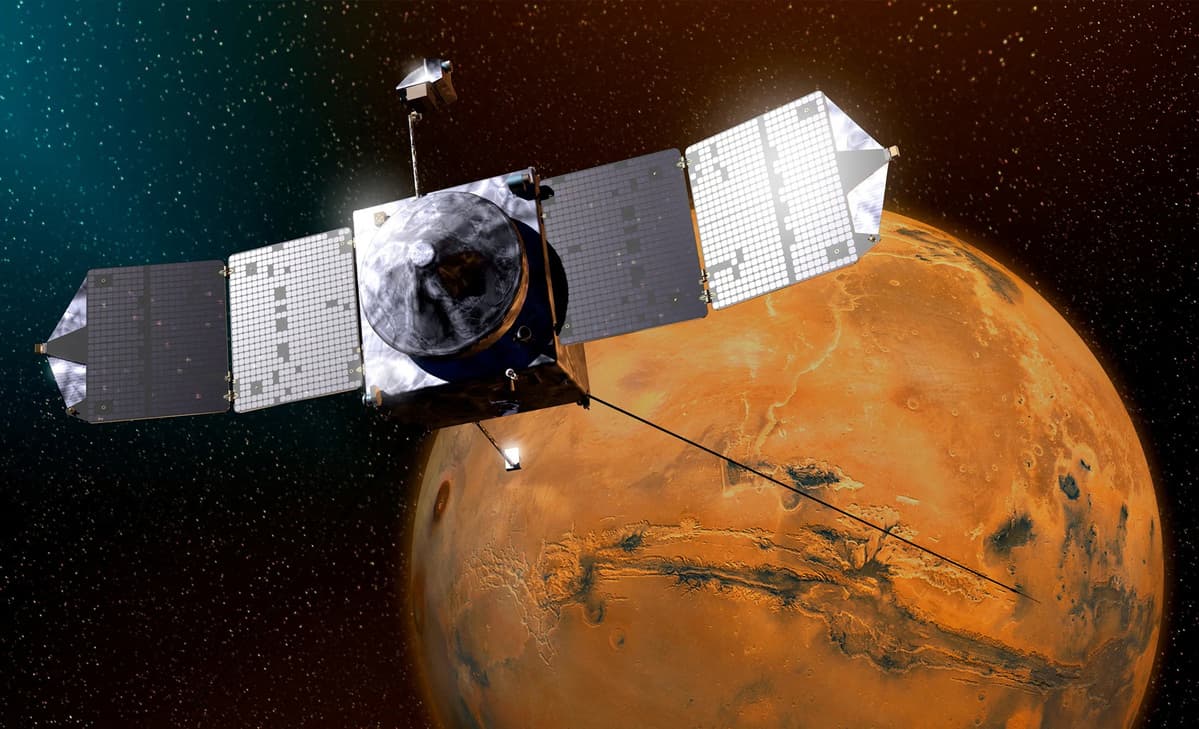
Top Summary
- What happened: NASA officially declared the end of its MAVEN Mars mission following a total loss of contact with the spacecraft.
- Why it matters: MAVEN operated for over 11 years, vastly exceeding its design life and providing key data on the Martian atmosphere.
- What changes: Active data collection has ceased, shifting the focus to archiving and analyzing the massive historical dataset.
- Who is affected: The global scientific community and future space exploration missions preparing human travel to Mars.
A Historic Mission Comes to an End
The National Aeronautics and Space Administration (NASA) has officially declared the end of its pioneering Mars Atmosphere and Volatile Evolution (MAVEN) mission. This decision follows a total loss of communication with the orbiting spacecraft late last year.
Blasting off on November 18, 2013, MAVEN successfully entered Mars' orbit on September 21, 2014. While designed for a primary lifespan of only **one year**, the robust explorer operated at the Red Planet for **more than 11 years**, outlasting its planned mission duration by over a decade.
The Final Signal and Recovery Efforts
The ground control team last received a transmission from the spacecraft on December 6, 2025. The unexpected signal loss occurred immediately after MAVEN passed behind Mars.
In response, NASA convened a specialized anomaly review board in February to evaluate recovery efforts and determine the spacecraft's physical condition. The review board ultimately concluded that the spacecraft is completely unrecoverable and can no longer execute its scientific and data relay responsibilities.
What Caused the Spacecraft Loss?
Initial investigations suggest that MAVEN entered a high-rate rotation after transitioning behind Mars. This uncontrolled spinning triggered a cascade of failures:
- Disruption of the spacecraft's planned orbital trajectory.
- A rapid, complete drain of the onboard batteries.
- Total power loss to the communication system, rendering MAVEN unable to contact Earth.
The exact cause of the anomalous rotation remains unknown, and a final investigation report is expected later this year.
Archiving a Legacy for Future Space Travel
NASA has now initiated the formal process to decommission the mission and archive the complete dataset for future scientific research. This information is vital for the safety of future crewed missions to the Red Planet.
Louise Prockter, director of the Planetary Science Division at NASA Headquarters in Washington, emphasized the historical importance of the mission:
"The science MAVEN has given us is key to informing what kind of radiation protection and safety measures we must take before sending humans to Mars."
What to Watch Next
Engineers and scientists will focus on compiling the final anomaly report to identify the root cause of the spacecraft's fatal rotation later this year. Meanwhile, researchers worldwide will begin systematically analyzing the newly archived historical MAVEN dataset to design safety measures for future human exploration of Mars.