
Mysterious Substance Found on Titan and Pluto Stuns Scientists
An unknown compound, detected on both Saturn's moon Titan and dwarf planet Pluto, has astronomers puzzled.
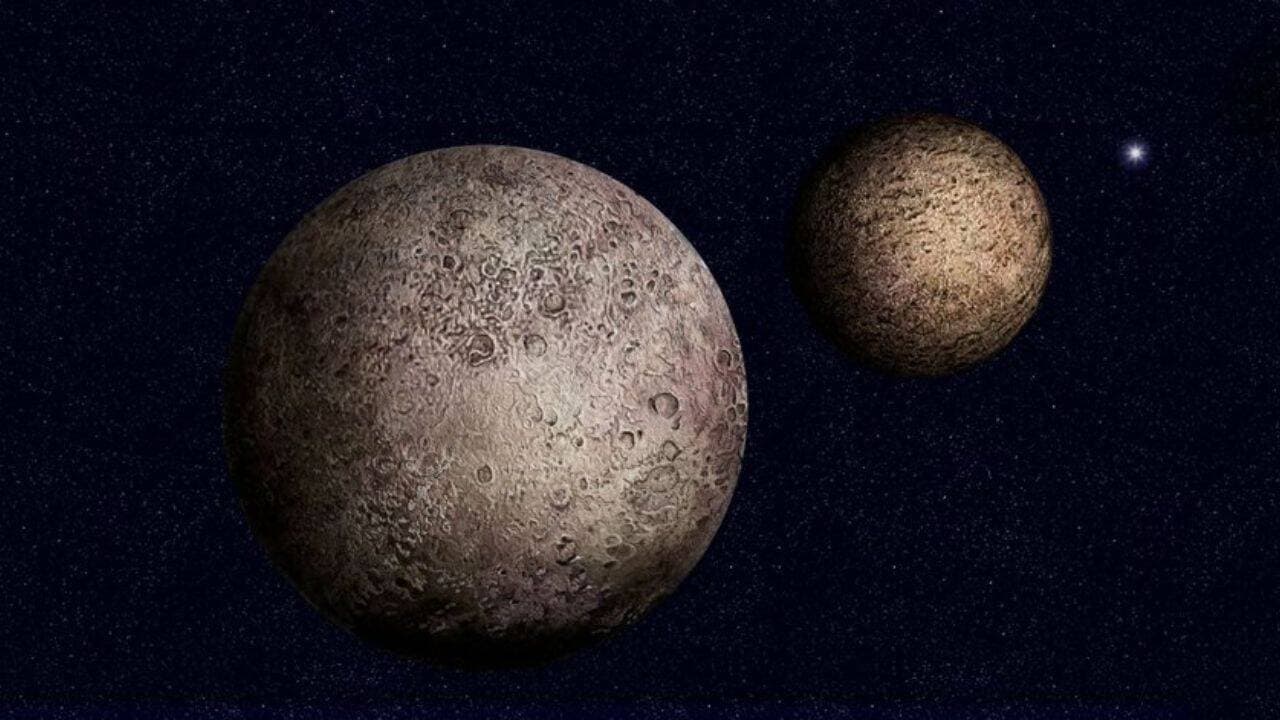
Top Summary
- What happened: Researchers using the James Webb Space Telescope detected a unique spectral signature on both Titan and Pluto, indicating a mysterious substance.
- Why it matters: Identifying this compound could unlock secrets about Titan's complex chemistry and its potential for hosting alien life.
- What changes: Current understanding of planetary surface compositions may need revision as scientists work to identify this novel substance.
- Who is affected: The scientific community, particularly those studying planetary science and astrobiology, are impacted by this intriguing discovery.
Unidentified Compound Detected on Distant Worlds
Scientists have identified a perplexing substance present on both Saturn's moon Titan and the dwarf planet Pluto. This discovery, made using data from the James Webb Space Telescope, has left researchers seeking answers.
The compound reveals itself through a specific pattern of light absorption, a narrow band on Titan and a broader one on Pluto. This spectral signature does not match any known compounds.
Titan's Chemistry and the Search for Life
Titan, with its dense atmosphere and potential for liquid oceans, is a prime candidate in the search for extraterrestrial life. Understanding its complex chemistry is therefore paramount.
This newly found substance could be a crucial piece of the puzzle in deciphering Titan's unique environment. Its presence on Pluto, despite significant differences, suggests a shared or surprisingly adaptable chemical pathway.
Comparing Two Vastly Different Worlds
Pluto and Titan, though seemingly disparate celestial bodies, share an intriguing chemical similarity. Pluto is significantly colder and has a far less dense atmosphere compared to Titan.
However, recent spectral analysis has shown a common anomaly in their light absorption patterns. This unexpected link is prompting further investigation into their atmospheric and surface compositions.
The Hunt for a Match
Astronomers employed spectroscopy to analyze the light signatures from both celestial bodies. This method involves studying how wavelengths of light are absorbed, reflected, or emitted by different chemicals.
The team, led by Bruno Bézard from the Paris Observatory, meticulously compared the observed spectral features with extensive databases of known compounds and potential ice formations.
“We have a few candidates, but it will not be a simple compound,” stated Bézard. “Whatever it is, it will be a surprise.”
Potential Explanations and Future Research
While no exact match was found, some compounds came close. These near-matches suggest that the mysterious substance might be a modified form of a known molecule or a mixture of several compounds.
Further investigation is planned by Bézard and his colleagues to pinpoint the identity of this unusual compound. The scientific community eagerly awaits the results of these ongoing studies.
What to Watch Next
Future observations with advanced telescopes will be crucial in refining the spectral data of the mysterious substance. Scientists are also exploring laboratory experiments to simulate conditions that could create such a compound.