
ISS: NASA Studies Cancer, Blood Clots, & Preps for Spacewalks
Astronauts on the ISS study cancer treatments and prep for spacewalks.
Top Summary
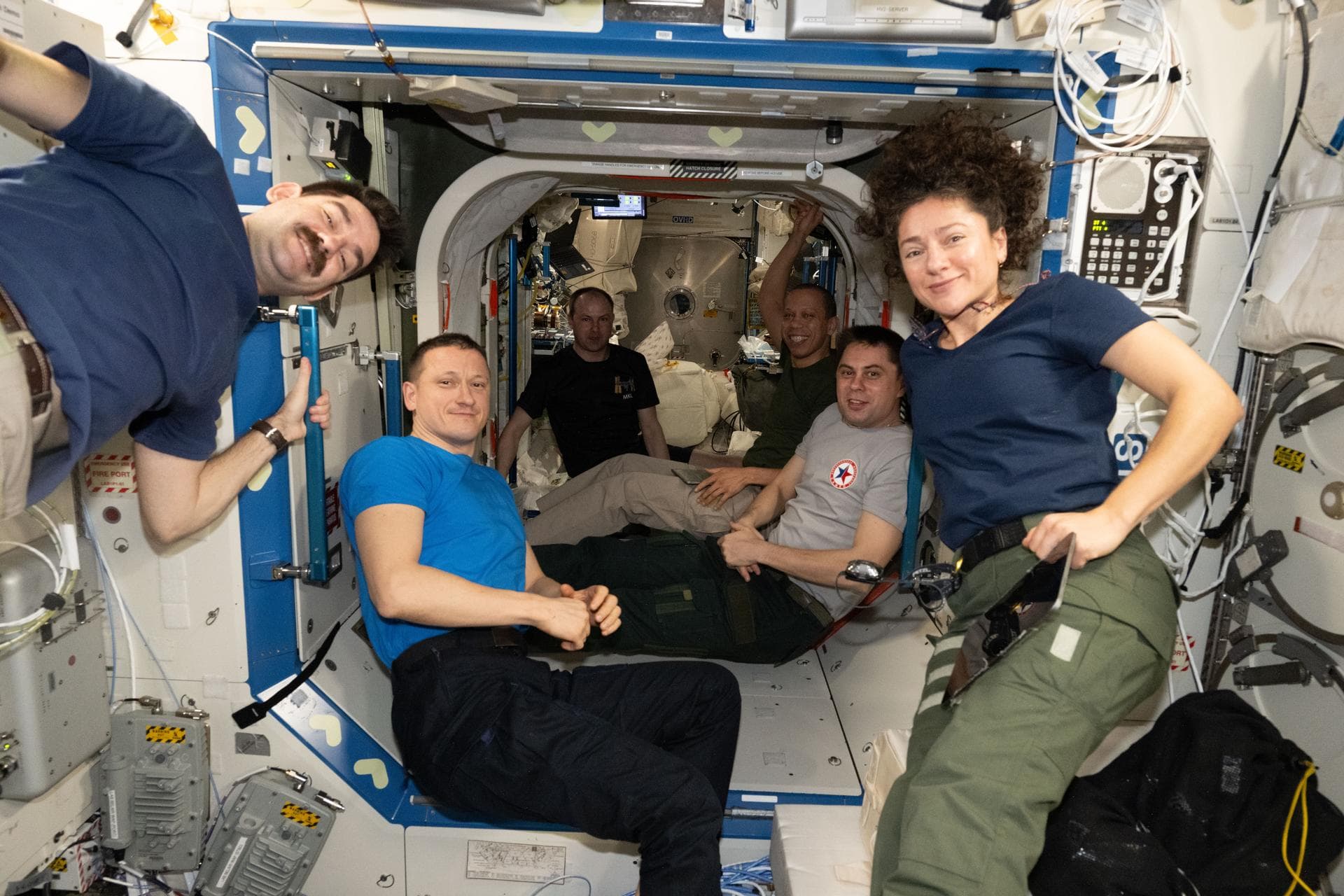
- What happened: NASA astronauts aboard the International Space Station (ISS) are conducting biomedical research focusing on cancer and blood clots, alongside preparing for upcoming spacewalks (EVAs).
- Why it matters: Research in microgravity may lead to medical breakthroughs for cancer treatment and understanding blood behavior, benefiting both astronauts and people on Earth.
- What changes for people: Insights from space-based studies could result in improved cancer treatments and a better understanding of blood-clotting mechanisms.
- Who is affected: Cancer patients, individuals at risk of blood clots, astronauts on long-duration missions, and the broader medical community are all affected.
Cancer Research in Microgravity
On May 20, 2026, Expedition 74 crew members are utilizing the ISS's microgravity environment.
Their aim is to better understand how diseases, particularly cancer and blood clots, develop in space conditions.
According to NASA, insights gained from these studies could contribute to future medical breakthroughs on Earth. This research will also help protect astronaut health during long-duration missions to the Moon and Mars.
Experiments and Objectives
NASA researchers are concentrating on cancer cell behavior and blood system activity in space. Experiments involve observing the effect of cancer treatments on biological samples during weightlessness.
The crew members are exploring how cancer and blood-clotting systems respond in space using laboratory modules onboard the ISS.
Samples are exposed to radiation and microgravity to investigate the impact on cancer disease development.
The International Space Station is described as a "unique laboratory" where biological processes can be studied without the influence of gravity, opening new pathways for medical innovation.
One key benefit is the opportunity to conduct cell-growth experiments in a 3D environment, more accurately mimicking natural tumor behavior.
Blood research examines clot formation under weightlessness, investigating why astronauts' circulation and immune responses are impacted.
Spacewalk Preparations
In addition to scientific experiments, cosmonauts are preparing for spacewalks, also known as extravehicular activities.
Astronauts are practicing physically and mentally for spacewalks scheduled within the current month.
Cosmonauts from Roscosmos are also involved in this activity.
The Rigors of EVA
Spacewalks require careful preparation on Earth, including practicing under weightless conditions by diving into water.
Astronauts work in a vacuum wearing heavy pressurized suits, which limits mobility.
Each mistake may turn into a disaster in space.
The purpose of spacewalks is to maintain the station itself, including repairing outer constructions, installing new apparatuses, and checking solar panels.
Space Science and Medical Innovation
The connection between cancer, blood, and spacewalk studies highlights the dual nature of human space flights: science and operations.
Agencies like the European Space Agency also conduct studies in biology, medicine, and material sciences on the ISS.
It is expected that results obtained during studies will provide important insights into disease development and methods used to cure it.
Scientists believe further research on cells in microgravity will be useful to find better treatments for complex diseases, including certain types of cancer.
Spacewalk preparation provides necessary skills for crew members to ensure proper station maintenance and equipment repairs.
The International Space Station operates as both an engineering facility and a science laboratory, linking space research and developments in medicine.
What to Watch Next
The outcomes of the current spacewalk preparations will be closely monitored for their impact on station maintenance and future EVA procedures. Also, expect updates on the ongoing cancer and blood clot studies aboard the ISS, as scientists analyze the data collected in microgravity.