
ISRO Scientist Nandini Harinath's Mars Mission Sari Displayed At US Smithsonian Museum
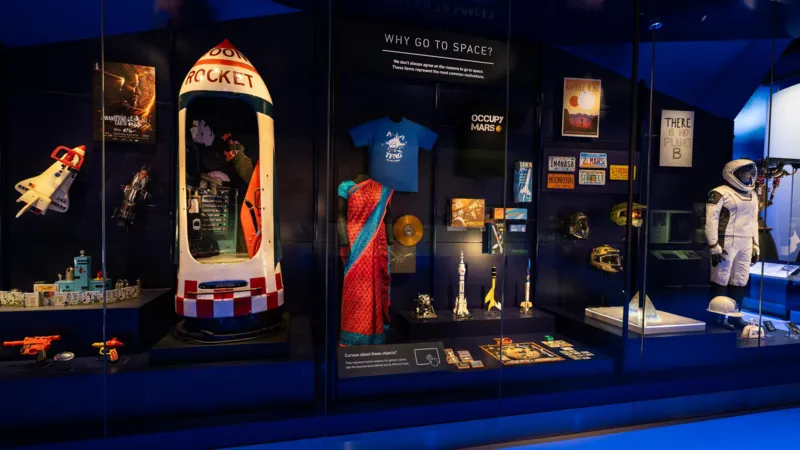
The historic sari worn by ISRO scientist Nandini Harinath is now on display at the US Smithsonian's National Air and Space Museum.
Top Summary
- What happened: The historic sari of ISRO scientist Nandini Harinath is now on display at the US Smithsonian Museum.
- Why it matters: It marks the museum's first-ever sari and the first Indian object in its interplanetary science collection.
- What changes: Millions of international visitors can now see Indian space history represented alongside iconic global space artifacts.
- Who is affected: Space enthusiasts, global museum visitors, and the international scientific community.
A Historic First for Indian Space Science
The prestigious Smithsonian's National Air and Space Museum has added a historic piece of Indian space exploration to its collection. The sari and matching blue blouse worn by ISRO space scientist Nandini Harinath during India's landmark Mars mission are now showcased for public viewing.
To prepare the exhibit, textiles conservator Beth Knight had to watch YouTube videos to learn the precise technique of draping the traditional Indian garment on a mannequin.
A Significant Addition to the Interplanetary Collection
While the Smithsonian, which sees tens of thousands of visitors weekly, houses other Indian artifacts, most originate from the Air Force and airline companies. The collection also includes a commemorative silver tray presented by ISRO to science fiction author Arthur C. Clarke in 2007 on his 90th birthday.
However, this textile piece represents a major milestone for the institution's space curation.
"But Nandini's sari is the first object I have collected from India for our interplanetary science collection and it's our very first sari," Shindell says.
Positioned Alongside Icons of Space History
The garment is on display in the museum's "Futures in Space" gallery. It is placed right next to the iconic blue t-shirt worn by Sally Ride during her historic 1983 Shuttle mission as the first American woman in space.
Curators noted that the sari shares a "family resemblance" to other iconic garments worn during crucial ground control operations, drawing a comparison of key artifacts:
- Nandini Harinath's Sari: Worn during India's historic Mars mission at ground control.
- Gene Kranz's Vest: Worn by the NASA Flight Control Chief in 1970 to guide the Apollo 13 crew back to safety.
- Sally Ride's Blue T-Shirt: Worn during the groundbreaking 1983 spaceflight.
The goal of this display is to engage visitors with recent events in space and spark conversations about what could happen next in exploration.
What to Watch Next
The Smithsonian will continue using this exhibit to inspire and educate its massive weekly audience about diverse global contributions to space exploration. Future updates to the "Futures in Space" gallery may feature more contemporary international milestones. Observers will watch how this inclusion paves the way for more diverse representations of Asian space achievements in global museums.