
Voyager 1 Powers Down Instrument After 47 Years: What it Means
NASA shuts down Voyager 1's LECP to conserve power after nearly five decades of operation.
Top Summary
- What happened: NASA's Voyager 1 powered down its Low-energy Charged Particles (LECP) experiment after 47 years to conserve dwindling power.
- Why it matters: LECP provided vital data about the interstellar medium. Conserving power keeps Voyager 1 operational longer.
- What changes for people: Temporary loss of LECP data, but could resume if the 'Big Bang' power fix succeeds.
- Who is affected: Scientists studying interstellar space and the Voyager mission team.
Voyager 1's Power Problem
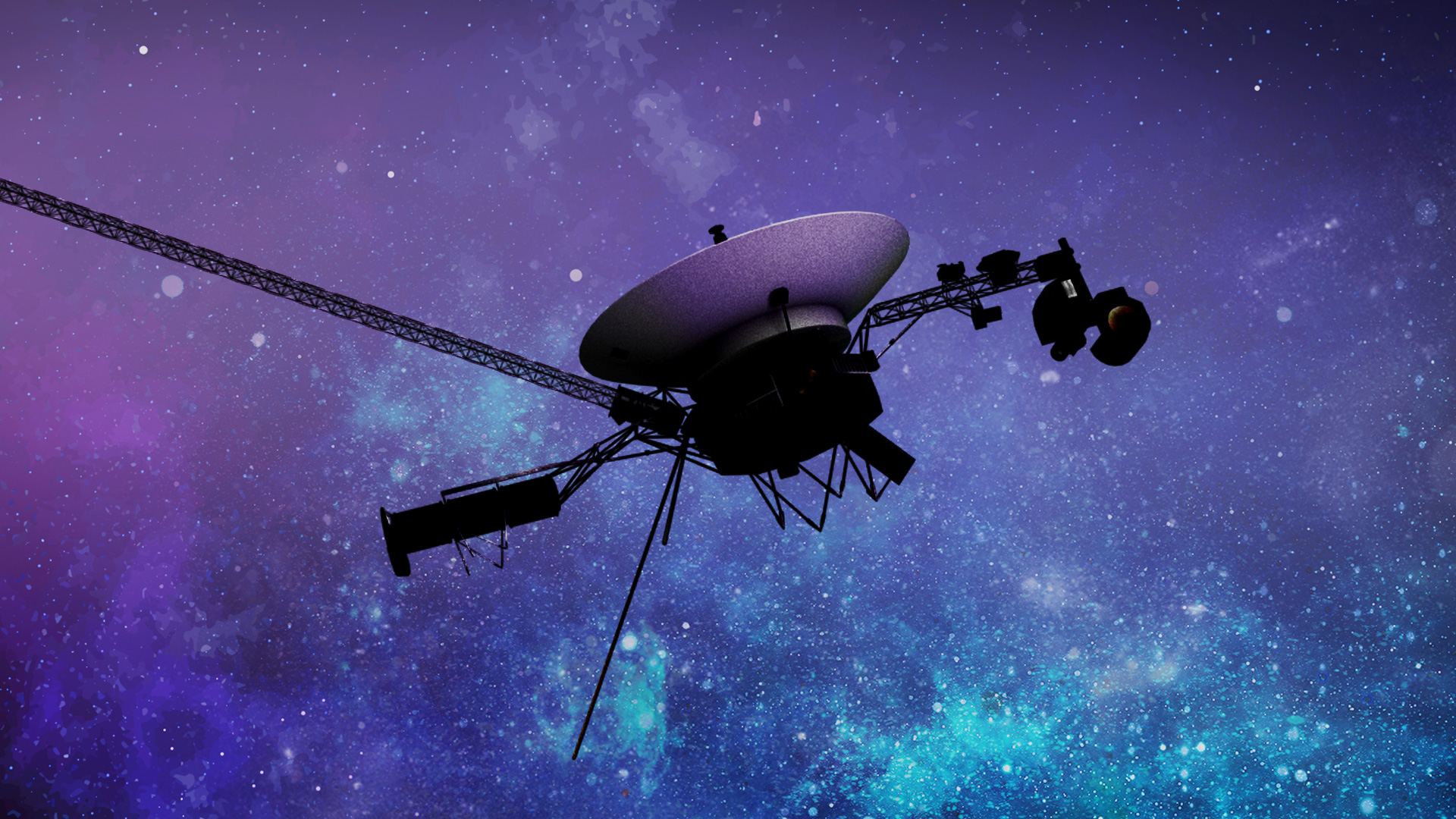
NASA's Jet Propulsion Laboratory (JPL) shut down the Low-energy Charged Particles experiment (LECP) on Voyager 1 on April 17. This was a necessary step to conserve power on the aging spacecraft.
Voyager 1, launched in 1977, relies on a radioisotope thermoelectric generator, which loses about 4 watts of power each year.
This shutdown avoids triggering the spacecraft's undervoltage fault protection system. Mission engineers proactively acted to prevent this from happening during a routine maneuver on Feb. 27.
LECP's Legacy
The LECP has operated almost continuously since 1977, measuring low-energy charged particles from our solar system and galaxy.
"While shutting down a science instrument is not anybody's preference, it is the best option available," said Kareem Badaruddin, Voyager mission manager at JPL.
It provided critical data on the structure of the interstellar medium. Voyager 1 is over 15 billion miles from Earth, making it the only spacecraft capable of gathering such information.
The Conservation Plan
The Voyager team had planned this shutdown years in advance, creating a list of instruments to deactivate as power decreased.
The LECP was next on the list. The team shut down the LECP on Voyager 2 in March 2025.
Only a small motor (using 0.5 watts) that spins the sensor will remain on, allowing for possible reactivation if more power becomes available.
'The Big Bang' Solution
Engineers estimate that shutting down the LECP will provide Voyager 1 with an additional year of operation.
They are working on a more ambitious solution called "the Big Bang", swapping out multiple devices for lower-power alternatives.
This "Big Bang" will first be tested on Voyager 2 in May and June of 2026. If successful, the same fix will be applied to Voyager 1 no sooner than July. There's a possibility of reactivating the LECP if this occurs.
What to Watch Next
Keep an eye on the Voyager 2 tests of the "Big Bang" power-saving fix in May and June 2026. The success of these tests will determine whether Voyager 1's LECP can be reactivated and how much longer these historic spacecraft can continue their missions.