
US Loses Measles-Free Status After Case Surge
The United States has been stripped of its measles-elimination status due to a significant rise in cases, reversing a decade-long public health victory and marking...
The Cliff News | 17 November 2026
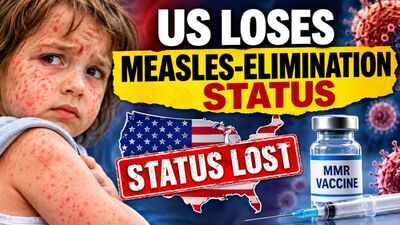
The United States has officially lost its measles-elimination status, a significant public health setback following a dramatic surge in cases this year. The Pan American Health Organization (PAHO), an independent commission operating under the World Health Organization (WHO), withdrew the designation after concluding that measles transmission has continued uninterrupted within the country for over 12 months.
This decision marks a reversal of a major public health achievement, as the US was first declared to have eliminated measles in 2000. The virus is now considered endemic in the country once again. PAHO is expected to formally announce the withdrawal on Tuesday.
Dramatic Surge in Measles Cases
Experts are sounding the alarm over the severity of the current measles situation in the US. "The United States has an extraordinary measles problem," stated Noel Brewer, a public health professor at the University of North Carolina at Chapel Hill. "We’ve had more measles cases in the last 18 months than we’ve had in the previous 25 years combined."
More than 5,400 measles cases have been reported in the US this year alone. This figure is more than double the previous year's total and represents the highest annual count since 1991. State health departments have also confirmed 10 deaths linked to the disease.
PAHO's Assessment Criteria
PAHO is responsible for evaluating whether countries in the Americas meet the criteria for measles elimination. The eight-member commission of public health experts convened in Washington, DC, last week for four days to meticulously examine the situation in the US. Their assessment focused on determining if the virus had been circulating continuously for at least a year.
The panel analyzed crucial data, including genetic information from locally acquired infections – cases not associated with international travel. This helped them establish connections between outbreaks in different states. They also considered key public health indicators such as vaccination coverage rates, the effectiveness of the country's disease surveillance systems, and its overall preparedness to contain outbreaks.
Declining Vaccination Rates Fueling Outbreaks
A primary driver behind the resurgence of measles is the documented decline in vaccination rates across the US in recent years. During the 2025-26 school year, only 92% of kindergarten children received the measles vaccine. This is a notable drop from the 95% coverage observed in the 2019-20 school year, a threshold generally considered necessary to prevent widespread outbreaks.
An investigation by NBC News revealed that vaccination coverage fell below this critical benchmark in 75% of US counties and jurisdictions for which kindergarten measles vaccine data was available. This widespread under-vaccination has created a larger pool of susceptible individuals, allowing the virus to spread more easily.
Vulnerable Populations at Risk
The return of endemic measles poses significant risks, particularly to unvaccinated individuals. Walter Orenstein, former director of the US Immunization Program at the Centers for Disease Control and Prevention (CDC), emphasized the considerable danger. Infants, who typically receive their first measles vaccine dose at 12 months, and individuals with weakened immune systems are especially vulnerable.
"People can go into a supermarket and get infected," Orenstein warned, highlighting the ease with which the highly contagious virus can spread in community settings. At least four of the measles-related deaths reported this year tragically involved infants too young to have received the routine vaccine, underscoring the urgency of the situation.
Public Health Response and Recommendations
In affected areas, health authorities are now advising parents to consider administering an earlier dose of the measles vaccine to babies as young as six months. This measure is being implemented to provide critical protection to the youngest and most vulnerable populations amidst the ongoing outbreaks.
Measles is recognized as one of the most infectious diseases known. A single infected individual can transmit the virus to up to nine out of 10 susceptible people in close proximity. Furthermore, the virus can remain airborne for up to two hours, posing a continuous threat.
Severe Complications and Calls for Action
For unvaccinated individuals, measles infection can lead to severe complications, including pneumonia and inflammation of the brain. Professor Noel Brewer characterized the current lack of a comprehensive response plan as "clear negligence," emphasizing the urgent need for immediate and effective action to control the outbreak.
Previously, the CDC had a history of responding to measles outbreaks through public briefings and organized vaccination drives. The current situation calls for a renewed and robust public health strategy to curb the spread and protect the population from this preventable disease.