
US Immigration Policy Shifts Spark Anxiety for Indian Talent
New U.S. policy proposals and recent incidents are raising concerns among Indian professionals and students about their long-term prospects in America. The 'Brown Face Test'...
The Cliff News | 10 October 2026
A perceived shift in American immigration policy and recent high-profile incidents are fueling anxiety among Indian professionals and students regarding their future in the United States. These developments suggest that the traditionally open pathway for skilled immigrants is becoming more complex and potentially exclusionary, raising questions about America's commitment to attracting global talent.
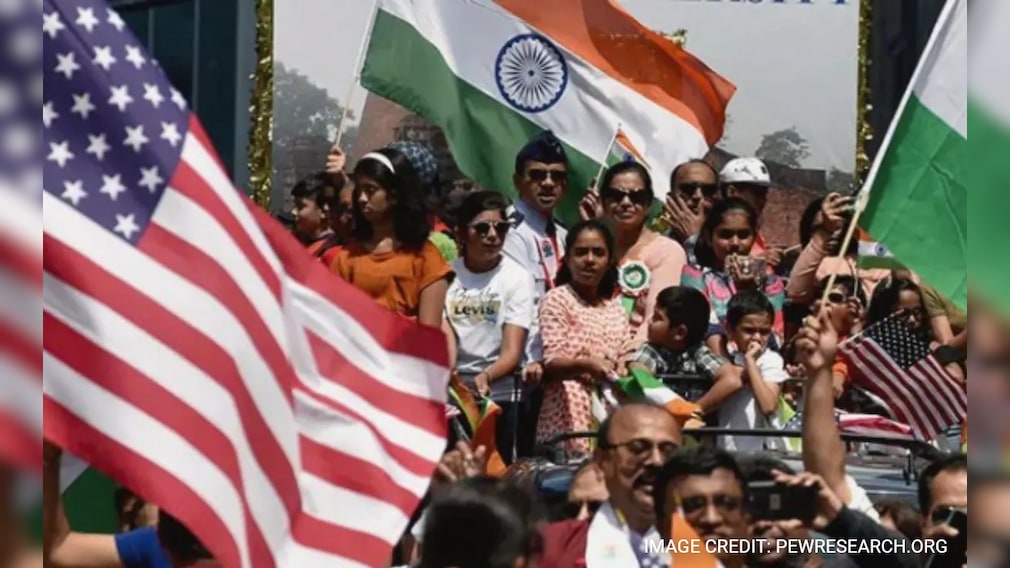
For millions of Indians, America has long represented a promise of meritocracy, where hard work and dedication, rather than birthright, paved the way for success. This proposition involved legal immigration, diligent study and work, tax compliance, entrepreneurship, and integration into American society through education, cultural engagement, and civic participation. However, a new, unwritten challenge has emerged, referred to by some as the 'Brown Face Test,' which appears to gauge an individual's acceptance based on appearance, irrespective of their qualifications or legal status.
Policy Changes Create Uncertainty
Recent actions by the Trump administration have significantly amplified these concerns. A proposal to introduce a substantial USD 70,000 fee for international students participating in the Optional Practical Training (OPT) program, which allows graduates to gain work experience, could have profound implications for Indian students. Although the proposal is pending, its potential impact is enormous.
Adding to the unease, Washington recently suspended eight major technology companies, including prominent Indian IT firms like TCS, Infosys, Wipro, and HCLTech, from the Permanent Labour Certification (PERM) program. This program is a crucial step towards obtaining employment-based green cards. The suspension, citing alleged system abuses, casts a shadow over the long-term career prospects of skilled foreign workers in the U.S., even if existing H-1B visas remain unaffected.
The 'Brown Face Test' Manifests
The unsettling reality of perceived prejudice was highlighted by the actions of Bo French, a Republican nominee for the Texas Railroad Commission. French shared a photograph of South Asian students at a University of Texas football game, claiming their presence indicated that Americans were being 'displaced by foreigners.' This assertion was particularly disturbing as there was no evidence that the students were not American citizens; their perceived foreignness seemed to stem solely from their appearance.
University of Texas data indicates that only 4% of its students are foreign. The incident underscored how individuals with brown skin could be labeled as outsiders, even within educational institutions and at mainstream American events. While several Texas Republicans, including Senator John Cornyn, condemned French's remarks, the episode revealed a growing divide and the pervasive nature of 'othering' within certain political circles.
Rising Anti-India Sentiment
Online platforms have increasingly become a stage for anti-India sentiment, with this effervescence intensifying as mid-term elections approach. Several recent events in Texas have brought the intersection of immigration, race, and Indian identity to the forefront.
In April, a video by conservative influencer Savannah Hernandez focused on the Hanuman Temple in Frisco, triggering a barrage of anti-Indian and anti-Hindu comments. The video framed Indian immigration and demographic shifts in a way that incited racist rhetoric online. This sentiment escalated when conservative activist Jesse Hughes posted a photograph of a 90-foot Hanuman statue in Texas, declaring, 'When we win, we are tearing this down.' This threat was met with strong condemnation from Indian Americans, including a U.S. Army veteran who viewed it as an attack on his religion.
Government Involvement and Stereotyping
Perhaps most concerning was the involvement of the U.S. Department of Homeland Security (DHS). In September 2026, DHS posted an AI-generated immigration-enforcement image depicting a brown-skinned, turbaned man labeled 'Mr Singh.' The accompanying message, 'America for Americans. Get off our roads; you don't know how to drive, Mr Singh,' was widely condemned by Sikh and Indian-American organizations. They pointed out that 'Singh' is a common Sikh surname and that appearance should not be used as a proxy for immigration status, highlighting the dangers of racial stereotyping and profiling.
The political movement associated with Donald Trump has increasingly emphasized national identity, cultural continuity, and loyalty to his agenda, often encapsulated in slogans like MAGA and 'America for Americans.' This rhetoric appears to have emboldened the sentiment that has led to these concerning episodes and policy considerations.
The cumulative effect of these policy proposals, public statements, and online commentary creates a climate of uncertainty for Indian immigrants and professionals. The aspiration to contribute to and belong in America, a nation built on the strength of its diverse immigrant populations, is being challenged by what many perceive as a widening cultural and political divide.