
US Apache Gunship Crashes Near Strait of Hormuz Amid Rising Iran-US Tensions
A United States Army Apache attack helicopter has gone down near the strategically vital Strait of Hormuz, adding to tensions in the region amid the...
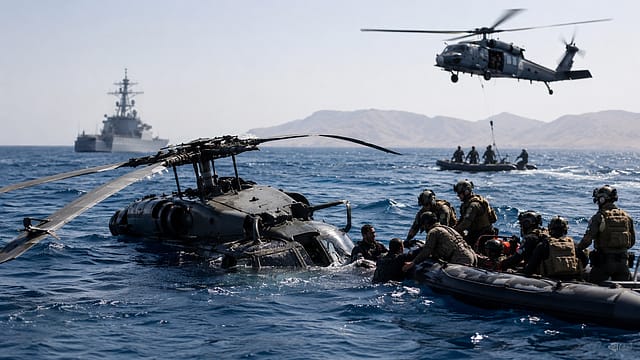
A United States Army Apache attack helicopter has gone down near the strategically vital Strait of Hormuz, adding to tensions in the region amid the ongoing military confrontation between Washington and Iran. Both crew members were rescued safely, according to reports.
What happened
A US Army Apache helicopter crashed near the Strait of Hormuz on June 9.
The incident occurred during a period of heightened military activity in the Gulf region following the escalation of hostilities between the United States and Iran.
According to reports, both pilots were successfully rescued and are safe.
US President Donald Trump confirmed that the pilots were "fine" following the crash.
Why it matters
The crash comes in one of the world's most sensitive maritime and military zones.
The Strait of Hormuz is a critical global energy chokepoint through which a significant share of the world's oil shipments pass.
Any military incident in the area is closely monitored by governments, energy markets, and security analysts due to the potential for wider regional escalation.
What changes
- US military authorities are expected to launch an investigation into the cause of the crash.
- Security measures around ongoing military operations in the Gulf could be reviewed.
- The incident adds another layer of uncertainty to an already volatile regional security situation.
Who is affected
- US military personnel operating in the Gulf region.
- International shipping companies using the Strait of Hormuz.
- Global energy markets sensitive to regional instability.
- Governments monitoring the Iran-US confrontation.
Detailed Story
A US Army Apache attack helicopter went down near the Strait of Hormuz on Tuesday, prompting immediate rescue operations that successfully recovered both crew members.
The crash occurred against the backdrop of escalating military tensions between Washington and Tehran. While reports confirmed that the pilots survived, authorities have not yet disclosed the exact cause of the incident.
Initial information indicates that investigators are examining multiple possibilities, including mechanical failure, operational issues, or hostile action. At the time of reporting, there was no official confirmation that the aircraft had been struck by Iranian fire.
The Apache is one of the US military's most advanced attack helicopters and is frequently deployed in conflict zones and high-risk operational environments. The loss or damage of such an aircraft near one of the world's most strategic waterways is likely to attract significant military and diplomatic attention.
The Strait of Hormuz remains a focal point of global security concerns due to its importance to international energy supplies and its proximity to ongoing regional conflicts.
Impact Analysis
- The safe rescue of both crew members prevented what could have become a major military casualty incident.
- The crash highlights the operational risks facing military forces in highly contested regions.
- Depending on the investigation's findings, the incident could influence future military deployments and operational planning in the Gulf.
- Markets and security analysts will closely watch whether the crash was accidental or linked to hostile activity.
What to watch next
- The official US military investigation into the cause of the crash.
- Any evidence indicating mechanical failure or hostile engagement.
- Statements from US and Iranian authorities regarding the incident.
- Potential implications for military operations around the Strait of Hormuz.
- Developments in the broader Iran-US conflict and regional security situation.