
Tidal Waves of Lava May Slosh Across Alien Worlds, Scientists Say
What happened:Scientists studying ultra-hot exoplanets say some alien worlds may experience towering tidal waves of molten lava, driven not by moons like on Earth, but...
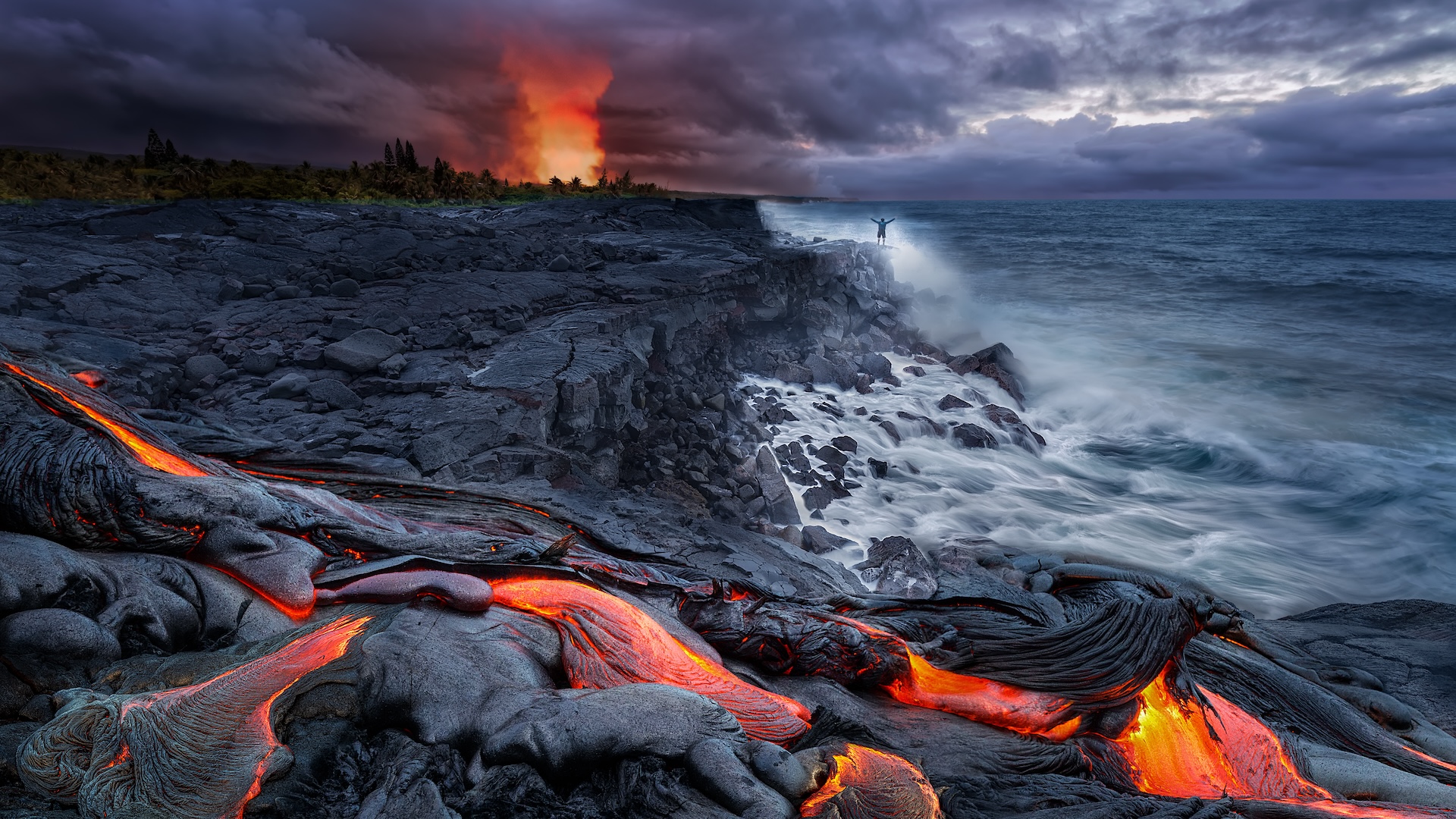
What happened:
Scientists studying ultra-hot exoplanets say some alien worlds may experience towering tidal waves of molten lava, driven not by moons like on Earth, but by extreme gravitational forces from nearby stars.
Why it matters now:
The findings could reshape how astronomers interpret temperature data from distant planets and may explain long-standing mysteries spotted by space telescopes like James Webb (JWST).
Lava tides on planets locked in extreme orbits
The research, presented at the Rocky Worlds conference in the Netherlands and shared as a recent preprint, suggests that rocky planets orbiting very close to their stars can experience dramatic lava tides.
On Earth, tides are caused by the Moon and the Sun. But on some exoplanets, stellar gravity alone may be strong enough to pull oceans of molten rock back and forth across the surface.
One striking example is 55 Cancri e, a scorching rocky planet that completes one orbit around its star in just 18 hours. According to simulations, lava waves there could rise hundreds of metres high and move at speeds comparable to a human sprint.
Why scientists underestimated lava behavior
Until now, most planetary models treated lava as a semi-solid material that slowly deforms under stress. But researchers argue this assumption is flawed.
“Lava isn’t a runny solid — it’s a viscous liquid,” said planetary scientist Mohammad Farhat of the University of California, Berkeley, who led the study. Liquids respond very differently to tidal forces, generating far more internal heat through motion and turbulence.
Using computer simulations, Farhat and colleague Eugene Chiang showed that even slightly elliptical orbits — just a few percent off circular — could produce enough tidal heating to melt a planet deep below the surface.
On Earth-sized planets, this process could potentially liquefy everything from the crust down toward the core, far beyond the shallow magma pools scientists had previously imagined.
A challenge for detecting alien atmospheres
The implications extend beyond geology.
Astronomers often search for exoplanet atmospheres by measuring surface temperatures. If a planet has air, heat spreads from the day side to the night side, cooling the dayside slightly. But lava tides could mimic that same signal.
Overlapping lava waves may form intensely hot, wandering blobs of molten rock, hundreds of degrees hotter than surrounding regions. These moving heat sources could appear to telescopes as atmospheric heat redistribution — even if no atmosphere exists.
“This raises serious questions about whether lava tides could imitate the observational signature of an atmosphere,” noted planetary scientist Johanna Teske, who was not involved in the study.
A possible solution to a decade-old mystery
The findings may help explain puzzling observations of 55 Cancri e, which has shown unexplained temperature swings of nearly 1,000 degrees Celsius for over a decade.
Scientists have proposed everything from lava rain to reflective clouds, but none fully fit the data. If the planet’s orbit is slightly eccentric — something still unknown — lava tides could be the missing explanation, researchers say.
“If this is true, it can explain what we’re seeing,” said planetary scientist Jayshil Patel, who studies the planet using JWST data.
What comes next
If lava tides exist, they could be directly detectable as erratic thermal flashes and drifting hot spots in infrared observations. That would make them one of the most extreme geological phenomena ever observed beyond our solar system.
What to watch next:
Future JWST observations and refined orbital measurements could confirm whether lava tides are real — and whether molten worlds are far more dynamic than scientists once believed.