
Supreme Court to rule on Umar Khalid, Sharjeel Imam bail pleas in 2020 Delhi violence case
The Supreme Court of India is set to pronounce its verdict on Monday on bail pleas filed by Umar Khalid, Sharjeel Imam, and five other...
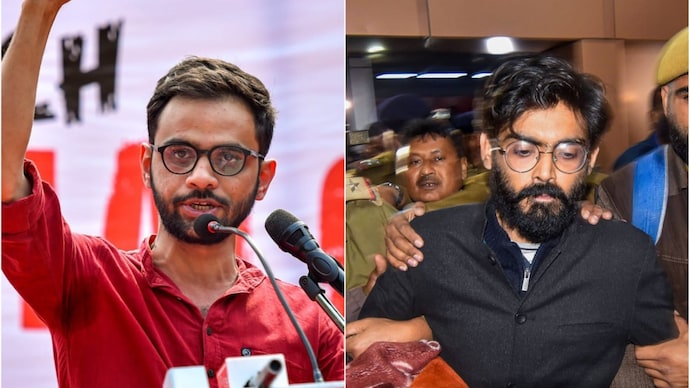
The Supreme Court of India is set to pronounce its verdict on Monday on bail pleas filed by Umar Khalid, Sharjeel Imam, and five other accused booked under the Unlawful Activities (Prevention) Act (UAPA) in connection with the February 2020 north-east Delhi violence.
The decision follows months of intensive hearings and brings a five-year legal battle to a critical juncture, with implications that extend beyond the courtroom into governance, public order, and constitutional freedoms.
Bench, hearings, and the challenge before court
A bench comprising Justices Aravind Kumar and N.V. Anjaria reserved its judgment in December, after marathon arguments by the Delhi Police and senior counsel representing the accused.
The petitions challenge a September 2023 Delhi High Court order that denied bail, citing the grave nature of allegations and the seriousness of the alleged conspiracy.
Who is accused and what the case alleges
The accused include Umar Khalid, Sharjeel Imam, Gulfisha Fatima, Meeran Haider, Shifa Ur Rehman, Mohd Saleem Khan, and Shadab Ahmed.
They are charged under UAPA and provisions of the erstwhile Indian Penal Code, accused of being “masterminds” behind the violence that erupted amid protests against the Citizenship (Amendment) Act and the proposed National Register of Citizens.
The violence left 53 people dead and over 700 injured, making it one of the most severe episodes of communal unrest in the capital in decades.
Police claim of a planned conspiracy
Opposing bail, the Delhi Police has maintained that the violence was not spontaneous but a pre-planned conspiracy. In an affidavit before the Supreme Court, the prosecution described the events as a “regime-change operation” intended to destabilise the country and damage India’s global image.
Police submissions rely on witness statements, call records, chat messages, and electronic evidence to argue the existence of a deep-rooted conspiracy organised on communal lines.
The prosecution has also accused the accused of deliberately delaying the trial, rejecting defence claims that nearly 900 witnesses would prolong proceedings. According to police, only 100 to 150 witnesses are material, and the trial could progress swiftly with cooperation.
Invoking UAPA principles, the affidavit reiterates that <u>custody, not release, is the norm in serious terror-linked cases</u>.
Alleged roles of Khalid and Imam
Police allege Umar Khalid conceptualised the “chakka jam” strategy and coordinated planning through the Delhi Protest Support Group, including secret meetings where participants were allegedly asked to mobilise crowds and stockpile weapons.
Sharjeel Imam, investigators claim, operated in coordination with senior conspirators and played a key role in the initial phase of unrest from December 2019 to early 2020, including speeches that allegedly encouraged widespread disruption.
Authorities have also cited messages referencing the India visit of then US President Donald Trump, claiming the timing of the violence was intended to internationalise the issue.
Defence argument: prolonged incarceration and slow trial
The defence has consistently pointed to extended pre-trial detention as the core ground for bail.
Khalid and Imam have been in custody since September 2020, while the case remains at the stage of arguments on framing of charges. The chargesheet runs into thousands of pages, accompanied by voluminous electronic records.
While the Delhi High Court acknowledged that bail is generally the rule, it held that prolonged incarceration alone is not a universal ground for bail under the peculiar facts of the case.
Interim relief and political reactions
In December, a Delhi trial court granted Umar Khalid two weeks of interim bail to attend his sister’s wedding, subject to strict conditions including no social media use and no contact with witnesses. He surrendered on December 29 after the relief expired.
The interim order sparked political reactions. Mehbooba Mufti, former Jammu and Kashmir chief minister, described the situation as deeply troubling, questioning why a brief parole came after years of incarceration.
International attention and government response
Ahead of the verdict, the case has drawn international attention. New York mayor Zohran Mamdani wrote to Khalid, and eight US lawmakers urged Indian authorities to grant bail and ensure a fair and timely trial, questioning the strength of the evidence.
The Bharatiya Janata Party has rejected these interventions, alleging an anti-India narrative and political motivation behind foreign commentary.
Why Monday’s verdict matters
The Supreme Court’s ruling is expected to influence how courts interpret <u>bail standards under UAPA</u>, especially in cases involving prolonged pre-trial detention.
Legal experts say the judgment could shape future debates on national security, personal liberty, and trial timelines, with consequences for accused persons, investigative agencies, and the justice system at large.