
Supreme Court Pushes for New Rules to Curb Harmful User-Generated Content Online
The Supreme Court of India has urged the Union government to move swiftly on creating a comprehensive framework to regulate harmful user-generated content (UGC), warning...
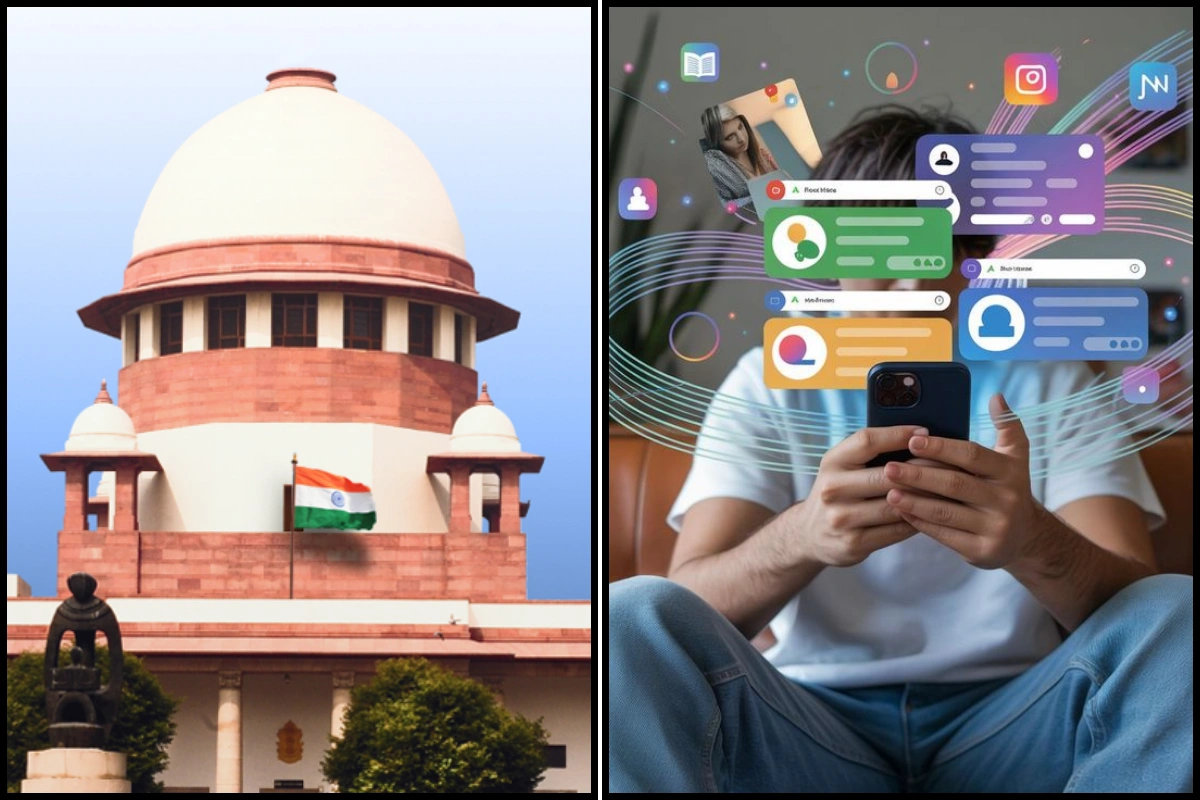
The Supreme Court of India has urged the Union government to move swiftly on creating a comprehensive framework to regulate harmful user-generated content (UGC), warning that unverified posts circulating online within seconds are causing irreversible damage to individuals and public order.
A Bench led by Chief Justice of India (CJI) Surya Kant, along with Justice Joymalya Bagchi, said the current system offers no real-time protection against obscene, defamatory, or misleading posts that can go viral long before platforms act.
Court Flags “Accountability Vacuum” in Digital Space
During Thursday’s hearing, the judges observed that millions of users today run independent online channels with virtually no oversight.
CJI Kant called it “strange” that individuals publishing content to massive audiences continue to operate without any meaningful accountability. The court said existing warnings—such as brief age-restriction screens—do little to shield minors or vulnerable users from explicit or harmful material.
The Bench even floated age-verification tools, including Aadhaar-based checks, as a possible safeguard. While stressing that free speech must remain protected, the Chief Justice clarified that the right cannot extend to enabling mass harassment or reputational injury.
Why the Court Wants Action Now
The judges underscored a core issue: speed. Harmful content spreads faster than regulators or platforms can respond.
Justice Bagchi noted that even a swift takedown takes hours, whereas misinformation, explicit videos, or personally damaging posts may reach millions instantly. “By the time the content is removed, the harm has already taken place,” he observed.
The court described prosecution of the content creator as merely a “post-occurrence penalty,” insisting that preventive mechanisms are necessary to stop harm before it begins—especially when digital material can cross borders within seconds.
Debate Over ‘Preventive’ vs. ‘Pre-Censorship’
Senior advocate Amit Sibal, representing the Indian Broadcast and Digital Foundation, voiced concern that the term preventive could be interpreted as prior restraint or censorship. He urged the court to reframe the objective as creating “effective” oversight rather than pre-screening content.
Advocate Prashant Bhushan argued that any policy touching on free speech must follow extensive public consultation, cautioning that loosely defined labels like “anti-national” could be misused.
Court Suggests Independent Oversight Body
In what could become a significant shift in digital regulation, the Bench suggested the creation of an independent and autonomous authority—one not controlled by either the government or private broadcasters—to determine whether certain content is prima facie permissible before it causes public harm.
The judges emphasized that such a body should not “tinker with free expression” but instead shield ordinary people who are often defenseless when targeted by viral posts.
The Ministry of Information and Broadcasting has been asked to examine the proposal and return with a detailed plan.
What This Means for India’s Digital Future
If implemented, India could become one of the first major democracies to introduce a real-time accountability system for user-generated content. Experts say the move could:
-
Set new global benchmarks for balancing free speech and safety
-
Strengthen safeguards against misinformation, deepfakes, and online abuse
-
Prompt social media companies to adopt more AI-driven content filters
-
Spark debates about privacy, data use, and the limits of prior regulation
The government is expected to initiate consultations with industry bodies, legal experts, and civil society before drafting any guidelines.