
Spacetime Quasicrystals: New Theory Could Rewrite Physics | Cliff News
Physicists theorize spacetime quasicrystals, impacting quantum gravity and string theory.
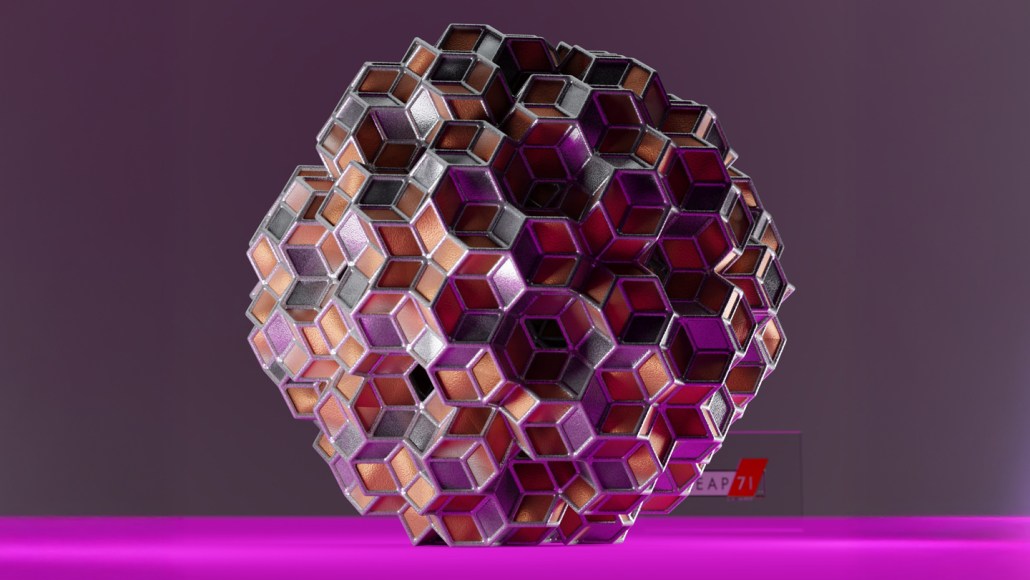
Top Summary
- What happened: Physicists have theoretically discovered spacetime quasicrystals, ordered structures bridging space and time, adhering to Lorentz symmetry.
- Why it matters: These theoretical quasicrystals could revolutionize our understanding of spacetime and potentially underlie the very structure of the universe.
- What changes: This discovery might impact quantum gravity and string theory research, eventually influencing our comprehension of fundamental physics.
- Who is affected: Physicists, cosmologists, and researchers in related fields are affected by this finding.
Unveiling Spacetime's Hidden Order
Quasicrystals, materials exhibiting orderly yet non-repeating structures, have previously been observed in meteorites and atomic bomb test remnants.
Now, a groundbreaking theory proposes that these unique materials could exist within spacetime, the very fabric of reality as described by Einstein's theory of relativity. The research was submitted to arXiv.org on January 12.
Bridging Space and Time
Unlike regular crystals that repeat in a predictable pattern, quasicrystals possess orderly structures lacking regular repetition. They typically exist in two or three spatial dimensions.
This new research suggests the theoretical spacetime quasicrystals would bridge space and time, existing within spacetime itself.
Lorentz Symmetry and Cosmic Structure
Spacetime quasicrystals would obey Lorentz symmetry, meaning their appearance remains consistent regardless of an observer's speed.
Ordinary crystals and quasicrystals lack this property; their structure changes depending on the observer's motion.
Mathematical Foundations
Researchers mathematically modeled these quasicrystals by slicing a four-dimensional grid and projecting points onto the slice.
The slice has an irrational slope, preventing repetition and leading to the formation of the quasicrystal structure.
Implications for Fundamental Physics
Sotiris Mygdalas of the Perimeter Institute suggests that spacetime itself could be a quasicrystal.
This concept might prove relevant to quantum gravity theories, where spacetime is broken into individual points at extremely small scales. Spacetime quasicrystals could also impact string theory, which proposes the existence of extra, curled-up dimensions.
Speculation and Elegance
The authors acknowledge their ideas are "admittedly half-baked."
Gregory Moore of Rutgers calls the mathematics "beautiful" but deems the physics "very highly speculative."
"The things they've come up with are … the most elegant things you can have in spacetime as a combined entity." - Felix Flicker, theoretical physicist, University of Bristol.
What to Watch Next
Future research will focus on further exploring the implications of spacetime quasicrystals for quantum gravity and string theory.
Scientists will also be looking for potential ways these theoretical structures might manifest in the real universe.