
Solar eclipses trigger sharp ozone spikes high above Earth, scientists find
NASA-backed climate model shows temporary 80% ozone jump in the mesosphere during eclipses Top Summary What happened: Scientists found that solar eclipses can sharply increase...
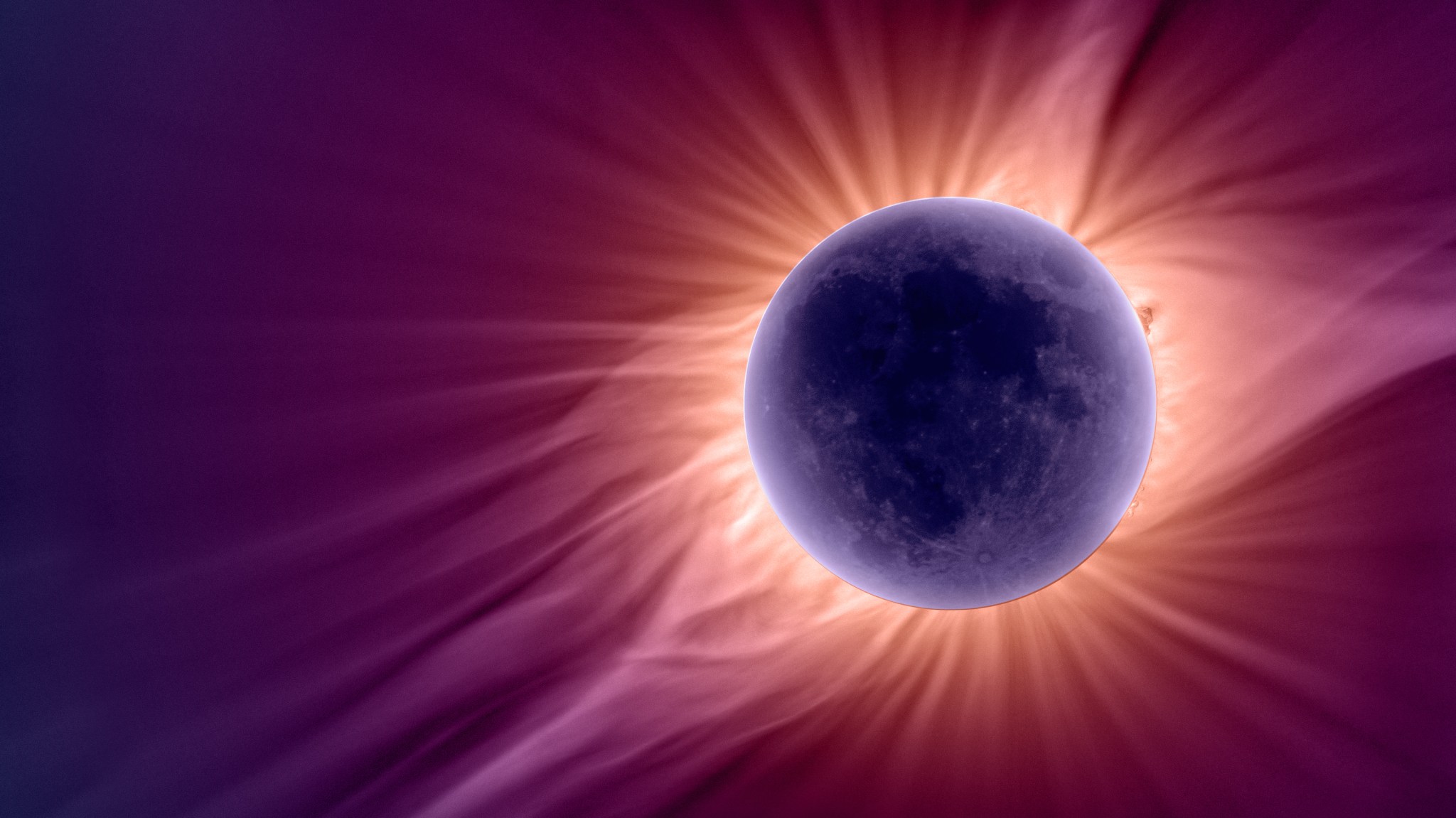
NASA-backed climate model shows temporary 80% ozone jump in the mesosphere during eclipses
Top Summary
-
What happened: Scientists found that solar eclipses can sharply increase mesospheric ozone, mimicking a rare atmospheric feature.
-
Why it matters now: The findings clarify how sunlight directly controls ozone chemistry, improving climate and space-weather models.
-
What changes for people: Better prediction of upper-atmosphere behaviour, crucial for satellites, GPS signals, and climate simulations.
-
Who is affected: Climate scientists, space agencies, satellite operators, and atmospheric researchers.
What happened:
A new scientific study using advanced atmospheric simulations has found that solar eclipses can trigger sudden, large increases in ozone high above Earth, in a region known as the mesosphere.
Using the 14 December 2020 solar eclipse as a natural experiment, researchers ran sensitivity tests on the WACCM-X climate–atmosphere model to isolate how ozone reacts when sunlight is abruptly cut off.
The result: ozone levels jumped by nearly 80% at altitudes of 60–65 km during peak eclipse conditions.
Why it matters now:
Ozone chemistry in the upper atmosphere is extremely sensitive to sunlight. Solar eclipses provide a rare, clean way to study this relationship without interference from weather or pollution.
Understanding these mechanisms is critical for:
-
Accurate climate and chemistry models
-
Predicting space-weather impacts
-
Managing satellite drag and signal disruption
Small chemical shifts at high altitude can cascade into major modelling errors if misunderstood.
What changes for people:
-
Climate models can now separate real chemical effects from observational noise
-
Space agencies gain better tools to predict upper-atmosphere variability
-
Researchers can explain why ozone signals stay visible even when related chemicals appear unchanged
This improves confidence in long-term atmospheric projections.
Who is affected:
-
Atmospheric and climate scientists
-
Space agencies and satellite operators
-
Navigation and communication systems
-
Researchers studying Sun–Earth interactions
What caused the ozone spike?
The study found two distinct physical mechanisms behind the ozone surge:
1. Slowed ozone destruction
During an eclipse, reduced sunlight suppresses the creation of HOx radicals — chemicals that normally destroy ozone.
-
HOx levels dropped by ~50%
-
This effectively put the brakes on ozone loss
2. Rapid chemical reshuffling
Lower sunlight also weakens ozone-splitting reactions in the Chapman cycle, causing oxygen atoms to recombine into ozone instead.
This chemical “repartitioning” added ~0.12 ppm of ozone per hour on its own.
Solving an observation puzzle
Scientists have long noticed that:
-
Ozone changes remain visible at very high solar zenith angles
-
HOx changes often disappear into measurement noise
The model explains why.
At high sun angles:
-
Background photochemistry is already weak
-
Relative HOx reductions naturally fall from ~50% to ~37%
-
The smaller signal gets lost in observational noise
Ozone, however, remains chemically robust and detectable.
Bottom line
Solar eclipses don’t just darken the sky — they briefly rewire the chemistry of Earth’s upper atmosphere. This study shows that mesospheric ozone can surge dramatically when sunlight dips, driven by predictable and measurable processes. The findings sharpen climate models and resolve long-standing inconsistencies between theory and observation.