
Solar Eclipse February 2026: Rare ‘Ring of Fire’ Not Visible in India
What happened: A rare annular solar eclipse, creating a “ring of fire,” will occur on 17 February 2026. Why it matters now: The event marks...
-
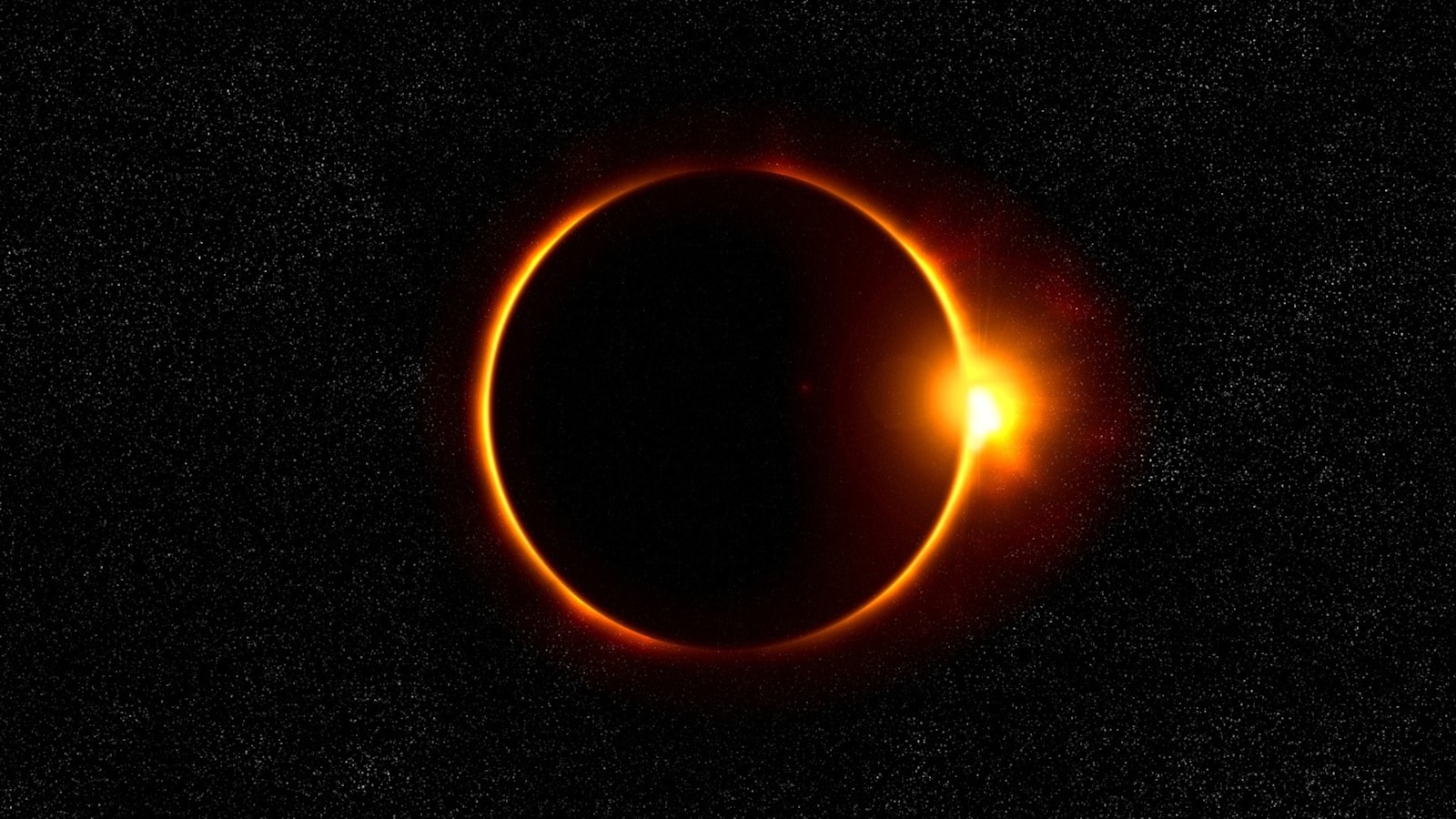
What happened: A rare annular solar eclipse, creating a “ring of fire,” will occur on 17 February 2026.
-
Why it matters now: The event marks the start of a unique series of three solar eclipses within 708 days, drawing global attention from skywatchers and astronomers.
-
What changes for people: While visually striking, the eclipse will not be visible from India, limiting public observation opportunities.
-
Who is affected: Astronomy enthusiasts, science communicators, and international travelers seeking eclipse viewing.
A rare annular solar eclipse is set for 17 February 2026, forming a striking “ring of fire” effect, but Indian skywatchers will miss the spectacle. The Moon will cover nearly 96% of the Sun’s centre, leaving a glowing red-orange rim, but the eclipse’s path passes exclusively over Antarctica, with other later eclipses visible in South America, West Africa, and parts of Europe and the Pacific.
What to expect during the eclipse
During the brief annular phase, which lasts up to 2 minutes, observers within the eclipse path will see the Sun as a bright ring surrounding the dark silhouette of the Moon. Experts from Forbes Astronomy note that such limited visibility makes in-person observation extremely rare. While India will see no portion of this eclipse, the event is scientifically significant as the first in a sequence of three solar eclipses over the next 708 days.
Global eclipse sequence
Following February’s event, the next solar eclipse on 6 February 2027 will produce another “ring of fire,” this time crossing Chile and Argentina, while parts of West Africa will also witness it. Astronomers highlight that tracking these eclipses helps refine orbital models and improve understanding of the Moon’s motion and solar dynamics.
Why mobile readers should care
Even if the eclipse is not visible locally, the event underscores global celestial patterns and offers educational opportunities for students, enthusiasts, and travelers. Science communicators are expected to broadcast the eclipse live, allowing viewers worldwide to witness the phenomenon safely.
Expert insights
Dr. Ananya Roy, an astrophysicist at the Indian Institute of Astrophysics, explains: “Annular eclipses are rare because the Moon must be at a specific distance from Earth. Observing these events in real time, even via live streams, provides critical data for solar research and public engagement in astronomy.”