
Slender-Billed Curlew Declared Extinct: A Stark Warning for Global Migratory Bird Conservation
In a sobering announcement, the International Union for Conservation of Nature (IUCN) has officially declared the slender-billed curlew (Numenius tenuirostris) extinct. Once a widespread migratory...
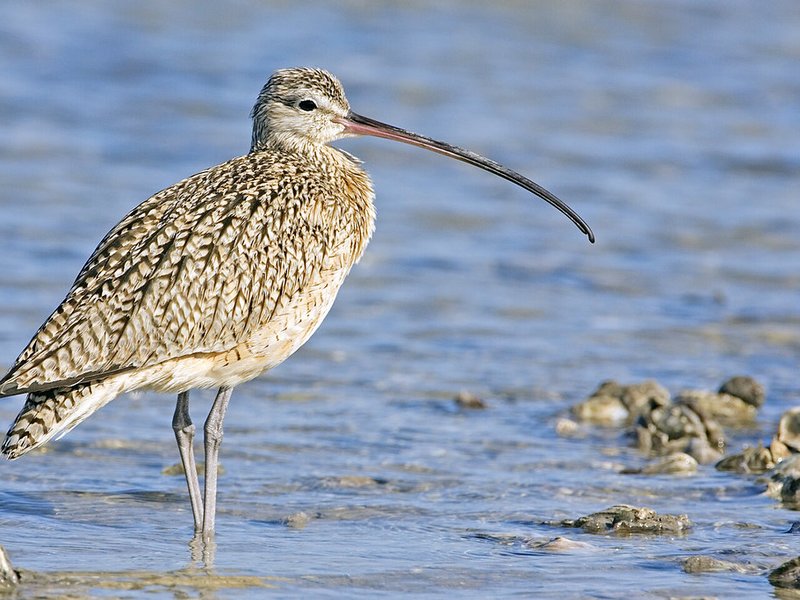
In a sobering announcement, the International Union for Conservation of Nature (IUCN) has officially declared the slender-billed curlew (Numenius tenuirostris) extinct. Once a widespread migratory bird spanning mainland Europe, North Africa, and West Asia, its disappearance marks the first known global extinction of a formerly abundant migratory bird species.
The last confirmed sighting of the bird was recorded over three decades ago, on February 25, 1995, at Merja Zerga in Morocco. Despite decades of exhaustive international searches and conservation efforts, no further verified sightings have been made. The declaration on Friday ends lingering hopes that the species might still survive in isolated pockets.
“This devastating loss underlines the urgent and sustained need for stronger, coordinated conservation efforts for migratory birds, and migratory species in general,” the IUCN stated in its announcement.
A Tragic Turning Point for Migratory Bird Conservation
The extinction of the slender-billed curlew is being described by conservation leaders as a wake-up call. Amy Fraenkel, Executive Secretary of the Convention on the Conservation of Migratory Species of Wild Animals (CMS), called it “a tragic and sobering moment,” emphasizing that the loss highlights the critical need for rapid and effective conservation measures to protect other migratory species at risk.
The slender-billed curlew had been listed under Appendices I and II of CMS since the Convention was signed in 1979. A dedicated Memorandum of Understanding (MoU) for its conservation was adopted in September 1994, aiming to protect what was then believed to be fewer than 50 remaining individuals. The bird’s range included breeding grounds in northwestern Siberia and Kazakhstan, with wintering and stopover sites across southeastern Europe, the Middle East, and North Africa.
Tragically, just five months after the MoU was signed, the species was seen for the last time. In a further attempt to protect migratory waterbirds, the Agreement on the Conservation of African-Eurasian Migratory Waterbirds (AEWA) was signed in June 1995, listing the slender-billed curlew among 255 priority species.
Conservation Frameworks: Too Late for One, Critical for Others
“This extinction must not be in vain,” said Jacques Trouvilliez, Executive Secretary of AEWA. “It should galvanize stronger implementation of conservation frameworks—backed by science, resources, and political commitment—before more species follow the same path.”
According to Trouvilliez, around two-thirds of all bird species are currently in decline. The curlew’s extinction serves as a stark reminder of what is at stake if conservation actions remain underfunded or delayed.
Several other migratory waterbird species are also facing increasing threats. Species such as the grey plover, broad-billed sandpiper, and curlew sandpiper have been uplisted to Vulnerable on the IUCN Red List, while the ruddy turnstone and dunlin are now considered Near Threatened. These changes signal a growing crisis for migratory birds, especially those dependent on increasingly fragile wetland and coastal habitats.
A Call to Action: Never Again
Nicola Crockford, Chair of the joint CMS/BirdLife International Slender-Billed Curlew Working Group, issued a powerful warning: “With today’s technology and scientific understanding, there is no justification for repeating such a tragedy. Once a species is gone, it cannot be brought back.”
The extinction of the slender-billed curlew stands as both a monument to lost opportunity and a rallying cry for urgent, international cooperation in biodiversity conservation. With many migratory species now teetering on the brink, conservationists stress that immediate and coordinated action is essential to prevent more names from being added to the list of lost species.